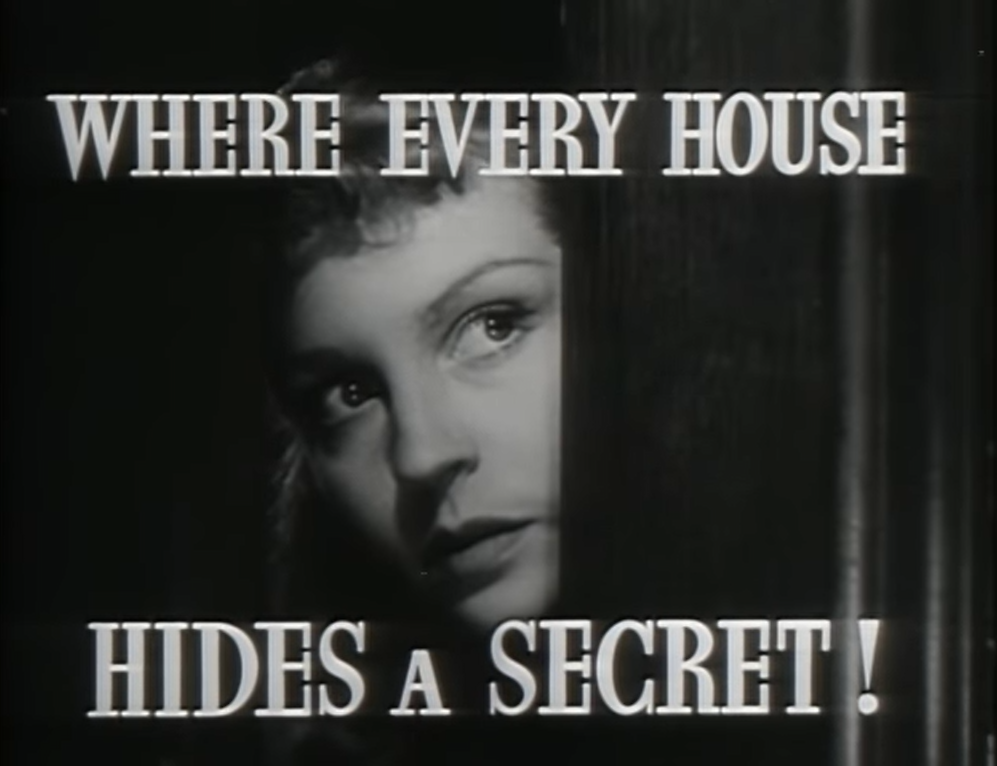
Closing out the three-month season of "Small Town Blues", Peyton Place may seem like a break from the previous two entries. Of course, just last month, I said the same thing about Our Town! Granted, Peyton Place shares a darker, subversive streak with Kings Row that the more innocent ensemble of Our Town avoids - and while Kings Row is set in the Midwest, Peyton Place could be just a few towns over from Our Town in New Hampshire. For the most part, though, Peyton Place is the odd one out. Both Kings Row and Our Town were directed by Sam Wood, in black-and-white, almost back-to-back in the early forties, whereas Peyton Place belongs to the widescreen, Technicolor era of sweeping melodramas in the late fifties (as such, it feels a bit closer in mood and aesthetic to Twin Peaks). Kings Row and Our Town are set in the quaint turn-of-the-century days long before World War I, while Peyton Place evokes a far more recent history for its audience, unfolding just before and during World War II. Like those other two films, Peyton Place crossed mediums, not just from novel to cinema but eventually as one of the most popular soap operas of all time and a direct precedent to Peaks; in fact, when David Lynch's and Mark Frost's mutual agent suggested the project, he introduced the concept as "Blue Velvet meets Peyton Place." As I discovered in this re-viewing, Peyton Place already has a bit of Blue Velvet about it - while lacking the Lynch film's surrealism and mystery plotting, it also depicts a cozy small town with a sleazy underbelly, and was viewed as quite subversive in its own time. One of the most striking and disturbing elements that connects Peyton Place to Twin Peaks - a quasi-incestuous abuse haunting one of the characters - is also shared with Kings Row (albeit more obliquely, given the censorship of that time). This is a connection cemented by casting, as the author Lindsay Hallam has pointed out to me in the past. Hope Lange, the troubled young woman in Peyton Place, would go on to play a mother in Blue Velvet; in Peyton Place, her own mother is played by Betty Field...who played a similar victim in Kings Row.