Lost in the Movies

The Wide View 1957 - 1959 • "32 Days of Movies" Day 12


The twelfth chapter in "32 Days of Movies", an audiovisual tour through 366 films.
(2015 update: included Vimeo embed after the jump)

The Wide View

"Are we kids here or what?" Increasingly, the answer was "No" - for better or worse. As the fifties rolled to a close, American cinema underwent its first stirrings of adolescence. Puberty would strike with full force by the mid-sixties, crippling the movies for a time with growing pains, failed attempts at worldliness, and alienated lassitude. Yet initially this onset of maturity offered many Hollywood films a valuable edge. Whether locking a steady gaze on the brutality of war, shining a harsh light on the cynical modern media, or nakedly exposing the sexual voyeurism of audience and auteur alike, today's selections show hints of the quantum leap in content and style which would seize a moribund industry in 1967.

An International Era 1955 - 1957 • "32 Days of Movies" Day 11


The eleventh chapter in "32 Days of Movies", an audiovisual tour through 366 films.
(2015 update: included Vimeo embed after the jump)

An International Era

In the late fifties, the Cold War cooled and from the Khrushchev speech to the kitchen sink debate, the era many had expected in the wake of World War II - one focused on the United Nations and at least talking about peaceful coexistence - had begun to emerge. After a decade of fiercely agonizing over who and what was and wasn't "American", the nation seemed to have a renewed hunger for the exotic, the different, the international. This was reflected on its movie screens, as a taste for foreign films serendipitously (or conveniently) coincided with the rise of several truly great auteurs.

The Restless Fifties 1953 - 1955 • "32 Days of Movies" Day 10


The tenth chapter in "32 Days of Movies", an audiovisual tour through 366 films. 
(2015 update: included Vimeo embed after the jump)

The Restless Fifties

Far from being a tepid, sedate period as is sometimes suggested, the fifties were full of dynamic energy. What distinguished the decade from the following one was the difficulties these energies faced in finding expression. You could see them in advertisements, magazine layouts, in widescreen movies (making their first appearance today) and live television, and especially the emergence of teen culture and rock 'n' roll. Yet somehow there seemed to be a deeper restlessness and rootlessness there, something left over from the war that couldn't quite fully flower.

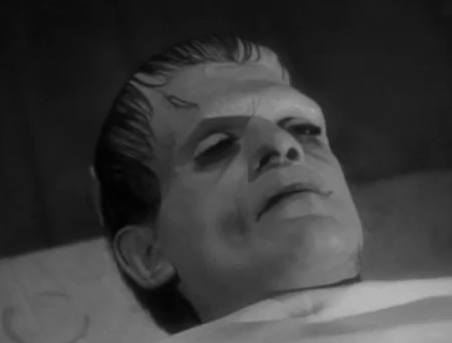
Frankenstein ("Fixing a Hole")


Today's chapter in "32 Days in Movies" - called "A Violent Release" and featuring movies from the half-century mark with violent themes or elements - was posted this morning. But I also want to use today to announce a new series I am launching on Wonders in the Dark. Called "Fixing a Hole" its sole purpose is to review notable films that have not yet been covered on that site (thousands of films have been, but cinematic history is so rich that tens of thousands, including classics, obscurities, and controversial movies among them, have as of yet slipped through the cracks).

Every month will have a theme and this October is designated "Universal Horror Month." I will be writing several of the entries, but I've also invited guest writers to contribute and the inaugural entry is by one such guest writer, the passionate, knowledgeable, and extremely engaging Dennis Polifroni, whose personal pieces for the site I've always admired. I assigned him "Frankenstein" and he's hit the ball out of the park. Here's a sample, and then I encourage you to follow the link and take it all in!

"Karloff so perfectly infuses gentleness into his hand movements when pulling the petals off a daisy stem in his moment with the little girl by the pond that you forget this is just an actor in a costume and some very heavy make-up. In these moments you really believe it’s a being who is trying to recreate, for himself, the same kind of innocent whimsy that attracted him to the smile of this little child. You can see, in the way he crouches next to her and slowly inches his way closer to her, that he sees her as his mentor, someone with answers to his many inner questions, in what is beautiful about a life that has just begun for him."
Update 2018: Unfortunately, this sample is now all that remains of Dennis' essay, as the piece was deleted. 

A Violent Release 1949 - 1952 • "32 Days of Movies" Day 9


The ninth chapter in "32 Days of Movies", an audiovisual tour through 366 films.
(2015 update: included Vimeo embed after the jump)

A Violent Release

From the Russian A-bomb explosion to the Korean War, peacetime was not very peaceful. Around the world the focused energies of the antifascist fight had been scattered among myriad causes and directions. Clips this week come from a couple defeated Axis powers (their messages seem the most pacifist), a Cold War-minded America, and a Frenchman shooting in India with British actors and American money. Some days the chapters have a theme, sometimes they don't. Today they most certainly do.

Noir and Naturalism 1946 - 1949 • "32 Days of Movies" Day 8


The eighth chapter in "32 Days of Movies", an audiovisual tour through 366 films.
(2015 update: included Vimeo embed after the jump)


View "Chapter 8: Noir and Naturalism"


Noir and Naturalism

Waking up in the postwar world, it was as if all the jitters and anxiety that had been submerged for the war effort were now out in the open. Already, a new style/genre/sensibility/movement had been developing (though it was too unconscious and informal to fit some of those terms). Later dubbed "film noir," this perspective scanned the hardened landscape with jaundiced eyes, yet with an undercurrent of wounded romanticism that made this dark world something you wanted to plunge into again and again. Meanwhile, both overseas and in Hollywood, an "opening" was occurring in the classically enclosed studio style.

Dreaming in Wartime 1943 - 1946 • "32 Days of Movies" Day 7


The seventh chapter in "32 Days of Movies", an audiovisual tour through 366 films.
(2015 update: included Vimeo embed after the jump)

Dreaming in Wartime

Today's chapter tells a definite story - we begin with a man in the air, determined to crash-land his bomber. It gets closer to the ground, closer, closer, and then... And then the strangeness begins, dreams and nightmares. A witch crashing into a burning pile of rubble. A lucid but depressive atheist wandering amidst crowd of candle-carrying Catholics. A cool, cool jazz band lounging in some never-never minimalist studio in the sky. See you on the sunny side of the street...

And the dreamers. Oh the dreamers - they're all over the place. Sleeping on the eve of a battle, watched over unbeknowst by their king. Chasing mirror-faced daemons in the cracked sunlight of a chillingly cloudless afternoon. Napping in the houses of murder victims and waking up to wonder if they're still dreaming. Climbing from beach to boardroom, or lying in a groggy state on dirt roads to be awakened by flashlights.

Storm Clouds Gather 1940 - 1942 • "32 Days of Movies" Day 6


The sixth chapter in "32 Days of Movies", an audiovisual tour through 366 films.
(2015 update: included Vimeo embed after the jump)


Storm Clouds Gather

In a quiet European cafe, a couple bicker and, by bickering, flirt. It is charming, wistful...and more than a little poignant: argument as gradual romance rather than violent dispute. In another establishment, in another European country, this same couple (or so it seems) find themselves surrounded by a bloodthirsty crowd, hands raised high in stiff salute, singing lustily about their glorious leader. Upon reflection, that cafe scene becomes even more poignant, tragic even. War has come to Europe, and by extension, to Hollywood.

Hooray for Hollywood! 1938 - 1940 • "32 Days of Movies" Day 5


The fifth chapter in "32 Days of Movies", an audiovisual tour through 366 films.
(2015 update: included Vimeo embed after the jump)


Hooray for Hollywood!

Depression lingers. War looms. Fascism marches across Europe. And yet here we are, hobnobbing with socialites and hanging out with callous adventurers, giggling at pratfalls and whizzing along in car chases, playing with children's toys and fighting a war with Indians. We're dazzled by Robin Hood, hushed by a mythic Lincoln, and assaulted by the last of the dodos.

Concluding our survey of the thirties (or at least that sliver of it captured in my collection), we dive right into the thicket of Tinseltown. In this chapter, America dominates, and by America we mean Hollywood, and by Hollywood we mean movie stars, and by movie stars we mean Henry Fonda, Katherine Hepburn and, in particular, Cary Grant (that unseen third wheel in the picture above). A narrow view, to be sure, but aside from the contingencies of my control group (recent boxset purchases filled gaps while also creating imbalances), this focus can be justified by the desire to display, if only once, the glamorous allure of the silver screen unalloyed by its other appeals and values.

The Golden Ages 1935 - 1937 • "32 Days of Movies" Day 4


The fourth chapter in "32 Days of Movies", an audiovisual tour through 366 films.
(2015 update: included Vimeo embed after the jump)

It was a time of barnyard concerts in eye-popping color, giant silhouettes dancing in sync, and exotic swashbucklers vying for the attention of a beautiful woman. No wonder the thirties are considered the golden age for the American film industry, as much of the Hollywood mythos was established in this period. Yet my title is plural for a reason; with the technological hurdle of sound now overcome, this was a global golden age, not limited to Hollywood. France, Britain, and Japan all have something to offer in this entry, in a diverse array of forms: stop-motion fairy tales, humanist dramas, and shocking thrillers. Tomorrow the focus will narrow somewhat but today about half the films hearken from beyond the cozy confines of sunny California.

Talking, Singing, Dancing Pictures 1929 - 1934 • "32 Days of Movies" Day 3


The third chapter in "32 Days of Movies", an audiovisual tour through 366 films.


View "Chapter 3: Talking, Singing, Dancing Pictures"
(2015 update: included Vimeo embed after the jump)


Talking, Singing, Dancing Pictures

Creaky. Tinny. Stagebound. All of these adjectives have been used to describe the early talkies and, sure enough, many directors had no clue what to do with the new technology. Perhaps most did not understand sound at first (and one in this chapter, making his first appearance, didn't want to - at least for the time being). However, those who did understand used sound extremely well, perhaps even better than later filmmakers, who took it for granted. Sound can be a girlfriend screaming over the phone, a radio playing across an alleyway, a glutton burping, or the gutteral growls of a gorilla (two gorillas, actually). Or it could be the sublimely casual way someone asks, "Cigarette?"

Jazz Age Visions 1926 - 1929 • "32 Days of Movies" Day 2


The second chapter of "32 Days of Movies", an audiovisual tour through 366 films.


View "Chapter 2: Jazz Age Visions"
(2015 update - includes Vimeo embed after the jump)


Jazz Age Visions

Following the first flush of discovery, when the miracle of movement held everyone in thrall, great directors began pushing cinematic boundaries. The tempo picked up, the effects became more elaborate, the techniques sharpened and personalized. This adventurous spirit reached its height in the late twenties - the films here provide name after illustrious name in the auteur canon. It would be another forty years before filmmakers had such freedom again, yet most of these young men would continue working, albeit often under difficult circumstances. Here was where they got their start - in the last, heady days of the silent era, as the Jazz Age boomed towards its bust and visions spoke louder than words.


Search This Blog