An old woman, with a striking pinched face that smiles warmly when it isn't lost in a melancholy fog, wanders to the door of her husband's perfume shop and pauses. He comments, offscreen, that this often happens just after sunset: she always starts to leave without actually committing to leaving. She is not alone in that spirit, even if she dramatizes it more boldly than most. So much of this film about small business on a Parisian avenue, a documentary dominated by long stretches of purely observational technique, seems caught between the dimness of the world outside and the absorption of the world inside. When the film inquires about the shopkeepers' sleeping patterns, the petite bourgeois standard-bearers acknowledge that even their dreams are filled with work: the day-to-day routines and sturdy, functional environments of their workplaces are cocoons which could be - and perhaps occasionally are - suffocating, but are more often comforting. The films of Agnès Varda are always exploratory, frequently in a globe-trotting or at least nation-spanning manner, but Daguerréotypes' world is small and close at hand, in more ways than one.
Showing posts with label agnes varda. Show all posts
Daguerréotypes
An old woman, with a striking pinched face that smiles warmly when it isn't lost in a melancholy fog, wanders to the door of her husband's perfume shop and pauses. He comments, offscreen, that this often happens just after sunset: she always starts to leave without actually committing to leaving. She is not alone in that spirit, even if she dramatizes it more boldly than most. So much of this film about small business on a Parisian avenue, a documentary dominated by long stretches of purely observational technique, seems caught between the dimness of the world outside and the absorption of the world inside. When the film inquires about the shopkeepers' sleeping patterns, the petite bourgeois standard-bearers acknowledge that even their dreams are filled with work: the day-to-day routines and sturdy, functional environments of their workplaces are cocoons which could be - and perhaps occasionally are - suffocating, but are more often comforting. The films of Agnès Varda are always exploratory, frequently in a globe-trotting or at least nation-spanning manner, but Daguerréotypes' world is small and close at hand, in more ways than one.
The Sunday Matinee: Cleo From 5 to 7
This is an entry in The Sunday Matinee series.
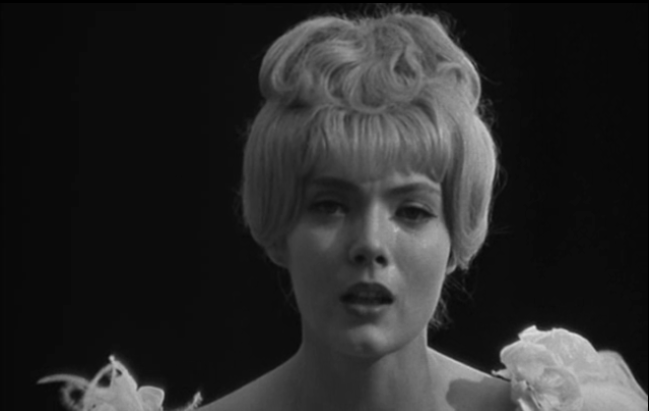
Cleo From 5 to 7, France, 1962, dir. Agnes Varda, starring Corinne Marchand
The visual touchstone of French New Wave cinema is a character wandering down the real-life streets of Paris, trailed by a handheld camera or preceded by a makeshift dolly: think Jean Seberg shouting "New York Herald-Tribune!", Jean-Pierre Leaud playing truant, Bernadette Lafont pretending to ignore flirtatious overtures from a passing car, or Betty Schneider ducking into a cafe to discuss a mysterious disappearance with Jean-Luc Godard. This visual tradition traveled through time when Jules and Jim brought the New Wave spirit to prewar bohemia, parading down the period avenues and alleys. Truffaut's big hit seemed to capture the restless motion of a whole generation at the dawn of a new, exciting era in art and life alike (although in its ending it contained foreshadowings of the frustrations, disappointments, and uncertainties to come).
Then "the walk" crossed the Channel in 1963 with Julie Christie's daffy, free-spirited stroll through a Yorkshire town in Billy Liar, and it crossed the Atlantic when Liar's director John Schlesinger set Jon Voight and Dustin Hoffman loose in a downbeat, grimy New York - by then, the sixties had taken a darker turn. (In 1974, Louis Malle would turn the French "city-walking film" on its head: rather than follow one character with a moving camera, he fixed the camera in place, allowing it to glimpse into the lives of all the passerby who crossed its path.) But no film more perfectly captures or fully explores the potential of this method than Cleo From 5 to 7, Agnes Varda's second feature and her first fictional film since 1955's Le Pointe-Courte, a documentary-narrative hybrid, which preceded the New Wave.
The Gleaners & I
#59 in Best of the 21st Century?, a series counting down the most acclaimed films of the previous decade.
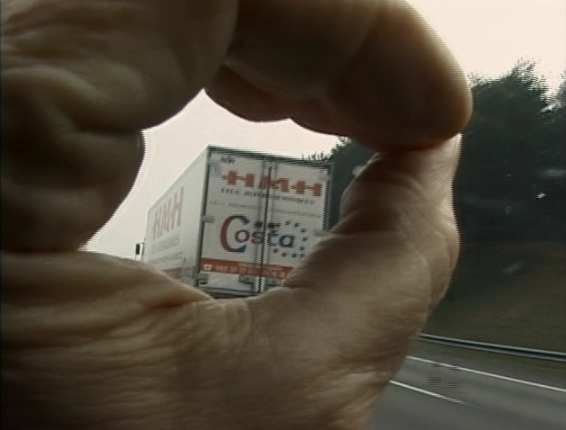
"Again one hand filming the other hand, and more trucks. I'd like to capture them. To retain things passing? No, just to play."In Agnes Varda's documentary The Gleaners & I (a more literal translation from the French would be "The Gleaners & The Gleaner", or even "Gleaneress") play, investigation, and contemplation are all intricately yet loosely wound together - each element distinct yet forming an unpretentiously ambitious whole, much like the found-object artpieces Varda highlights throughout. Her subject, as you might have gathered (no pun intended), is gleaning: in all its forms. We are introduced to the classical gleaners, the peasant women who would follow the harvest by crouching and stooping through the fields, rummaging for leftovers once the more illustrious agricultural bounty was carried off. We see such gleaners in famous French paintings, and meet one or two who reminisce only - it seems that this more traditional form of gleaning has fallen by the wayside: mechanized reaping has become too precise and so few crops are left behind these days. This we learn in the first five minutes of the 90-minute film; what follows is an eager, inquisitive investigation of gleaning in all its latter-day manifestations...
Subscribe to:
Posts (Atom)