Lost in the Movies: british new wave
Showing posts with label british new wave. Show all posts

European New Waves in the Sunday Matinee


In 2010, I launched a three-month series called "The Sunday Matinee" for Wonders in the Dark which covered several films each from four different European cinemas of the sixties: Italian, British, Czechoslovakian, and French. The essays are finally gathered here for convenient navigation.

Patreon update #32: Twin Peaks season 3 rewatch - Part 13 (+ This Sporting Life, living in 3 centuries, the decline of Hollywood, Richard and Audrey Horne & more)


Cooper is back with a vengeance; the first half of Part 13 is almost entirely dominated by both of his incarnations. Among other topics, this podcast episode digs into the nature of Mr. C and his juxtaposition not with the "whole" Cooper but with the equally partial "Dougie." Listener feedback encourages further discussion on the decline of Hollywood as the physical (and spiritual) center of the film industry as well as the Horne family's purpose in the Twin Peaks' third season. My Opening the Archive reading of the British New Wave essay ends with a review of This Sporting Life. (I actually forgot to mention what the next archive highlight will be, despite teasing it at the end of this episode - it's my essay on Let the Right One In as a novel, Swedish film, and American remake.) And just for fun, I'm re-visiting a Twitter thread, and some replies, from a while back in which I explored how close certain events are to past eras compared to today, a nineteenth-century president whose grandchildren are still alive, and a woman whose life spanned three centuries (meaning that she lived at the same time as people who were alive in the 1600s and also people still alive today).


Line-up for Episode 32

INTRO

WEEKLY UPDATE/works in progress: archive, Twin Peaks character runners-up

TWIN PEAKS REFLECTIONS Return Rewatch Pt. 13
The feel & structure of the episode
Twin Peaks - Cooper investigation/Richard's father/Becky/Ed & Norma/RR Franchise/Jacoby/Sarah/James/Roadhouse/Audrey's world
Mr. C
Las Vegas - Dougie at work/Dougie at home/Assassination/Mitchums
Spirit World - Red Room
Character introductions & re-introductions/screentime rankings/timeline of events
Coffee, pie, and donuts
Lodge lore
Laura Palmer


OTHER TOPICS: The Passage of Time & Lifespans - how close events are to the present and earlier events, living in 3 centuries, generations close together & far apart

LISTENER FEEDBACK: Pt. 10 feedback including Audrey Horne's original storyline, Pt. 12 feedback, Richard Horne's importance

OPENING THE ARCHIVE: British New Wave (3 of 3): This Sporting Life

OUTRO, including the possibility of making some older segments public on YT

BECOME A PATRON

Patreon update #31: Twin Peaks season 3 rewatch - Part 12 (+ Billy Liar, The Great Movie Ride & more) and description of Laura character study, pt. IV


After two long episodes (especially last week), this one's a nice little digestible nugget - it comes in at almost exactly an hour. There's no film of focus; however, for the first time the Opening the Archive section emphasizes a particular title as I read aloud my review of Billy Liar from 2010 (part of a longer essay which I'll conclude next week with a review of This Sporting Life). My Return rewatch reaches Part 12, widely considered a disappointment at the time although I found it really rich to explore on this viewing. I also read some feedback on Part 9 and talk about Disney World's late Great Movie Ride which I was compelled to bring up for some reason. For my biweekly preview, the Laura character structure finally reaches the most interesting section, in which I organize the scenes that feature her "spirit" in one way or another.

Incidentally, this weekend I saw Sorry to Bother You, a major new release that will definitely be featured as a film in focus in August. This will probably be the week after next week so I have more time to read some other takes on it and dialogue with them. Quick take is I thought it was funny, fascinating, and flawed, and that it offered an extraordinarily and unusually deep well to draw from.


Line-up for Episode 31

INTRO

WEEKLY UPDATE/recent posts: comments from limbo, fixed Wire images

WEEKLY UPDATE/Patreon: 2nd tier biweekly - Laura Palmer character study structure Pt. IV ("Spirit")

WEEKLY UPDATE/works in progress: the full archive

TWIN PEAKS REFLECTIONS Return Rewatch Pt. 12
The feel & structure of the episode
Twin Peaks - Cooper investigation/Jerry/Sarah/Fat Trout/Hit and run/Richard's father/Ben & Beverly/Jacoby/Roadhouse/Audrey's world
FBI in South Dakota - Yankton/Buckhorn
Las Vegas - Dougie at home/Jade & the key
Character introductions & re-introductions/screentime rankings/timeline of events
Lodge lore
Laura Palmer

OTHER TOPICS: The Great Movie Ride in Disney World

LISTENER FEEDBACK: Pt. 9 feedback including the Search for the Zone site and the Hornes & the waterfall

OPENING THE ARCHIVE: British New Wave (2 of 3): Billy Liar

OUTRO

Patreon update #30: Twin Peaks season 3 rewatch - Part 11 (+ Alexandria Ocasio-Cortez, the British New Wave, Twin Peaks as a meditation on art and creativity, podcast recommendations & more)


This ended up being a surprisingly long podcast (as well as a surprisingly late one - I got the actual episode up within an hour of its schedule, but the show note links, this cross-post, and other details took a bit longer). The Return rewatch, which resumes this week with an exciting, acclaimed episode, isn't much longer than usual and there's no film in focus, so I guess it was mostly the "other topics" section (with a little bit of help from some in-depth listener feedback) that stretched things out. This was my first opportunity to discuss the lightning-fast rise of Congressional candidate Alexandria Ocasio-Cortez - I address the success of her campaign, the differences between democratic socialism and social democracy, some of the left's criticisms of her recent statements, the unsurprising but still amusingly frantic reaction of both the right and the center, and more. As if that wasn't already enough, I also round up a number of podcast episodes (including several that address Ocasio-Cortez's win) plus a few videos, shows, and films that I've watched since June - so all in all, this section is about as long as it's ever been.

Afterwards, I feature some feedback on my Part 8 episode from listeners/patrons, including a long comment from Jake and an even more extended analysis of how Twin Peaks relates to art and creativity as indirect subjects, from Laurence. Finally I kick off a new era on "Opening the Archive" - from now on it will be a sort of reading series, in which I share older pieces from this site. Longer essays will be divided over several episodes, as is the case here; in anticipation of my Billy Liar and This Sporting Life reviews in the next two weeks, I lay out the history of the British New Wave and the cultural context of 1963, when both films were released.


Line-up for Episode 30

INTRO (including recent visit to Twin Peaks locations)

WEEKLY UPDATE/recent posts - correction of previous podcast, cross-posted 25 Years Later, "Greeting from Twin Peaks" photos

WEEKLY UPDATE/works in progress - videos of locations for Journey series

TWIN PEAKS REFLECTIONS Return Rewatch Pt. 11
The feel & structure of the episode
Twin Peaks - Cooper investigation/Hit and run/Becky/RR Franchise/Steven & Gersten/Shelly & Red/Ed & Norma/standalone scenes/mood of the town
FBI in South Dakota - Buckhorn
Las Vegas - Dougie at work/Debt/Assassination/Mitchums
Spirit World - Red Room (glimpse)/Convenience Store/Zone Spiral 
Character introductions & re-introductions/screentime rankings/timeline of events
Coffee, pie, and donuts
Lodge lore
Laura Palmer

OTHER TOPICS, Pt. 1: Alexandria Ocasio-Cortez (her victory, definitions of social democracy vs. democratic socialism, left-wing criticism of her Israel statements, right-wing and centrist attacks)

OTHER TOPICS, Pt. 2: podcast recommendations (including some about left electoralism & Ocasio-Cortez), John Oliver on Venezuela (& the debunking video), Eric Andre, High Maintenance, Sweetie, North Shore

LISTENER FEEDBACK: Pt. 8 feedback including a lengthy passage on Twin Peaks, art, and creativity

OPENING THE ARCHIVE: British New Wave (1 of 3): 1963 & "Whaddya got?"

OUTRO

The Sunday Matinee: This Sporting Life and Billy Liar


This is an entry in The Sunday Matinee series.

The Sunday Matinee is a series exploring various national cinemas of the 60s – Italian, British, Czech, and French. Usually, the approach is film by film but this week is an exception. This admittedly rather long essay takes a wide view, not just of the two films in question, but of the British New Wave as a whole, and how these particular movies relate to it. Both reviews contain spoilers.

This Sporting Life, UK, 1963, dir. Lindsay Anderson, starring Richard Harris, Rachel Roberts

Story: Frank Machin, a working-class bloke made local hero in a rugby league, tries to establish a relationship with his widowed landlady, but neither of them can escape their past – she because of her suicidal first husband, he because the patriarchs owning his team never let him forget to whom he owes his success.
• • •
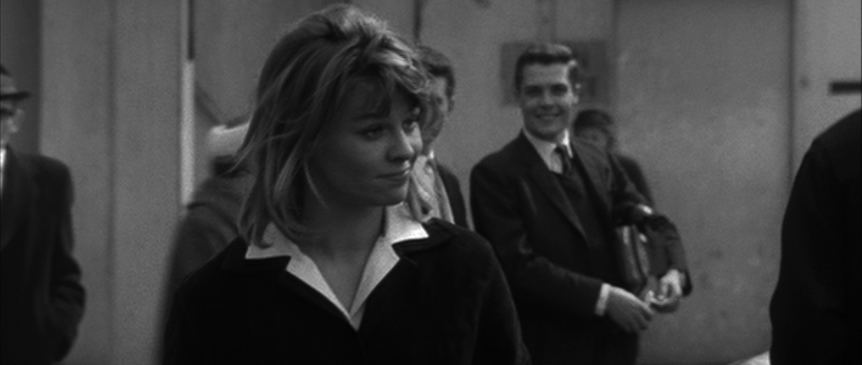
Billy Liar, UK, 1963, dir. John Schlesinger, starring Tom Courtenay, Julie Christie

Story: Billy Fisher uses imagination to get him through a life filled with boring dead-end jobs, multiple fiancées, and crushed hopes, but his active fantasy life is challenged by Liz, a free spirit who pushes him to live out his dreams in the real world, rather than in his mind.

The Sunday Matinee: Saturday Night and Sunday Morning


This is an entry in The Sunday Matinee series.

Saturday Night and Sunday Morning, 1960, dir. Karel Reisz, starring Albert Finney, Rachel Roberts, Shirley Anne Field

Story: Arthur Seaton spends the week working in a factory, and the weekend winning drinking contests, sleeping with a co-worker's wife, and generally pissing off everyone in sight.

When the British New Wave hit cinemas in the early 60s, with its unprettified portraits of working-class life, it was seen as part of an overall cultural trend, already predominant in literary and theatrical works (from which many of these films, this one included, were adapted): the rise of the "Angry Young Man." In Look Back in Anger, he's a snarling young Richard Burton, lashing out at his lover yet displaying a wounded pride when she lashes back. Loneliness of the Long Distance Runner spots him at a borstal, where Tom Courteney runs from authorities until the authorities actually want him to run, at which point he stops. This Sporting Life tackles Richard Harris on the rugby field, A Kind of Loving traps an upwardly mobile Alan Bates in an unwanted marriage, and A Room at the Top locates Laurence Harvey's insecurity and exploits it through a frustrating relationship with an older, wealthier woman. Saturday Night and Sunday Morning may be the purest take at this iconic figure, unfettered as it is by the apparatus of an athletic narrative or the demands of an equal female protagonist (Roberts and Field, both excellent, are definitely supporting characters here). Yet Albert Finney, as Arthur Seaton, does not initially seem as bitter, desperate, or frustrated as any of those other furious youths - as his opening narration informs us, "I'm out for a good time - the rest is propaganda!" And indeed, in the picture above we see him grinning after falling down a flight of stairs, drunk as a skunk but flush with victory after out-drinking a sailor. Sprawled out on the floor, he couldn't seem happier but make no mistake: he's angry as fuck.

The Sunday Matinee: The Loneliness of the Long Distance Runner


This is an entry in The Sunday Matinee series.

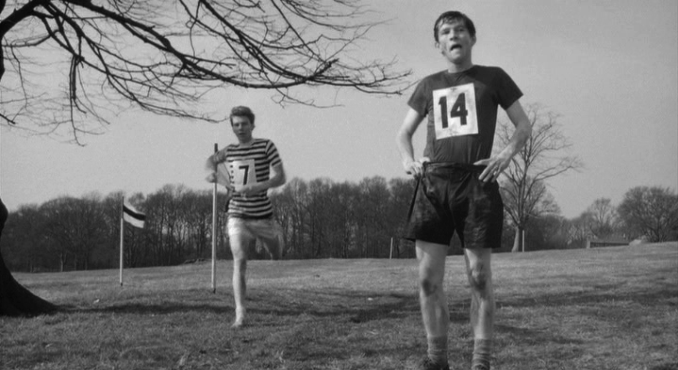
The Loneliness of the Long Distance Runner, UK, 1962, dir. Tony Richardson, starring Tom Courtenay, Michael Redgrave

Story: Colin has been sent up for robbing a bakery, but to his surprise he finds himself being handed advantages and privileges at the reform school. As it turns out, he’s a talented runner and the school director hopes he will help defeat a prestigious public school in an upcoming race.

First things first, the timing of this entry is no accident. This morning the New York Marathon kicks off – so good luck to all the runners, particularly my friends Patrick and Morgan. Secondly, tributes aside, it should be noted that this is in many respects an anti-sports film, both in the sense that it thumbs its nose at “sports film” conventions, and because it views competitive athleticism itself with severe antipathy. But more on that by the by. When we are introduced to Colin, he’s pulling double duty, running and narrating just like Fabrizio at the start of last week’s entry, Before the Revolution. There the similarities more or less end. Whereas Fabrizio was politicized in theory but distanced from any sense of class struggle, Colin – without necessarily articulating it in explicitly political terms (save for a few somewhat clumsy “consciousness-raising” lines of dialogue) – views his entire life as one long struggle against authorities and class constrictions. “Running’s always been a big thing in our family,” he tells us in the opening narration (during which, unlike Fabrizio, he runs away from the camera rather than towards it). “Especially running away from the police. It’s hard to understand. All I know is that you’ve got to run. Run without knowing why, through fields and woods, and the winning post’s no end even though barmy crowds might be cheering themselves daft. That’s what the loneliness of the long distance runner feels like.”

Search This Blog