Lost in the Movies: the sixties
Showing posts with label the sixties. Show all posts

December 2022 Patreon round-up • LOST IN THE MOVIES patron podcast #98: Holiday Special / Continuing the 60s... The Apartment (capsules on How the Grinch Stole Christmas, Rudolph the Red-Nosed Reindeer, A Charlie Brown Christmas, 00s archive reading of A Christmas Tale, Andrew Cook's further reflections on 300 & 00s cinema + my plans for the 3 big Twin Peaks projects, feedback/media/work updates & more) + 3 TWIN PEAKS Character Series advances & Twin Peaks Conversations podcast


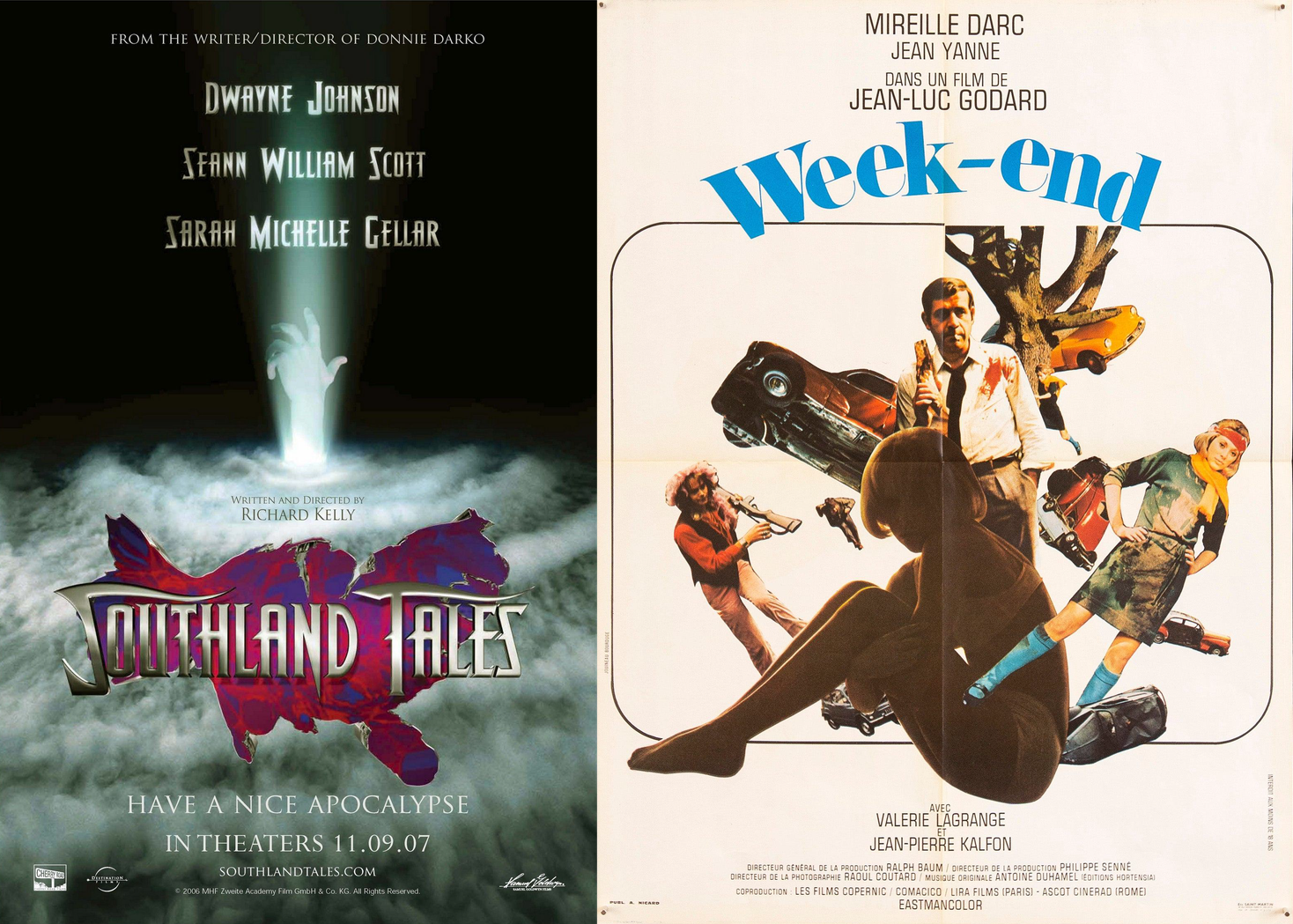
As with Halloween, I'm taking a breather between massive omnibus decade studies for a slimmer holiday-themed episode that still maintains the latest decade theme. In this case, I'm continuing my sixties coverage by exploring a favorite Christmas/New Year's comedy - Billy Wilder's iconic The Apartment - in a full review alongside shorter capsules on classic cartoon specials from the era. I'm also diving deep into my plans for the coming week and (depending how that goes) year. And I received some great written feedback from last month's guest, who has more thoughts to offer on Southland Tales and 300 alongside a number of other zeroes films I discussed in that episode.


To wrap up the year, I'll be offering three more character studies just for patrons (these entries aren't ready yet at the time of this cross-post but will be linked here as soon as they are). Behind the scenes, I'm hoping to plunge deep into a backlog over the next week so that I can finally justify prioritizing this series for public release come 2023. Patrons will continue to receive access to full pieces at least a month ahead at that point.

(become a patron to discover their identities)


December's Twin Peaks Conversations was cross-posted on Patreon a week ago but here's the official $5/month reward on its own. The second part of the discussion runs fifty-two minutes and dives deeper into the details of my guests' unique experiences with Twin Peaks and Neon Genesis Evangelion (one of them started with The Return, the other with the "Rebuild" films) - and what we each see as connections between the two works.


Podcast Line-Up for...

belated November 2022 Patreon round-up • LOST IN THE MOVIES patron podcast #97 coming this week: The 00s in November (& beyond) + 60s bonus & Concluding the 90s & 70s... Godard's Weekend & Southland Tales w/ guest Andrew Cook (w/ his feedback & my capsule on 300, more capsules on Bonnie & Clyde, The Graduate, Midnight Cowboy, The Swimmer, Dr. Strangelove, No Country for Old Men, There Will Be Blood, Zodiac, A History of Violence, Brokeback Mountain, Eternal Sunshine of the Spotless Mind, The Darjeeling Limited, The Dark Knight, Gangs of New York, 500 Days of Summer, The Ring, Donnie Darko, The Box, Dog Day Afternoon, The Muppet Movie, The Muppet Christmas Carol, The Witches, Heat, The Blair Witch Project, Edward Scissorhands, Election, Groundhog Day, Total Recall, Dick Tracy, archive readings of my reflections on the 00s decade, To Kill a Mockingbird, Breathless + much, much more including feedback/media/work updates) + 3 TWIN PEAKS Character Series advances & Twin Peaks Conversations podcast


The Patreon episode intended for last month will be released in four parts.
These links will be updated as the episodes are published in mid-December...

Jean-Luc Godard's Weekend (capsules on Bonnie & Clyde, The Graduate, Midnight Cowboy, The Swimmer, Dr. Strangelove, Dog Day Afternoon, The Muppet Movie, The Muppet Christmas Carol, The Witches, Heat, The Blair Witch Project, Edward Scissorhands, Election, Groundhog Day, Total Recall, Dick Tracy, archive reading of To Kill a Mockingbird + feedback/media/work updates & more)

(readings of Breathless, The Wild Bunch, Cleo From 5 to 7, Before the Revolution, The Loneliness of the Long-Distance Runner, Loves of a Blonde, Primary, 4 Days in November, Dear Brigitte, The Trip, Greetings & the Olympics + 60s/00s crossover w/ The Life & Death of Peter Sellers)

Southland Tales w/ guest Andrew Cook (w/ his feedback & my capsule on 300 + capsules on No Country for Old Men, There Will Be Blood, Zodiac, A History of Violence, Brokeback Mountain, Eternal Sunshine of the Spotless Mind, The Darjeeling Limited, The Dark Knight, Gangs of New York, 500 Days of Summer, The Ring, Donnie Darko, The Box & archive reading of my reflections on the decade)

(readings of 25th Hour, Inland Empire, earlier reviews of The Dark Knight & 500 Days of Summer, You Can Count on Me, Funny Ha Ha, Thirteen, The World, Iraq in Fragments, The Story of Marie and Julien, The Girlfriend Experience & the Olympics)


Introducing the episodes

As we spread out from August's focus on the eighties, moving into earlier and later decades in each direction, we reach two eras forty years apart. Yet they make the perfect pairing in my mind, in part because I was obsessed with the sixties during the zeroes, a time I experienced firsthand and which shaped my perceptions of the world for better or worse. In a way, these decades are a natural fit at least from the American perspective: both haunted by national traumas (Kennedy's assassination and 9/11), both dogged by quagmire wars of choice (Vietnam and Iraq in particular), both racked by technological transformations which troubled as well as enticed (inward for the age of the iPhone, outward for the epoch of the moonshot). But while the sixties gave birth to a vibrant youth counterculture and political resistance, the zeroes often felt like a dead zone to those of us living through it. This was part of my hunger for sixties media; I sought work which excavated and explored the turbulence that I could feel under the surface in the cold, sterile, repressed Bush era but which somehow always remained locked off. These were periods of deep societal alienation which expressed that alienation in very different ways.

With all that in mind what better film to focus on than Richard Kelly's Southland Tales, the sprawling, notorious follow-up to his cult classic Donnie Darko (which I discuss more briefly in this podcast, along with its own deep if different zeroes zeitgeist connections)? Set in an alternate version of 2008 but shot in 2006, it imagines an America whose War of Terror tremors have caught up with a culture that just wanted to go shopping - transforming the country into a manic police state with an active resistance and wild sci-fi developments emerging virtually overnight. Ambivalent after my first viewing years ago, I invited Andrew Cook as a return guest (after our Eyes Wide Shut episode); he's a big Kelly fan who knows the film inside and out which made for an interesting dynamic as I tried to wrap my head around it. This is one of the longest film in focus podcast segments I've ever recorded, running over an hour as we dig into both the film and the era it depicts...and re-invents as something else (perhaps the Trump era to come). This also makes for an offbeat but appropriate pairing with my sixties film in focus, the very different avant-garde apocalypse of Weekend. Here Jean-Luc Godard reaches the apotheosis and negation of his radical sprint through the decade, anticipating the chaos of May '68 months ahead of time. The selection, in which I wrestle with a film that converted me to Godard when I first saw it but which I had more trouble with this time, is one more tribute to the legendary director who passed away in September (I also focused on his eighties film Hail Mary in a previous episode).

Elsewhere, Andrew's contributions continue when I read his in-depth feedback (alongside my own short reflection) on Zack Snyder's 300, an iconic, and much more popular, film by another of his favorite directors. In capsule form, I run through a number of memorable zeroes films alongside a smaller selection of sixties classics, wrap up my viewings of the nineties (alongside a pair of quite different seventies classics), and offer updates on my recent intake and output in several mediums. Most notably, in addition to a couple archive pieces that I wanted to center and share on their own - a meditation on the power and limitation of To Kill a Mockingbird and a broad polemic expressing my frustration with the state of American culture in the Bush era - I'm also gathering a number of pieces focused on each decade into two public archive episodes, offering a survey not just of zeroes and sixties cinema, but my own perception of them at various points.

As noted in the introduction to this podcast, I am planning to wrap up this podcast approach - combining updates with film reviews and other topics in a main montly episode - after reaching #100 in February. Though there's still much content to come in those months, I can't think of a better way to begin my ending than with this particular episode(s).


Meanwhile, I've continued chugging along with my advance character studies every month - although I need to pick up the pace if I want to have the necessary backlog ready at year's end for a 2023 public debut. November's trio includes one of the third season's scummiest characters alongside one of its most heroic. Unlock these pieces for $1/month to learn more...

(become a patron to discover their identities)


And Patreon also housed my $5/month tier reward, the second part of my discussion with the director of The People's Joker (as discussed in last week's cross-post). Southland Tales comes up again too!


Podcast Line-Ups for...

belated October 2021 Patreon podcasts: LOST IN THE MOVIES #84 - Twin Peaks Cinema: Field of Dreams (+ Twin Peaks Reflections: Rusty, Annie, Library, Easter Park, Lodge Mythology/Season 3 Part 14 & more) plus Twin Peaks Conversations, Lost in Twin Peaks & other announcements


My October patron podcasts took almost as long to complete as my February ones did (longer, in the case of the main episode). In some of the announcements linked below, I explain why - if you haven't already read/heard me talking about it - but by the eve of Thanksgiving* I got there, publishing the first new "Twin Peaks Cinema" discussion since early September. A listener suggested Field of Dreams when re-watching her childhood favorite and I was intrigued by similarities both circumstantial and fundamental. Both capture something about the late eighties/early nineties zeitgeist, its quasi-spiritual yearning for both the comfort of the past and the excitement of a just-on-the-cusp future. And once again Part 18's existential road trip offers a new point of comparison between Twin Peaks and another work, although in this case reclusive writer Terrence Mann and boomer dreamer Ray Kinsella bond more readily than Cooper and Carrie Page. Elsewhere in this episode, I read from one of my favorite essays - an extensively-researched 2010 meditation on Field of Dreams' relationship to the sixties (as well as the later zeitgeist looking back on it nostalgically) - and I use a late season two episode of Twin Peaks as a springboard for several subjects including the show's sprawling mythology. Here's the round-up...

(*November's official podcasts were completed after these, during the last days of the month, and will be cross-posted separately in a couple weeks.)

Class violence in 4 films: Once Upon a Time in Hollywood, The Irishman, Joker, Parasite (LEFT OF THE MOVIES podcast #2/LOST IN THE MOVIES podcast #10)


For the second time (I previously covered Medium Cool in August, in light of the Democratic convention), I am turning my public platform over to Left of the Movies, my nascent political cinema podcast. The episode offers five-to-ten minute capsules of some of the most hyped films of 2019: Quentin Tarantino's reimagining-Manson late sixties dream Once Upon a Time in Hollywood, Martin Scorsese's possibly apocryphal Hoffa portrait The Irishman, Todd Phillips' controversial DC-meets-gritty-seventies-crime-film reboot of Joker, and Bong Joon-ho's Best Picture-winning architectural horror portrait of inequality Parasite. All four films climax with violence that can be viewed through a class-based lens - destruction as an almost ritualistic way to either destablize or reinforce the social order. My discussion focuses on how these climaxes express their respective films' political visions.

The bulk of this episode was originally recorded in January 2020 but in the wake of Donald Trump's contentious loss, the Black Lives Matters protests and left-right clashes in the street, the coronavirus pandemic and its unequal economic fallout, and the electoral defeat of Bernie Sanders' populist movement in the Democratic primaries, it seemed like a good idea to revisit these films again in the light of such a world-historic ten months. So I recorded an extra ten or so minutes extending the previous discussion, including Trump supporters' image of him (vis a vis Hoffa and the Mafia in The Irishman), the irony of "white male rage" Joker anticipating the BLM protests six months later, and especially the way that all of these films explore individual outbursts rather than collective action. There's still much to dig into, so I hope some of the listeners will offer feedback that I can further engage in upcoming episodes.


Subscribe, rate, and review on Apple Podcasts
You can also listen on Pinecast and Spotify


LINKS FOR EPISODE 10


New on Patreon
(for $1/month)

Medium Cool (LEFT OF THE MOVIES podcast #1/LOST IN THE MOVIES podcast #4)


A week after the Democratic Party's presidential convention (and the week of the Republican event) seemed like a good time to kick off my Left of the Movies podcast with Medium Cool. Haskell Wexler's fiction/nonfiction hybrid stars Robert Forster and documents the notorious 1968 Democratic convention in Chicago. What a contrast with the locked-down, frequently prerecorded virtual gathering which aired last week, although in other ways - particularly the violent protester/police confrontation in the streets outside the hall - the film's events resonate quite well with 2020. For now, this side project, a study of political movies from the past century-plus of cinema, is still a part of the Lost in the Movies feed but some time in 2021 it will get its own listing and move to a monthly rather than every-other-month schedule).


Subscribe, rate, and review on iTunes
You can also listen on Pinecast and Spotify


LINKS FOR EPISODE 4

New on this site

Updated on this site


Side by Side: The Big Chill vs. Return of the Secaucus Seven (video)


This narrated video essay, a resumption of my Side by Side series, has been a long time in the making - and what an appropriate time this is for its debut. More on that shortly. Comparing two similar stories and then picking them apart to see what they reveal about different writer-directors, different classes, and different eras (the Carter seventies and the Reagan eighties), this video essay looks at the films in three particular contexts: cultural, philosophical, and political. In each case, we have the characters' sixties pasts, alluded to directly and indirectly, as guideposts to their present orientation. For me at least, it was fascinating to examine these films not just in relation to each other but in relation to those historical mythologies they evoke - as well as the then-unknown future evolution to follow: both the boomers' (from stereotypes of hippies to stereotypes of Trumpsters), and the generations, particularly millennials, who would live in their shadow. I try to address the latter very briefly at video's end but I'll also discuss it further here because I can't help myself. While I like to keep these cross-posts short (after all, the video is the point), this case - especially given this moment - calls for more.

SOME THOUGHTS ON THIS SUBJECT IN 2012/2016/2020
(AND LATE FEBRUARY/MID-MARCH/LATE MARCH)

SEVEN AMERICAN GENERATIONS: zoomers, millennials, X, boomers, silent, greatest, and lost


An illustrated guide to the living American generations (excluding those born after 2013) and the unique periods of the past century they experienced at different ages

INTRODUCTION

Although intended as a useful reference going forward, I'm publishing this entry in the particular context of December 2019. Between the "ok boomer" meme, Xers fretting over their "forgotten middle child" status, questions about where the millennial generation actually begins, and uncertainty about what to call post-millennials, there's been a lot of talk about generations in the past few months. No wonder: the 2020 presidential campaign has sharpened divisions between different age groups, with majorities of boomers and millennials not only supporting different parties, but different candidates within the Democratic primary (ironically, the oldest candidate has overwhelming youth support while the youngest is disproportionately popular with an aging crowd). We're also reaching the end of a decade defined by millennials, while in the past few years an even younger tech-savvy, politically activated generation has begun to come of age.

Meanwhile, dramatic demographic changes hover on the horizon. By the end of the 2020s, the last of the lost generation will probably pass away; the entire greatest cohort will cross their century mark and the first silent will turn one hundred; the oldest boomers will hit eighty while the youngest boomers and oldest Xers become senior citizens; millennials will enter middle age as zoomers constitute the majority of young adults; and an even newer generation will emerge onto the scene (the oldest of them are already five, but most haven't been born yet so I'm leaving them out of this analysis). This is an especially dramatic turn for my own generation since the Age of the Thinkpiece has made the terms "millennial" and "young" synonymous - often negatively so. As I once joked, around 2032 a thirtysomething will write a "damn millennial kids are ruining ______" essay, only to be informed that they're actually younger than the youngest millennial. Indeed, by my own admittedly controversial calculations, the first millenial will turn forty in a few weeks; with all of this in mind, December 2019 seems like a good time to take stock, try to lock some of this down and ponder the phenomenon both visually and statistically. Please note, as the title suggests, I am focusing exclusively on a U.S. context especially when it comes to defining the different eras.

The following entry is the result of a year's worth of off-and-on pondering and about a week's worth of hunting and gathering images to illustrate these ideas - as well as a lifetime of being inordinately obsessed with eras, generations, and the process of aging, and how these stack up against each other in a kind of historical grid. I think it's mostly self-explanatory and don't want to further clog up this introduction, but if you're confused I offer an "explanation of process" at the end of this entry. This is not academic work for which I've been trained to follow certain procedures, it's purely the result of my own curiosity and speculation, so take it as you will! Hopefully it's as helpful and absorbing to peruse as it was to assemble.


Descriptions/credits for "Seven American Generations"


This entry lists all of the actors, events, and photographers (for the era collages, where available) in my "Seven American Generations" post. I didn't want to disrupt the flow of that piece but knew readers might be curious. Where there's an accompanying video, it's linked in the description. The above image, by the way, is of Eddie Fisher and Debbie Reynolds with a space man (how prescient) on the opening day of Disneyland in 1955. It didn't fit with the collage I created but I'm glad I found a place for it somewhere.

Also, since there are no repetitions here and everything is full-size you can use this as an image gallery too (click an image to fill your screen).

If you stumbled across this post via a Google image search or another similarly blind route, you're probably confused...click below for context:

VISIT


European New Waves in the Sunday Matinee


In 2010, I launched a three-month series called "The Sunday Matinee" for Wonders in the Dark which covered several films each from four different European cinemas of the sixties: Italian, British, Czechoslovakian, and French. The essays are finally gathered here for convenient navigation.

Patreon update #35: Twin Peaks season 3 rewatch - Part 16 / film in focus: Medium Cool (+ Sarah Palmer's inner smile, late cinematic popularity, podcast recommendations & more) and preview of Fire Walk With Me & season 2 episodes


Exactly fifty years ago, on August 26 - 29, the infamous 1968 Democratic National Convention (and accompanying street protests/riots) unfolded in Chicago. Haskell Wexler was there to capture it on camera for his film Medium Cool, a disorienting mixture of documentary footage and a fictional narrative unfolding in and around this momentous event. Starring Twin Peaks' own Robert Forster as a young cameraman too absorbed in his craft to take account of its political implications, the film is a fascinating document to pick apart and reflect upon. I've known for months that I wanted to make this my film in focus for the big anniversary, and it was compelling to revisit the film at this particular political moment as well (the last time I saw it was around the end of the Bush era, when the left was far more inert than it is now).

This episode also covers one of the most important episode of The Return; Cooper awakens, Diane breaks down, Audrey dances, and Richard goes up in smoke in Part 16. I have a lot to say about all of this, especially the fascinating, pointed juxtapositions of Cooper's story with Diane's (and Audrey's). Twin Peaks discussion continues in listener feedback as I correct something from a previous podcast: the smile we see inside Sarah Palmer's face is not Laura Palmer. But who is it? We have a pretty good idea...

Elsewhere I recommend dozens of podcasts, ask what it takes for forgotten films to become beloved classics, and - for my second tier biweekly preview - draw connections between Fire Walk With Me and several Twin Peaks episodes from the second season.


Line-up for Episode 35

INTRO

WEEKLY UPDATE/Patreon - 2nd tier biweekly preview: comparing Fire Walk With Me to individual season 2 episodes

WEEKLY UPDATE/works in progress - republishing Twin Peaks episode comments from dugpa & Reddit, archive, reviewed Black Panther & Get Out

TWIN PEAKS REFLECTIONS Return Rewatch Pt. 16
The feel & structure of the episode
Twin Peaks - Richard's parents/Hit and run/Jerry/Ben & Beverly/Roadhouse/Audrey's world
FBI in South Dakota (including an aside on the Diane/Cooper juxtaposition)
Mr. C
Las Vegas - Cooper is back/Dougie at work/Dougie at home/The search for Dougie/Assassination/Mitchums
Spirit World - Red Room
Character introductions & re-introductions/screentime rankings/timeline of events
Lodge lore
Laura Palmer

FILM IN FOCUS: Medium Cool

OTHER TOPICS: Podcast recommendations

LISTENER FEEDBACK: Pt. 14 feedback including the green glove, Diane & Janey-E as sisters, and whose smile is inside of Sarah?

OPENING THE ARCHIVE: Popular, eventually...

OUTRO

Patreon update #4: Interstellar & The Prestige (+ millennials, Soviet communism, mumblecore & more) and preview for Fire Walk With Me as horror/art film & Fellini montage


This week brings the first double feature (expect many more, as well as triple and occasionally quadruple features as the number of 2nd-tier patrons - and therefore patron-selected films in focus - grows). Usually they won't be particularly linked but two different patrons recommended Christopher Nolan films this month so I thought it would be a good idea to pair them. I think this was only the second time I saw both of these films, and I was surprised what I had forgotten. Elsewhere, the podcast's theme seems to be generations and the passage of history - I talk about my short film Class of 2002, confusion about millennials, the legacy of the sixties in the eighties, Eastern Europe after the fall of Communism, and the curiosity of reviewing a 2002 film in 2009 - and then discussing that film in 2018. I also attempt and probably fail to pronounce "epistolary," "epoch," and "Bujalski."

By the way, make sure you check out the links in the podcast post - this week in particular they're chock full of fascinating tangents.


Line-up for Episode 4

Intro
*
WEEKLY UPDATE/2nd tier Biweekly Preview: Fire Walk With me as horror & Fellini montage video

*
WEEKLY UPDATE/recent posts: Class of 2002 5th Anniversary

*
WEEKLY UPDATE/works in progress: Phenomena as part of FWWM/horror, FWWM & season 3, FWWM & original episodes, The Art Life, The Wire viewing diary, upcoming montage (Kieslowski/Winehouse), The Last Laugh for Voyage into the Movies, postponing character series, including Diane recordings in her character entry, background character entry

*
FILM IN FOCUS: Interstellar

*
FILM IN FOCUS: The Prestige
*
TWIN PEAKS REFLECTIONS: audiobooks of The Secret History of Twin Peaks & The Final Dossier, The Lodgers discuss Lynch/Frost collaboration

*
OTHER TOPICS: defining (and misdefining) millennials, "tankies" & violence (Marxism-Leninism/Stalinism/the recent Twitter controversy), Hill Street Blues episodes about 60s/70s radicals in the early 80s

*
LISTENER FEEDBACK: plausibility of The Prestige, Nolan as blockbuster auteur (would Lynch have followed his path if Dune was a hit?)

*
OPENING THE ARCHIVE: "Sophomore Slump" (January - March 2009), this week's highlight: Funny Ha Ha


BECOME A PATRON

Patreon update #2: Mulholland Drive & Twin Peaks (+ Reactionary Boomers, Stranger Things & more)


I recorded this week's podcast almost immediately after the other, hoping to get into a routine where I was always at least a week ahead of time. And it's a good thing I did, because it ended up being kind of a beast. The film in focus came courtesy of a new patron, with the request that I look at Mulholland Drive not just as a film in and of itself, but a Lynch work with strong links to Twin Peaks. The result was a half-hour segment (much longer than these will usually be) which I enjoyed preparing for. In the latter part of the episode, I touch on some series I've been watching, and ask why suddenly the cultural stereotype of baby boomers has been flipped on its head.

Intro
*
WEEKLY UPDATE/works in progress: 5 Weeks of Fire Walk With Me (Fire Walk With Me & season 3)
*
FILM IN FOCUS/TWIN PEAKS REFLECTIONS: connections between Mulholland Drive & Twin Peaks
*
(pt. 1: Intro/History of Mulholland Drive)
*
(pt. 2: Relationship to original Twin Peaks/Fire Walk With Me, Mulholland Drive's mythology if it continued as a show)
*
pt. 3: Relationship to Twin Peaks season 3...iconography/actors, structural similarities - sprawling start, loose ends, tightening at the end, story grows colder/darker at end, identity shift in protagonist, Martha Nochimson's interpretation of Lynchian shifts to darkness, Audrey in s3, Carrie Page & Diane Selwyn, differences...female vs. male perspective, stylistic distinction from the Mary Sweeney era, exception of the Becky sequence)
*
ADDITIONAL THOUGHTS: The Boomer-ang: has the characterization of boomers as uber-reactionaries gone too far? (plus Showtime's Guerrilla series, Stranger Things season 2 - the Duffers' nostalgia for an era they didn't experience, and Hill Street Blues on Bickering Peaks)
*
OPENING THE ARCHIVE: "Building Commitments and Community" (August - November 2008), this week's highlight (Twin Peaks: Fire Walk With Me)

The Favorites - Gimme Shelter (#7)


The Favorites is a series briefly exploring films I love, to find out what makes them - and me - tick. Gimme Shelter (1970/USA/dir. Albert & David Maysles, Charlotte Zwerin) appeared at #7 on my original list.

What it is • In 1969, the Rolling Stones were on top of the world. A few months before the events captured in this documentary, they were first dubbed "the greatest rock and roll band in the world." That world they were atop of was in turmoil, an ecstatic turmoil if you were young and adventurous enough to take part. No subsequent American epoch can claim a fraction of the energy generated by the counterculture and the intersecting New Left in the autumn of '69. The Stones, ever-eager to capitalize on the zeitgeist, toured the U.S. while pondering how best to connect with this moment. Renowned in subsequent decades for their high ticket prices and uncompromising business sense, they wanted to offer something more idealistic on this tour - their first since 1966 (the Beatles, the Stones, and the Kinks all abstained from touring in that three-year period, some more voluntarily than others). Woodstock had unfolded just a few months earlier, and the Stones proposed their own free concert on the West Coast, relocated at the last minute from San Francisco to the Altamont Speedway. Savvy to the currents of the time, the band chose Albert and David Maysles, perhaps the most celebrated contemporary nonfiction filmmakers, to document their moment of triumph. Unlike the catch-all potpourri of Woodstock, the Maysles' documentary is judicious, focusing on a few key events (aside from some cutaways to press conferences and other interstitial material). The first is the joyous Madison Square Garden concert in November, an exciting but thoroughly professional affair (frenzied fans leaping onstage are wrestled to the ground by perpetually busy bodyguards). Though the emphasis is on the Stones' set, the directors make room for opening act Ike & Tina Turner, who steal the show (a bit defensively, Jagger - shown watching this clip later - mutters, "It's nice to have a chick, occasionally"). The second event is the legal/financial wheeling and dealing of celebrity attorney Melvin Belli as he arranges the Altamont deal, while the third event is a trip to Muscle Shoals. There the Stones record a few tracks that will land on their seminal 1971 album Sticky Fingers. About half the film zeroes in on the fourth, most important event: Altamont. Hippies endure massively bad acid freakouts. The Hell's Angels, disastrously, enforce their notion of security around the stage. Jefferson Airplane is interrupted by violence in the audience, and the members of the Grateful Dead fly away shortly after landing (the Stones took a lot of heat for hiring the Angels, but apparently Jerry Garcia was the one who encouraged them to do so). And finally, the Stones appear before the seething crowd, nervously performing "Sympathy for the Devil" and "Under My Thumb"...as a man is killed before their (and our) eyes. A crucial fifth event - participants visiting the mundane room where Gimme Shelter is being edited - unfolds surrounding all this other material. Mick Jagger and drummer Charlie Watts wearily watch the footage, recognizing that they were present for a decisive, awful moment in rock history, but unable to fully assess its significance or their own responsibility.

Why I like it •

The Favorites - Easy Rider (#32)


The Favorites is a series briefly exploring films I love, to find out what makes them - and me - tick. Easy Rider (1969/USA/dir. Dennis Hopper) appeared at #32 on my original list.

What it is • Two all-American coke dealers (dubbed Captain America and Buffalo Bill, natch) score big and head for Florida, loading up their choppers with their illicit profits (Fonda called the shot of his character shoving a pipe full of cash into his star-spangled gas tank "fucking the flag with money," and the whole film - God love it - is pitched at about that level of visual subtlety). Along the way, they stop by communes, farms, roadside diners, motels (who flash a "No" over their "Vacancy" when they glimpse the bikers' hair and costumes) and even the occasional jail cell. Marijuana is smoked around campfires, acid is dropped at Mardi Gras, and George Hanson (Jack Nicholson) pops up to ride the back of one bike, clad in a goofy gold high school football helmet. The Byrds, The Band, Hendrix, and of course Steppenwolf adorn the soundtrack and the result is a picaresque tour through late sixties America, cemented not just by the audiovisual content but the form: sinuous telephoto pans across objects and faces, quiet verite observations, cuts back and forth across space and time, fish-lensed LSD trips - all the tricks and trades of European cinema brought to bear on very American subject matter. Finally, of course, there's the violence, inescapable in the era of riots, assassinations, and the Vietnam War. An instant hit in '69, regarded more ambivalently later on (and by some, even then) as too self-serious a hippie manifesto, the film carries both a simple-but-effective iconographic power and a more sophisticated combination of elements. Most importantly, it's a joyride, relying on the power of its style to sweep up the viewer.

Why I like it •

The more things change...: A collage/catalog of Forrest Gump


I've always been obsessed with cataloging experiences, creating variations on a theme, and juxtaposing change and consistency against one another (as well as viewing characters changing against historical backdrops, and maturing from one age to another). As such, I can't help being endlessly fascinated by Forrest Gump. It is chock-full of repetitions, variations, catalogs: sometimes droll, sometimes somber, sometimes sentimental. Below I've included nine image-compilations as examples; if you want to see larger versions of these pictures, click on the image.

#WatchlistScreenCaps, 1/23 - 2/1 (Sixties & Early Seventies edition)


Here are the last ten films I watched, with a screen-captured image and caption. Linked titles lead to my posts on that film. This time, all the films I watched were from 1965 to 1971, one of my favorite eras in film history (yet one which has been severely underrepresented in my viewing diary of the past year, hence this entry). Visit my #WatchlistScreenCaps archive for images from everything I've watched since February.

Sixties Reunion: The Big Chill & Return of the Secaucus Seven


In 2020, I adapted and updated part of this piece as a video essay.

You can take the baby boomer out of the sixties, but can you take the sixties out of the baby boomer? What's more significant - that sex, drugs, and rock 'n' roll became staples of the mainstream pop culture by the early eighties? Or that political commitment to improving society and challenging social structures grew more marginalized in those same years, occupying niches in the arts and the academy but elsewhere drowned out by the chorus of Reaganism? Is the lasting image of the boomer the middle-aged (now nearly senior citizen) professional striving to balance practical concerns with idealistic commitments, familial responsibility with a looser lifestyle? Or is it the narcissistic yuppie, giving lip service (and sometimes not even that) to a diluted liberalism which only proves that the original revolutionary rhetoric was a better measure of fashion than commitment?

Lawrence Kasdan's The Big Chill (1983) and John Sayles' Return of the Secaucus Seven (1979) are early entries in this debate, their differences as telling as their similarities. Both revolve around reunions of college buddies, a decade or more after the events, politically charged, that made their youth so vivid. Both play on the disparities within the group despite the bonds that hold them together against a misunderstanding outside world ("it's so nice not to have to explain your jokes to everyone," one character in Secaucus remarks when her friends arrive). Both take place in idyllic, sequestered communities, away from the demands of the "real world" where the characters can pause and assess their lives. Both see characters struggling to figure out how much they should compromise between professionalism and idealism, both set up intricate romantic engagements as characters swap lovers and recall ancient picadillos, both use drugs to reawaken excitement and nostalgia.

Yet in one similarity there is a notable difference: both films begin with a settled, relatively secure couple anticipating their weekend guests, but The Big Chill ends with hearty laughter and a rock-scored group shot, while The Return of the Secaucus Seven sees everyone leave town, most in a glum mood, and concludes as the hostess sighs, "What are we going to do with all those eggs?" The Big Chill seems to think it has all the answers (or many of them anyway), while Secaucus Seven knows that there are only more questions. Some of this is explained by differences in filmmaker backgrounds (both were experienced screenwriters, but Kasdan was embraced by George Lucas and Steven Spielberg, while Sayles - initially - labored on the margins with Roger Corman) and circumstances of shooting (Big Chill was a studio production, hesitantly approved by executives, while Secaucus Seven was shot on a shoestring by Sayles and a cast out of summerstock, and has been credited with unintentionally spawning America's independent film movement). And yet the most important distinction may be when the films were released; between 1979 and 1983, the national culture and a generation's self-identity had shifted dramatically, in a way we are still feeling the ramifications of today.

To understand how, first we have to take a long look back at the era in question, dimly reflected in the rear-view mirrors of these two films, all the more evocative for being offscreen. Be warned, this is a very long piece, maybe my longest ever. If you don't share my enthusiasm for extensively analyzing the sixties zeitgeist, I'd recommend jumping just to the sections labelled with the movie titles.


To Become Immortal, and Then, to Die. 1969 - 1970 • "32 Days of Movies" Day 19


The nineteenth chapter in "32 Days of Movies"an audiovisual tour through 366 films
Stay tuned through the credits today, as there will be a surprise at the end
(2015 update: included Vimeo embed after the jump)
To Become Immortal, and Then, To Die.

Chapter 13 began it. Chapters 16 - 17 shifted it into full gear. Today, in Chapter 19, the sixties come to an end. I will let the images (and sounds) speak for themselves, but would like to note that this is my favorite chapter, in terms of its construction (there are no loose ends, everything adds to the building theme and aesthetic flow), its references (this is to me one of the most exciting, poignant, and fascinating periods in history, cinema or otherwise), and its ending. Or rather its endings...

(continued below, along with NSFW specifications & other warnings)


Shadow of '68 1968 - 1969 • "32 Days of Movies" Day 18


The eighteenth chapter in "32 Days of Movies"an audiovisual tour through 366 films
(2015 update: included Vimeo embed after the jump)

Shadow of '68

For four chapters, the energy of the sixties built and built, until yesterday it exploded, the sort of explosion that only builds upon itself, growing larger and larger. Today, in the chapter representing 1968 - 1969, we might expect to find its climax. After all, the whole world was in the throes of uprising, revolution, war, changing consciousness, rebellion - from the Tet to May '68 in Paris to the Prague Spring (and subsquent repression) to Chicago to...well, you all know the litany.

But on this screen today you'll find few Molotov cocktails, little long hair, no drugs. There'll be plenty counterculture tomorrow, in the last sixties entry, but today's chapter embodies cool restraint, dark intensity, and collected contemplation. Several scenes feature suited squares acting as if the whole world isn't falling down around them. This is not the surface tumult we are all familiar with, but rather its shadow, in several senses.

There's Something Happening Here... 1966 - 1968 • "32 Days of Movies" Day 17


The seventeenth chapter in "32 Days of Movies"an audiovisual tour through 366 films
(2015 update: included Vimeo embed after the jump)

There's Something Happening Here...

We begin exactly where we left off yesterday, actually a split-second earlier, repeating that gunfire as if reliving the Big Bang for one brief, unexpected moment. And then it's on to the future - a girl tosses an apple in the air, holds it in her hands, and takes a big forbidden bite. With that the world bursts into glorious color and catches fire. Today black-and-white starts to disappear: most of these clips are in color and from now on, just like that, color will be the default for every chapter. This is only the most obvious aspect of gigantic swerve.

Search This Blog