Lost in the Movies: jean-luc godard
Showing posts with label jean-luc godard. Show all posts

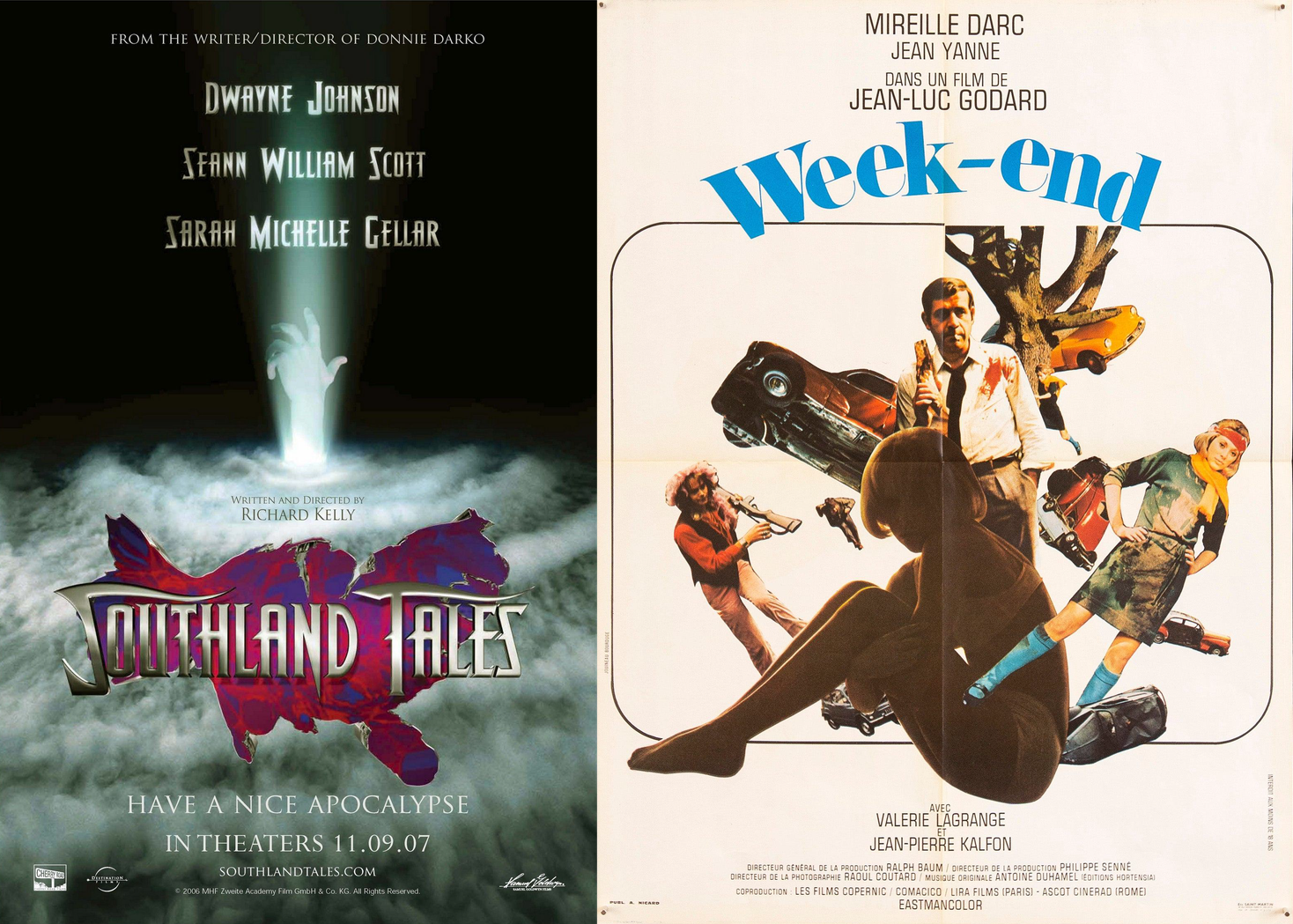
belated November 2022 Patreon round-up • LOST IN THE MOVIES patron podcast #97 coming this week: The 00s in November (& beyond) + 60s bonus & Concluding the 90s & 70s... Godard's Weekend & Southland Tales w/ guest Andrew Cook (w/ his feedback & my capsule on 300, more capsules on Bonnie & Clyde, The Graduate, Midnight Cowboy, The Swimmer, Dr. Strangelove, No Country for Old Men, There Will Be Blood, Zodiac, A History of Violence, Brokeback Mountain, Eternal Sunshine of the Spotless Mind, The Darjeeling Limited, The Dark Knight, Gangs of New York, 500 Days of Summer, The Ring, Donnie Darko, The Box, Dog Day Afternoon, The Muppet Movie, The Muppet Christmas Carol, The Witches, Heat, The Blair Witch Project, Edward Scissorhands, Election, Groundhog Day, Total Recall, Dick Tracy, archive readings of my reflections on the 00s decade, To Kill a Mockingbird, Breathless + much, much more including feedback/media/work updates) + 3 TWIN PEAKS Character Series advances & Twin Peaks Conversations podcast


The Patreon episode intended for last month will be released in four parts.
These links will be updated as the episodes are published in mid-December...

Jean-Luc Godard's Weekend (capsules on Bonnie & Clyde, The Graduate, Midnight Cowboy, The Swimmer, Dr. Strangelove, Dog Day Afternoon, The Muppet Movie, The Muppet Christmas Carol, The Witches, Heat, The Blair Witch Project, Edward Scissorhands, Election, Groundhog Day, Total Recall, Dick Tracy, archive reading of To Kill a Mockingbird + feedback/media/work updates & more)
(readings of Breathless, The Wild Bunch, Cleo From 5 to 7, Before the Revolution, The Loneliness of the Long-Distance Runner, Loves of a Blonde, Primary, 4 Days in November, Dear Brigitte, The Trip, Greetings & the Olympics + 60s/00s crossover w/ The Life & Death of Peter Sellers)

Southland Tales w/ guest Andrew Cook (w/ his feedback & my capsule on 300 + capsules on No Country for Old Men, There Will Be Blood, Zodiac, A History of Violence, Brokeback Mountain, Eternal Sunshine of the Spotless Mind, The Darjeeling Limited, The Dark Knight, Gangs of New York, 500 Days of Summer, The Ring, Donnie Darko, The Box & archive reading of my reflections on the decade)

(readings of 25th Hour, Inland Empire, earlier reviews of The Dark Knight & 500 Days of Summer, You Can Count on Me, Funny Ha Ha, Thirteen, The World, Iraq in Fragments, The Story of Marie and Julien, The Girlfriend Experience & the Olympics)


Introducing the episodes

As we spread out from August's focus on the eighties, moving into earlier and later decades in each direction, we reach two eras forty years apart. Yet they make the perfect pairing in my mind, in part because I was obsessed with the sixties during the zeroes, a time I experienced firsthand and which shaped my perceptions of the world for better or worse. In a way, these decades are a natural fit at least from the American perspective: both haunted by national traumas (Kennedy's assassination and 9/11), both dogged by quagmire wars of choice (Vietnam and Iraq in particular), both racked by technological transformations which troubled as well as enticed (inward for the age of the iPhone, outward for the epoch of the moonshot). But while the sixties gave birth to a vibrant youth counterculture and political resistance, the zeroes often felt like a dead zone to those of us living through it. This was part of my hunger for sixties media; I sought work which excavated and explored the turbulence that I could feel under the surface in the cold, sterile, repressed Bush era but which somehow always remained locked off. These were periods of deep societal alienation which expressed that alienation in very different ways.

With all that in mind what better film to focus on than Richard Kelly's Southland Tales, the sprawling, notorious follow-up to his cult classic Donnie Darko (which I discuss more briefly in this podcast, along with its own deep if different zeroes zeitgeist connections)? Set in an alternate version of 2008 but shot in 2006, it imagines an America whose War of Terror tremors have caught up with a culture that just wanted to go shopping - transforming the country into a manic police state with an active resistance and wild sci-fi developments emerging virtually overnight. Ambivalent after my first viewing years ago, I invited Andrew Cook as a return guest (after our Eyes Wide Shut episode); he's a big Kelly fan who knows the film inside and out which made for an interesting dynamic as I tried to wrap my head around it. This is one of the longest film in focus podcast segments I've ever recorded, running over an hour as we dig into both the film and the era it depicts...and re-invents as something else (perhaps the Trump era to come). This also makes for an offbeat but appropriate pairing with my sixties film in focus, the very different avant-garde apocalypse of Weekend. Here Jean-Luc Godard reaches the apotheosis and negation of his radical sprint through the decade, anticipating the chaos of May '68 months ahead of time. The selection, in which I wrestle with a film that converted me to Godard when I first saw it but which I had more trouble with this time, is one more tribute to the legendary director who passed away in September (I also focused on his eighties film Hail Mary in a previous episode).

Elsewhere, Andrew's contributions continue when I read his in-depth feedback (alongside my own short reflection) on Zack Snyder's 300, an iconic, and much more popular, film by another of his favorite directors. In capsule form, I run through a number of memorable zeroes films alongside a smaller selection of sixties classics, wrap up my viewings of the nineties (alongside a pair of quite different seventies classics), and offer updates on my recent intake and output in several mediums. Most notably, in addition to a couple archive pieces that I wanted to center and share on their own - a meditation on the power and limitation of To Kill a Mockingbird and a broad polemic expressing my frustration with the state of American culture in the Bush era - I'm also gathering a number of pieces focused on each decade into two public archive episodes, offering a survey not just of zeroes and sixties cinema, but my own perception of them at various points.

As noted in the introduction to this podcast, I am planning to wrap up this podcast approach - combining updates with film reviews and other topics in a main montly episode - after reaching #100 in February. Though there's still much content to come in those months, I can't think of a better way to begin my ending than with this particular episode(s).


Meanwhile, I've continued chugging along with my advance character studies every month - although I need to pick up the pace if I want to have the necessary backlog ready at year's end for a 2023 public debut. November's trio includes one of the third season's scummiest characters alongside one of its most heroic. Unlock these pieces for $1/month to learn more...

(become a patron to discover their identities)


And Patreon also housed my $5/month tier reward, the second part of my discussion with the director of The People's Joker (as discussed in last week's cross-post). Southland Tales comes up again too!


Podcast Line-Ups for...

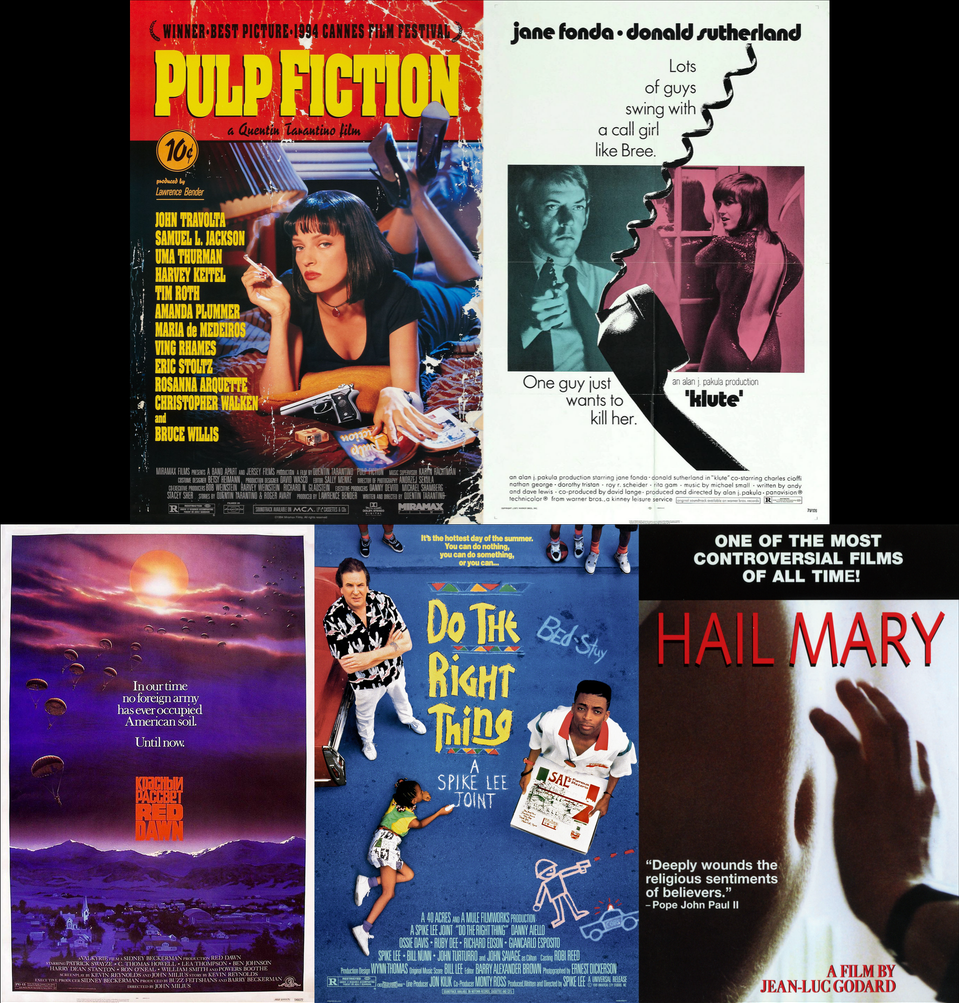
belated September 2022 Patreon round-up • LOST IN THE MOVIES patron podcast #95: The 90s in September (& beyond) + 70s bonus & Concluding the 80s ... Pulp Fiction, Klute, Red Dawn, Do the Right Thing & Hail Mary (capsules on Stranger Things, Top Gun: Maverick, The Goonies, Gremlins, Midnight Run, Scarface, Thelma & Louise, Scream, Gremlins II, Romeo + Juliet, Set It Off, The Firm, Exotica, Network, Superman, Magnolia, Saturday Night Fever, Thelma & Louise, Reality Bites, Boogie Nights, Nashville, The Pelican Brief, The Client, The Ice Storm, Dangerous Minds, archive readings of The Conversation & Enemy of the State + feedback/media/work updates including Encanto & more) + 3 TWIN PEAKS Character Series advances & Twin Peaks Conversations podcast


The Patreon episode intended for a couple months ago was released in two parts:


To represent the postmodern Gen X nineties, I easily chose Pulp Fiction - a film I'd surprisingly never really discussed on this site. Klute, on the other hand, was more a case of happenstance; I'd received the Criterion blu-ray as a gift a while ago but hadn't watched the film in a decade or more and remembered little about it. The film provides a fascinating snapshot of New York City right as the sixties/post-sixties cultural changes were taking hold alongside a phenomenal performance by Jane Fonda as a troubled, fairly independent, and deeply introspective call girl stalked by a mysterious figure. The other films I covered for the September podcast ended up being surprises - for me. I initially watched Red Dawn as something I'd mention briefly in capsule form but I ended up discussing it for much longer than that because there was so much to dig into with this Cold War relic (pairing its absurd premise with a tight, even thoughtful approach to the war film genre). Do the Right Thing and Hail Mary I did initially intend to be films in focus; after watching, I wondered if I'd have enough to say to justify that treatment but ended up elevating them from capsule status while pursuing various threads. My coverage of Hail Mary also serves as a tribute to the recently deceased Jean-Luc Godard - as will another film in focus in the November podcast.

In August, I began an approach that will take me through the end of the year: focusing on a different decade beginning with the eighties and moving in different directions. Each subsequent episode, including this one, would pair at least one full review and a bunch of capsules on films from a post-eighties decade with a review and handful of capsules on films from a pre-eighties decade (plus some more reviews/capsules finishing off the previous episode's decade). So for one of my more sprawling Patreon podcasts, I'm offering capsules on a couple dozen films from the seventies, eighties, nineties - plus the most films in focus I've ever provided in one episode. This one episode, however, is a two-parter separated by several weeks in which I waited to access some of the titles I wanted to discuss. As a result, this patron reward (intended for September) did not conclude until very late in October and I didn't get to sharing it on this site until now. (I was able to immediately catch up with a Halloween special podcast - you can listen to that one on Patreon; it will be cross-posted here soon.)


My advance character studies went up on time in September (I've already released October's round-up, which will be more officially cross-posted alongside the other reward intended for that month). For September, the trio of characters - ranked as always by screentime - included two familiar faces with new material in The Return and one entirely new entry on someone introduced in 2017. Patrons can now unlock each of these pieces...

(become a patron to discover their identities)


Finally, though I already cross-posted this conversation on its own, September saw John Thorne return to the Twin Peaks Conversations podcast; the longer part of our discussion - on his new book Ominous Whoosh and his further thoughts about Twin Peaks and especially the third season - is reserved for the $5/month tier.


Podcast Line-Ups for...

The Favorites - Masculin Feminin (#1)


The Favorites is a series briefly exploring films I love, to find out what makes them - and me - tick. Masculin Feminin (1966/France/dir. Jean-Luc Godard) appeared at #1 on my original list. Most entries are only a couple paragraphs; this one, to conclude the series, is much longer.

What it is • It is autumn, and an important election is on the horizon. Against a background of looming violence and repression, there is also a sense of determined, restless energy amongst the nation's youth, a dissatisfaction with the status quo and desire for change that is finding expression in a reinvigorated left...accompanied by absorption in a pop culture that celebrates consumption and pleasure dissociated from any sense of deeper meaning. But Masculin Feminin is not a present-day documentary and these "children of Marx and Coca-Cola" are not millennials. The country is France and the year is 1965. The film focuses on five young people - two boys, three girls (in their late teens or early twenties, living independent lives, yet still free-spirited, and uncertain, enough to seem more like "boys and girls" rather than "men and women"). Though Paul (Jean-Pierre Leaud) and his buddy Robert Packard (Michel Debord) hew to a more orthodox Communist Party line than the fashionable Maoists and anarchists emerging at the forefront of the New Left, they are definitely plugged into the zeitgeist: joining in strikes from their factory jobs, petitioning the Brazilian government, and protesting the Vietnam War and the Gaullist government up for re-election. However, they appear to be rather clueless about the youth counterculture, Paul especially (watching him "sing" Bob Dylan's lyrics is one of the more amusing moments in the movie).

The Favorites - Band of Outsiders (#34)


The Favorites is a series briefly exploring films I love, to find out what makes them - and me - tick. Band of Outsiders (1964/France/dir. Jean-Luc Godard) appeared at #34 on my original list.

What it is • Two wannabe hoodlums, Franz (Sami Frey) and Arthur (Claude Brasseur) enlist an odd, naive young woman, Odile (Anna Karina), into an attempt to rob the bourgeois family she lives with. Romantic, deadpan, perpetually bemused, the trio spends most of the film lounging (and dancing) in cafes, bantering about movies and current events, and deciding who Odile is going to sleep with. As Pauline Kael noted, it comes as a shock when they actually endeavor to commit the crime, as if one type of movie has been dropped down in the middle of another. Godard based the film on the pulp novel Fool's Gold by the Californian crime/western writer Dolores Hitchens. Thus we have another quintessential example of the French New Wave's interest in fusing taut American genre fare with a more leisurely French sensibility; Godard's early work in particular was an exemplar of this tendency from Breathless onward. The influence boomeranged back to America again, impacting the auteurs of New Hollywood down to Quentin Tarantino, who named his production company "Band Apart" - a play on the French title - and many others (while reading into the subject for this review, I even stumbled across an article comparing the dance sequence to Audrey in the diner on Twin Peaks). For such an influential film, Band of Outsiders has a mixed legacy - some consider it very minor Godard (including biographer Richard Brody and perhaps even the director himself), while others mark it among their favorites. Obviously, I'm with the latter group.

Why I like it •

The Passion of Anna K. (video essay on Jean-Luc Godard & Anna Karina)


Although I prefer to stick to the 3-a-week schedule, it looks like this week I'll be posting on Tuesday and Thursday as well, so stay tuned.

This is a video that has been on my mind for at least four years. Now I'm finally able to realize it for Fandor Keyframe.


Here is my written introduction for the non-narrated video:
Introduction

For six breathless years, actress Anna Karina and her filmmaker husband Jean-Luc Godard forged a cinematic partnership that remains legendary. Their collaboration is charted over the course of seven feature films: Le Petit Soldat (1960), A Woman is a Woman (1961), Vivre sa vie (1962), Band of Outsiders (1964), Alphaville(1965), Pierrot le fou (1966) and Made in USA (1966). Split into seven montages (one for each film), "The Passion of Anna K." traces the evolution of Karina's craft as well as her purpose within Godard's work. Each montage is bookended by Karina's first and last appearances in the particular film, a guideline that yields surprising revelations. We witness her transformation from playful ingenue to hardboiled pro. Trajectories emerge with tidal rhythm rather than the logic of a straight line: from love to disillusionment, affection to respect, spontaneity to rigor, passivity to power. (To reference a straightforward explication of the couple's relationship and collaboration, see Tyler Knudsen's complementary approach in "Godard and Karina: A Marriage on Film", which I discovered after making this).

Each montage features a simple title to guide us through the ebb and flow of this onscreen relationship.

"Muse" depicts Veronica from Le Petit Soldat as a cherished object of affection, observed externally. Concerned with capturing her vivacious aura but unable to enter her mind, the film itself eventually seems to close in on this butterfly.

"Performance" presents an actress simultaneously more enigmatic and more exposed (especially when Godard includes Karina's weepy line flub), reflecting the fact that in A Woman is a Woman Angela is the central subject rather than just a love interest.

"Discovery" echoes Vivre sa vie's structure with 12 shots (one from each chapter of the film) weaving together Godard's reverential but cold photography of Nana, the actress' growing command of gesture and expression, and the director's own narration of an Edgar Allan Poe story detailing an artist's lethal desire to capture his wife's presence in his art.

"Conversation" reflects Band of Outsiders' raw, uncertain dynamic of director and star, pushing forward from the previous film's breakthrough/dead end. Godard veers between vocalizing Odile's thoughts himself, and allowing Karina to express the character's own ideas and feelings.

"Awakening" chronicles the longing emotional distance between Alphaville's stoic hero and the brainwashed Natasha. Linking Karina's acting prowess with Godard's growing alienation from his muse, this genuinely poignant scenario climaxes with a declaration of love whose formality echoes the couple's first collaboration, suggesting lovers as strangers.

"Rupture" represents Pierrot le Fou as the collaborators' passionate, doomed final fling. Marianne's story is a brilliant microcosm of the entire Karina-Godard dynamic (from meet-cute through intense romance to disenchantment, distance, and destruction), conducted with a despairing self-awareness climaxing (for the third and final time) with the death of Karina's character.

"Freedom" serves as a surprise epilogue, using Made in USA to move beyond the previous films' framework. Karina plays Paula, a strong if also cartoonish heroine (the comic-book stylization of the film has been heightened by the montage's own design). Following a bittersweet reversal of the earlier films' climaxes, we conclude on a cautiously optimistic note, with the character, the actress, and the director all moving into an uncertain, open-ended future.

Update 2017: H. Perry Horton wrote a great little piece to accompany this video for Film School Rejects called "The Muse Matters" - check it out!

uploaded to YouTube 2017 (update 2020: but the link is currently private due to a copyright back-and-forth that I don't want to deal with again until my Twin Peaks videos are finished... as of 2022, it is public again)


The initial impetus for this idea came from Richard Brody's thorough Godard biography Everything is Cinema (2008) which connects the dots between Godard's tumultuous relationship with Karina and the stories he tells, events he depicts, and ways that he scripts and especially photographs Karina's characters. While that context isn't mandatory to appreciate the video (let alone the actual films) it certainly does add another interesting dimension to their dynamic, especially given the personal, confessional nature of Godard's filmmaking. Personally, I think Godard's and Karina's collaboration gets to the heart of movies - the interaction of an author's point of view with the larger world, a world that (especially when embodied by the human form of a performer) may push back with another identity, creating new complications and yielding unforeseen treasures.

Additional pictures follow the jump...


Fragments of Cinephilia, Pt. VI


Short thoughts on: Stanley Kramer • Howard HawksVivre sa vieAnatomy of a Murder • John FordThe Hunchback of Notre DameMouchetteYoung Mr. LincolnOrdet Jules and Jim

Here we are with another collection of IMDb comments, my sixth in about as many years (albeit my second in two months, so maybe you can expect more in the near future). As we move back in time, here we reach the period where I was really posting on those board prolifically, watching many movies and eager to share my thoughts in the primary forum I used at the time. While the previous (or should I say, chronologically, next?) round-up featured a lot of European films, here I seem to be at least as much focused on American classics. What do you think of these movies? Do you agree/disagree with my judgments? Since this was almost a decade ago, I'm not sure how frequently I concur with my conclusions, but it is interesting to revisit these earlier opinions.


Fragments of Cinephilia, Pt. V


If you're looking for further details on the Maya Deren video I just posted on YouTube, here is the blog post mentioned at the end.

Short thoughts on: Fists in the Pocket • Michael Medved • Goodbye, Mr. Chips • Russian Ark • My Night at Maud's • Claire's Knee • Paris Belongs to Us • 2 or 3 Things I Know About Her • Jean-Luc Godard • Europa '51

I've become a broken record on this subject, but I swear that within a few weeks I will have a huge backlog of Monday posts, more than I know what to do with - including a video that relates to the above picture. January is going to be very busy (although the work is mostly done, I'm waiting for other sites to cross-post). Unfortunately at this moment an interview, a guest post, at least four videos, and a podcast appearance are all waiting in the wings rather than in the bag. (That said, I did finally upload the "Cinepoem" video I blogged about back in November.) So I'm turning to one of my old standbys today, the archival of my old IMDb comments, where my online film commentary began. I've done this four times before, each time moving a bit further into the past. Some of these comments are actually almost a decade old, so be advised that they may no longer reflect my opinions (hell, I even left in some of the typos!). In many cases they represent my first engagement with the work in question, as a 23-year-old hungry for as many cinematic experiences as he could devour.

In fact 2006-07 was in many ways a peak viewing period for me; I was falling back into cinephilia after many years of caring more about music than movies. Most of the topics below relate to mid-century European films, particularly French filmmakers like Rohmer, Rivette, and Godard. Some of these films I loved, some I did not, but all of them seemed to me worthy of discussion - and still do. I would like to hear your thoughts as well, if you've seen these films (and if you haven't, I hope this serves as encouragement). Did Fists in the Pocket surprise you? Is Europa '51 too didactic? Does Goodbye Mr. Chips need a stronger narrative throughline? Is Rohmer subtly encouraging us to criticize the protagonist of Claire's Knee? Is Godard an incredibly consistent genius, an emperor with no clothes, or a hit-and-miss experimenter? Let me know what you think, and I'll let you know where I do and don't agree with the old me.

(I originally used a different image, culled from a Wonders in the Dark post several years earlier, but I replaced it with this one in 2017 when I cross-posted that Wonders piece on this site.)

Lost in the Pages: The books I read, July - December 2013


This is the second time I've posted a list of the last 20 books I've read, complete with snapshots of the covers and samples from the text. The last time was in June, and it covered the same number in only three months. For whatever reason, I've become a much slower reader! Since the spring, I've been reading four books at a time - fiction, nonfiction, film-related, and finally something tied into screenplay ideas I'm working on. The majority of titles below fell into that fourth category - the Kafka- and Grail-themed books, the Lowry novels, Tommyknockers, and the Marlowe novels all bore on story ideas I was working on throughout the year, with disappointing results though the work continues. In the New Year, I'm hoping to just stick to one book at a time. We'll see; my eyes are often bigger than my literary stomach.

Movies I watched in 2012


Capsule reviews of 15 films viewed since January 2012

(This post originally went up on Monday morning, but was quickly bumped. I fear it's been overlooked since, so I'm re-posting it now; I'd really like to hear back from readers on what they thought of these particular films; also I'd like to highlight "Who's Killing Cinema - and Who Cares", my response to the fascinating David Denby article; it went up middle of Saturday night because I couldn't wait, but deserves a bump now too...)

Histoire(s) du Cinema • The Long Day Closes • Madchen in Uniform • Me and My Gal  Melancholia • North Shore • Road to Morocco  Savages • Shoah • The Story of Film • Super 8   Tangled  Tanner '88 • Ways of Seeing • The Wind in the Willows

Fragments of Cinephilia, Pt. III


Short thoughts on: The Honeymoon KillersForbidden GamesTout Va Bien & Masculin Feminin Moby Dick • Robert Bresson • Yasujiro Ozu and Early SpringMy Dinner with Andre • Stanley Kauffmann • Sweet Movie

As I prepare a batch of fresh posts for the fall (a dozen new reviews are already written, with dozens more on the way), here are some more oldies but goodies. These sporadic notes and musings were originally comments on IMDb. Many of these thoughts led to longer conversations, and you can click on the date to see the original thread. Some of the responses are pretty interesting; in fact under the final fragment, on the extremely controversial Yugoslavian film Sweet Movie, I actually included some samples of the ensuing discussion (most of which I didn't see until now). And if you've viewed the film in question, I'd be really interested in your own opinion on the matter.

(See here for Pt. I and Pt. II of this archival project.)

Breathless


This is an entry in "The Big Ones," a series covering 32 classic films for the first time on The Dancing Image. There are spoilers.

Patricia is pregnant. Like the virgin mother-to-be in Hail Mary or the pop princess of Masculin Feminin contemplating a gruesome abortion (and unlike the desperate housewife in A Woman is a Woman), this young American has been knocked up - but her decision remains more ambiguous than that of the other two Godard heroines. The situation is doubly appropriate. For one, Breathless was probably the film, more than any other, which birthed the new cinema to dominate the next decade; for another, this is a movie uncertain and uneven in its style and story. Yet just as Patricia's fickleness and hesitation charm her beaux, so the movie's ragged, freefloating style impressed and excited an entire generation and held the coming epoch in thrall.

At times, one can have trouble figuring out why. Jean-Luc Godard is a brilliant filmmaker, but the intensely focused experimentalist who helmed Masculin Feminin or Weekend, wild yet precise in the manner of a jazz improvisationist, has not quite found his groove yet in Breathless. For better or worse, this remains the film's distinctive charm and provides it with the uniqueness that helps it to remain, to this day, the most popular and celebrated film in his oeuvre. It has an amiable looseness that would tighten up before long, a relaxed luxuriance best manifested in the captivating bedroom scene in which the characters' facades drop a bit and we glimpse the uncertain yet somewhat unconscious kids behind the masks.

In Praise of Love (Best of the 21st Century?)


#95 in Best of the 21st Century?, a series in which I view, for the first time, some of the most critically acclaimed films of the previous decade.

Let me take a moment to clear up some misunderstandings about the “Best of the 21st Century?” title. The question mark is there for a reason; this is not my canon for the decade, but rather the collective critical canon as compiled by the website They Shoot Pictures Don’t They?. A talented critic named Kevin B. Lee started an exercise years ago in which he moved through the website’s all-time canon, watching and discussing the films he had not yet seen. His imaginative approach is to create video commentaries for each film – while my own work here is nowhere near as ambitious, I’m taking a similar approach, writing about each film on the 21st Century list that I haven’t seen. Key point: that I haven’t seen, so I have no way of knowing, going into a viewing right before a review, if I’ll like the movie in question. I’ve seen a few responses in the past saying something to the effect of “Can’t wait to see your other favorites” or “Do you really think this is one of the best of the whole decade?” Hopefully this introduction clarifies my approach.

I bring this up because otherwise some of you might be confused by what follows. So far in this series, I’ve been generally positive about the films discussed even if dissenting from the acclaim in some regards (which was already too much for some). This time I have to dissent from the apparent consensus altogether; by and large, I didn’t care for In Praise of Love, so for me that response to the question mark of my series title would have to be a “No.” It’s ironic that this film would be the one to warrant that response, since Jean-Luc Godard is one of my favorite directors of all time. Yet even in his prime, I think he could be hit-and-miss, often within the same film. We take the lows of Godard because the highs are so exhilarating; unfortunately in Praise, the latter are scarce and the former all too abundant. Though some have seen it in exact opposite fashion, I find the movie gets much better as it goes along, leading finally to a rapturous conclusion, but it’s too little too late to save the movie as a whole. The meta-questions on Godard’s old work vs. his new are most creatively addressed by Bob Clark in his “the-best-way-to-criticize-a-film-is-to-make-another-film a-video-gameresponse to Film Socialisme last week. As for In Praise of Love, I come not to praise but to bury. So proceed below the fold…

"From now on, continuity shots are out": Reading Godard


Originally published exclusively on Wonders in the Dark in 2010, this was only re-located to this site in 2017.

In what may become an ongoing gesture, I'd like to point your attention to an interview conducted nearly 50 years ago. In December 1962, Cahiers du cinema spoke with their alumnus Jean-Luc Godard, who in just about three years had become a prolific and world-famous filmmaker. Many of you have probably read this, but it's worth re-visiting, because of the 50th anniversary of Breathless (A bout de souffle), because we've been discussing relevant issues here (from Godard's method to the relationship between filmmaking and criticism), and because it's always fun to read Godard. Hopefully a lively discussion will ensue.

I was going to transcribe the piece, but luckily it is excerpted in Google Books, and the first page is here:

"Jean-Luc Godard: 'From Critic to Film-Maker': Godard in interview (extracts)"

Just to kick off some conversation, here are a few prime quotes:

"I had written the first scene [of A bout de souffle]...and for the rest I had a pile of notes for each scene. I said to myself, this is terrible. I stopped everything. Then I thought: in a single day, if one knows how to go about it, one should be able to complete a dozen takes. Only instead of planning ahead, I shall invent at the last minute. If you know where you're going it ought to be possible. This isn't improvisation but last-minute focusing. Obviously, you must have an overall plan and stick to it; you can modify up to a point, but when shooting begins it should change as little as possible, otherwise it's catastrophic."

"Already in Le Petit soldat, where I was trying to discover the concrete, I noticed that the closer I came to the concrete, the closer I came to the theatre. Vivre sa vie is very concrete, and at the same time very theatrical. ... I started from the imaginary and discovered reality; but behind reality, there is again imagination.
Cinema, Truffaut said is spectacle - Méliès - and research - Lumière. If I analyse myself today, I see that I have always wanted, basically, to do research in the form of a spectacle. The documentary side is: a man in a particular situation. The spectacle comes from when one makes this man a gangster or a secret agent."

"American scriptwriters, too, simply dwarf even the better French writers. Ben Hecht is the best scriptwriter I have ever seen. In his book The Producer, it is extraordinary to see how Richard Brooks manages to construct a very fine, coherent script based on the Red Sea story which had been suggested to him. The Americans, who are much more stupid when it comes to analysis, instinctively bring off very complex scripts. They also have a gift for the kind of simplicity which brings depth - in a little Western like Ride the High Country, for instance. If one tries to do something like that in France, one looks like an intellectual."

Godard/Nixon or, Why I Must See This Movie


From Everything is Cinema, Richard Brody's biography of Jean-Luc Godard, which I'm currently reading:
"As the film [King Lear] inched forward, Godard thought of recruiting Richard Nixon for a '"distancing operation," a sequence of about twenty minutes during which Nixon and [Norman] Mailer would discuss "power and the loss of power".' Godard offered Nixon $500,000 for one day of shooting. Not surprisingly, Nixon did not respond."
Oh, how I wish he had.

But there's more:

Le Petit Soldat

Le Petit Soldat sits uncomfortably in Jean-Luc Godard's oeuvre. Supposedly, anyway. Godard is supposed to be many things, few of which actually relate to why I love the director and consider him among my favorite filmmakers. (I think he and Spielberg may be my co-#1's. They hate each other; or at least Godard hates Spielberg, but the American is just as misunderstood in his own way as the Frenchman. Peter Greenaway once said that they both make home movies. I'm not sure Spielberg still does, yet there's hardly a better way to describe E.T. and Close Encounters. But that's another post - on another director who, like Godard, I have remarkably not yet discussed on this blog). Back to Godard: Le Petit Soldat is supposed to sit uncomfortably because it's "political" and serious-minded, dealing with the Algerian war and such (it was banned as a result, another reason it can't really find its place in the Godard canon: by the time it was released, it was already a relic of Godard's ever-shifting aesthetic past). But it's also romantic, playful, and remarkably uncertain - not usually a trait one associates with Godard, although perhaps one should.

Search This Blog