Lost in the Movies: christmas movie
Showing posts with label christmas movie. Show all posts

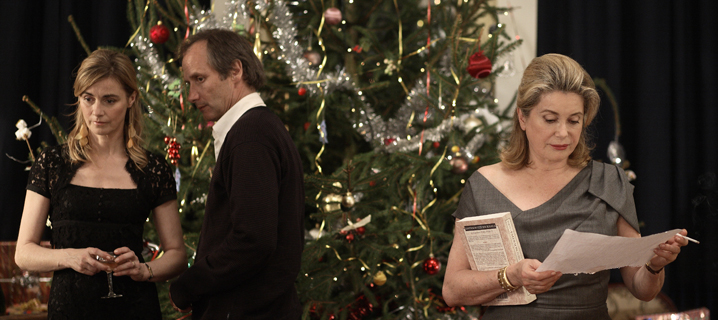
December 2022 Patreon round-up • LOST IN THE MOVIES patron podcast #98: Holiday Special / Continuing the 60s... The Apartment (capsules on How the Grinch Stole Christmas, Rudolph the Red-Nosed Reindeer, A Charlie Brown Christmas, 00s archive reading of A Christmas Tale, Andrew Cook's further reflections on 300 & 00s cinema + my plans for the 3 big Twin Peaks projects, feedback/media/work updates & more) + 3 TWIN PEAKS Character Series advances & Twin Peaks Conversations podcast


As with Halloween, I'm taking a breather between massive omnibus decade studies for a slimmer holiday-themed episode that still maintains the latest decade theme. In this case, I'm continuing my sixties coverage by exploring a favorite Christmas/New Year's comedy - Billy Wilder's iconic The Apartment - in a full review alongside shorter capsules on classic cartoon specials from the era. I'm also diving deep into my plans for the coming week and (depending how that goes) year. And I received some great written feedback from last month's guest, who has more thoughts to offer on Southland Tales and 300 alongside a number of other zeroes films I discussed in that episode.


To wrap up the year, I'll be offering three more character studies just for patrons (these entries aren't ready yet at the time of this cross-post but will be linked here as soon as they are). Behind the scenes, I'm hoping to plunge deep into a backlog over the next week so that I can finally justify prioritizing this series for public release come 2023. Patrons will continue to receive access to full pieces at least a month ahead at that point.

(become a patron to discover their identities)


December's Twin Peaks Conversations was cross-posted on Patreon a week ago but here's the official $5/month reward on its own. The second part of the discussion runs fifty-two minutes and dives deeper into the details of my guests' unique experiences with Twin Peaks and Neon Genesis Evangelion (one of them started with The Return, the other with the "Rebuild" films) - and what we each see as connections between the two works.


Podcast Line-Up for...

Patreon update #51: Before Sunset (+ Twin Peaks season 3 blu-ray special features, It's a Wonderful Life, 2000s politics: Bush administration/Obama campaign & more)


At the end of Before Sunrise, Jesse (Ethan Hawke) and Celine (Julie Delpy) hatch a plan to meet on the six-month anniversary of their rendezvous. Well, six months ago I cross-posted my podcast review of Before Sunrise on this site so here we are: the characters are reunited! Of course, it took them a bit longer than it took us - nine years to be exact. Choosing Before Sunset as my last film in focus for 2018 not only serves as a sequel to my earlier episode but also a continuation of my month-to-month Ethan Hawke series, which began with him as Dead Poets Society's shy young prep school student in early autumn and will conclude with him as First Reformed's fanatical pastor in the dead of winter. By the way, it won't take nearly as long for us to reach the next chapter in Jesse's and Celine's ongoing relationship; my plan for January is to review a Hawke/Richard Linklater double feature of Before Midnight and Boyhood.

Indeed, this is my last weekly episode of Lost in the Movies for the forseeable future; from now on, a somewhat beefed-up podcast will drop once a month for all patron tiers. I will also be debuting a Twin Peaks rewatch/introcast podcast for the second tier (the first tier will get access to each episode six months after they premiere, and eventually - years later - I will publish the episodes as a weekly public podcast). I'll have more information in upcoming Patreon updates, because I still plan to write about what I've been up to and link what's available every week on this site. This will include some form of wrap-up/look back at the past year, which not only saw extensive work on Patreon and in-depth retrospective activity for my tenth anniversary, but also my busiest year ever on this site, with over two hundred posts.

For now, in addition to the Before Sunset review and a more detailed announcement about 2019, I (finally!) dive into the blu-ray special features for Twin Peaks: The Return (er, Twin Peaks season 3, er, Twin Peaks: The Limited Event Series); finish my viewing of the CNN documentary series The 2000s, which leads to some thoughts on the previous decade's political landscape; catch up with the last batch of Twin Peaks feedback from the past few months; and conclude with an Opening the Archive entry on the Christmas movie, although of course it's much more than just that.

Thanks for following along this year, and see you again soon.


Line-up for Episode 50

INTRO

ANNOUNCEMENT FOR 2019

TWIN PEAKS REFLECTIONS: Twin Peaks season 3 blu-ray special features

FILM IN FOCUS: Before Sunset

OTHER TOPICS: CNN's 2000s documentary - Mission Accomplished/Quagmire/Yes We Can, NY Times Magazine Afghanistan article, podcast recommendation

LISTENER FEEDBACK: Hands in Twin Peaks, Fire Walk With Me book interview, is the Evolution of the Arm a good guy?, The Return's connections to seasons 1 & 2, Maddy's murder and Laura's spirit, podcast recommendation, Red

OPENING THE ARCHIVE: It's a Wonderful Life

OUTRO

Patreon update #50: Requiem for a Dream (+ The Blue Rose Magazine in 2018, The Green Book, A Charlie Brown Christmas/It's Christmastime Again, Charlie Brown, Sherilyn Fenn in Twin Peaks season 3, who is Red? & more) and preview of Mary Shelley review


Christmastime is (almost) here with the first of two archive pieces paying tribute to the holiday. This one doubles up a couple Charlie Brown Christmas specials, one from the sixties and one from the nineties, to find out what they tell us about changes in both pop culture and Peanuts canon across the years. I also reflect on Requiem for a Dream over the span of nearly two decades to revisit the early millennium's zeitgeist, much as I did with The Social Network last week. To continue this running theme of cinematic historiography, yesterday's biweekly preview explores how a Mary Shelley biopic straddles the eras of Reason and Romance (which bleed together more than we sometimes remember).

For "Twin Peaks Reflections" I survey a great year of issues for The Blue Rose magazine (including an amazing interview with Sheryl Lee), other topics include The Green Book and Richard Ojeda, and as always there's a ton of compelling listener feedback on Twin Peaks (this week perhaps a bit more than usual).

Stay tuned for one more podcast in a couple days, my last of the year before I take a revamped approach in 2019.


Line-up for Episode 49

INTRO

WEEKLY UPDATE/Patreon: 2nd tier biweekly preview - Mary Shelley

TWIN PEAKS REFLECTIONS: The Blue Rose Magazine in 2018

FILM IN FOCUS: Requiem for a Dream

OTHER TOPICS: The Green Book, Conspiracy Theory, Richard Ojeda, podcast recommendation

LISTENER FEEDBACK: The Owl Cave ring and Annie's nurse, Sherilyn Fenn in season 3, did Lynch care about the Audrey/Cooper romance?, who is Red?, is Audrey dead?, "Mike is the man" & Halloween

OPENING THE ARCHIVE: A Charlie Brown Christmas & It's Christmastime Again, Charlie Brown

OUTRO

The Favorites - It's a Wonderful Life (#10)


The Favorites is a series briefly exploring films I love, to find out what makes them - and me - tick. It's a Wonderful Life (1946/USA/dir. Frank Capra) appeared at #10 on my original list.

What it is • You may know this one: George Bailey (James Stewart) dreams of escaping his small town in upstate New York. Family crises, business troubles, and true love (however he might try to resist it) foil his plans for college, world travel, and a grand career. Threatened with financial catastrophe and public humiliation on Christmas Eve just after World War II, George contemplates suicide but an angel named Clarence (Henry Travers), who has been told George's life story in a series of "flashbacks," intervenes to show him what life in Bedford Falls would be like if he'd never been born, teaching him to be thankful for what he has and proud of what he's accomplished. Well...my Favorites list has hopefully been a healthy mix of under-the-radar recommendations and familiar classics. Few are more familiar than It's a Wonderful Life, certainly as celebrated a movie as Gone With the Wind or The Wizard of Oz though its trajectory is closer to the latter than the former - forgotten for years before television gave it second life. In fact, more than almost any other film in the history of Hollywood, It's a Wonderful Life has become synonymous with a particular ritual - and not just any ritual, but one of the most important in American culture. This has become the Christmas movie since PBS began airing it as holiday counter-programming in the seventies. In the process, attention settled on the "see what life is like if you'd never been born" high concept and especially the exuberant setpiece closing the movie with a joyous bang, all "Auld Lang Syne" and bells ringing on Christmas trees. It goes so well with eggnog and heapings of Christmas dinner crowding the coffee table in front of the TV, carols competing for attention from nearby stereos, and relatives gathered together in a living room, their chatter overwhelming the dialogue onscreen. Perhaps because of this taken-for-granted familiarity, or the fact that the Greatest Generation who experienced its timeline is now in its nineties, or simply because the black-and-white studio style can no longer claim the universality it once held, It's a Wonderful Life's dominance has become more precarious in recent years. More purely light-hearted fare like A Christmas Story (also set in the forties, but shot in color in the eighties) have threatened its perch, as have hundreds of other Christmas films aired on hundreds of other channels (and thousands available on platforms like Netflix) - long gone are the days when families had to select from only a few options for holiday party TV. I think it would be a pity if It's a Wonderful Life did slide back into quasi-obscurity, a favorite among cineastes but unappreciated by the wider public. It's much more than just a feel-good Christmas movie, but that status allows it to slip a deeper perspective and more ambitious approach into a diet of December fluff.

Why I like it •

The Christmas Day Nostalgia Marathon (#WatchlistScreenCaps)


Today, December 25, I celebrated Christmas with a viewing marathon. There was a definite theme to the lineup: not only were the first eight movies (well, six movies and a TV episode) holiday-themed, most of them I knew well from childhood (the two exceptions were based on stories or characters I was very familiar with). In many cases, this was my first re-viewing as an adult.

In keeping with the tradition of previous viewing marathons, all films viewed digitally appear full-size while TV episodes, VHS viewings, and broadcasts (i.e. things I usually wouldn't screen-cap if I wasn't being so comprehensive) appear in smaller images. Visit my #WatchlistScreenCaps archive for a full line-up of everything I've watched this year.

Links lead to pieces I've written on the given film. Merry Christmas (or what's left of it), Happy Boxer's Day, and a Happy New Year.

It's a Wonderful Life


This is an entry in "The Big Ones," a series covering 32 classic films for the first time on The Dancing Image. There are spoilers.

If there's a more American film than It's a Wonderful Life, and a more American hero than George Bailey, I don't know it. No other film more comprehensively or powerfully captures the common American experience between the wars - that is to say, between Armistice Day and V-J Day - and no other film creates a richer dialogue between the dreams and ambitions that motivate us (then and now), the comforts and camaraderie that soothe us (perhaps then more than now), and the responsibilities and burdens we feel toward our families and communities (now more essentially than ever). It is timeless but it is also very, very much focused on its own time (or rather, a time just passed), a quality that gives It's a Wonderful Life tremendous strength rather than dating it. By featuring popular songs and political references, by tying the daily life of Bedford Falls into the greater drama of the nation, it provides us with a moving portrait of our parents' or grandparents' experience; by not being afraid to situate itself in a particular moment in history, the movie shows us the universal in the particular. Besides, It's a Wonderful Life has never been timelier, maybe not even when it was released, amidst a postwar era waving goodbye (and good riddance - no wonder the film struggled at the box office) to the years depicted onscreen.

Remembering the Movies, Nov. 5 - 11

Every Friday, we look back at films released 10-100 years ago this week.

Halloween's over (with one exception), time for...Christmas? Shopping malls aren't the only ones to receive their holiday spirit a little early; this week Remembering the Movies features two Yuletide films right up front, plus a film set in wintry Alaska, just to get you yearning for those chestnuts round an open fire. Several great directors make an appearance below - Luis Bunuel, Tex Avery, David Lean, the ever ubiquitous D.W. Griffith, among others. Yet amongst the classic contenders I chose to highlight Home Alone above. And why not? Though I can't say it "holds up" (based on the reputation established when I was 7) it still fuels my nostalgia for a time when I was just starting to juice my now-defunct moviegoing jones. For more on that era, visit "They Once Were Coming Attractions...", my tribute to childhood cinematic excursions. For the rest, pack up your sleigh, and push it over the precipice (jump) below...

A Christmas Tale


Despite its cheerful Yuletide title – which is in fact so warm and snug as to initiate Grinch or Scrooge-like reactions post-haste – A Christmas Tale displays all the surface signs of being a cynical, darkly comical take on the holiday. The director, Arnaud Desplechin, has already made a specialty of family dysfunction, asocial charm, and passive-aggressive relationships in his 2004 film, Kings and Queen. Matieu Amalric, who played the slightly mad musician in that one, returns as another difficult personality – this one possibly more sane, if no less aggravating. In this round of Desplechin’s friendly feud with the nuclear family, Almaric plays Henri, the middle child of grand old eccentrics Abel (Jean-Paul Roussillon) and Junon Vuitton (Catherine Deneuve). Henri is returning home (to Roubaix! the opening credits inform us, exclamation point and all) for his first holiday celebration in years – ever since his older sister banished him from her sight. And that’s only one crumbling cornerstone of the family edifice: death, illness, depression, infidelity, age-old scars and new wounds alike, are all ingredients in the tastily rancid eggnog Depleschin serves up with delight. Ultimately, given the nuggets of dysfunction stuffed into the film’s bulky stocking (and A Christmas Tale runs for 2 1/2 hours), it almost goes without saying that the movie has, more or less, a happy ending.

A Charlie Brown Christmas & It's Christmastime Again, Charlie Brown!

Admittedly, it isn't exactly "Christmastime again." Not even if you count all twelve days (I think they start after, not before, the 25th, right?). I had originally hoped to get this post in under the Yuletide gun but eventually let the festive dancing of Fred and Ginger (that's a Christmas-sounding name, isn't it?) suffice as my last official post of the year. But as I like to review new additions to my home DVD collection, I only put my thoughts on the Charlie Brown twofer (which I bought on the eve of Christmas Eve) on the backburner, instead of in the trash. Now that The Dancing Image is sputtering back to life after a long holiday-inspired break, the time has come to put pen to paper, so to speak. If Charlie Brown's original Christmas is your thing (and it is for all of us) check out these three good write-ups on the 1965 TV special: Screen Savour's historical, Filmicability's personal, and Bright Lights After Dark's religio-cultural. As for myself, what fascinated me most about my new DVD was the contrast between the classic '65 special and the rather paltry "sequel", which was aired in 1992.

The differences between the two films are not only aesthetic and thematic but cultural-historical, personal (as far as Charles Schulz is concerned), and even musical. First, the music. Vince Guaraldi is credited with the score for both holiday specials, but the '92 music was recorded and arranged by David Benoit, whose taste seems to run more in the smooth jazz direction. Whereas Guaraldi's original soundtrack (which may be both the best original soundtrack and best Christmas album of all time) was spare, melancholy, lightly joyful, and quietly warm, Benoit ladles on the sax styling and keyboard backdrop and the result is more akin to a jaunt through the shopping mall, muzak playing on the sound system, than it is to hovering around the stage in a beat-up little jazz club in a small, sleeping city on the eve of Christmas (the effect of the original). 

Search This Blog