Lost in the Movies: star wars
Showing posts with label star wars. Show all posts

Leading up to The Clone Wars: 5 "prologue" entries, starting tomorrow


My previous TV entry was on Star Trek, which makes a nice segue into the similarly titled, similarly legendary, yet radically different world of Star Wars. Like the Trek entry, this week's posts will essentially be standalones, attached to a larger viewing diary yet not covering actual episode of the respective series. However, in this case there are enough pieces - five in all - to justify an introduction.

The Clone Wars, Lucasfilm's six-season prequel-era animated series (which tended to bridge some of the thornier divides within the ever-more-divided Star Wars fandom) had quite a long build-up. In terms of real-world chronology, that includes six feature films over thirty years, two trilogies that - along with the massive (and now largely defunct) extended universe - laid the groundwork for the show's bustling galaxy, mythology, and ensemble. In these "prologue" pieces, however, I'll be focusing mostly on in-world chronology, and thus limit myself to the first two prequel films (The Phantom Menace and The Attack of the Clones) whose stories precede the series, the earlier cel-animated series by Genndy Tartakovsky which overlaps with it (and introduces many of its characters), and the CGI feature film which essentially serves as its theatrical pilot. Finally, on Friday, I will publish a conversation with Bob Clark, who has been nudging me to cover this series for many years.

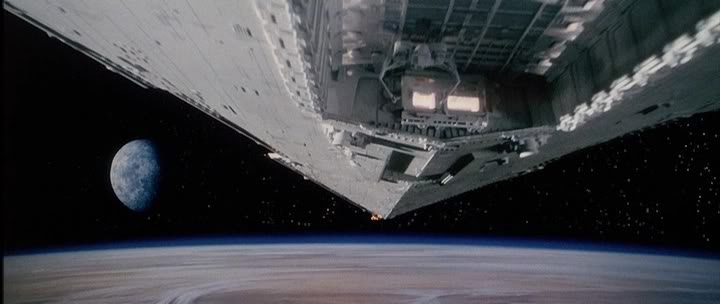
None of this week's pieces will be in my conventional viewing-diary format (story/reaction, ideally a paragraph on each, although Mad Men's first season stretched those boundaries by its end). They're a bit more free-range than that. I have also started work on the larger series (the above image is from the debut episode) but those entries probably won't appear on the site until next year or later. When they do, each season, perhaps each story arc will wrap up in another discussion with Bob.

See you tomorrow, and may the Force be with you...

Patreon update #1: The Last Jedi & more


Every Saturday from now on, I will offer an update of my Patreon activities. The update will cover the weekly podcast episode, Patreon blog posts, and any other news and information. The content will be accessible to anyone who becomes a patron, while these descriptions will keep regular readers abreast of my activity over there, in case they are thinking about joining, or if they are just curious to know what's going on.

This week, for the only time in the foreseeable future, I'm releasing the intro to the podcast as an illustrated clip on YouTube; it also doubles as an explainer for the format and the Patreon in general. You can hear/view it here:


This week I kicked off my new account with the first episode of my new podcast, and a few blog posts (one to go with the podcast, another a welcome, and another a preview). The Film in Focus this week is The Last Jedi; with the surprising number of second-tier patrons who joined up right out of the gate (meaning they can select future films for me to discuss) it looks like this may be the last one I pick myself, and possibly the last time I just focus on one film in an episode.


Here is the line-up for the podcast episode (the timestamps can be found in the blog post):

Intro
*
Brief background for Lost in the Movies
*
Explaining weekly podcast format
*
Welcome to the Patreon
*
FILM IN FOCUS: The Last Jedi
*
TWIN PEAKS REFLECTIONS: Difference between old & new Twin Peaks, Mark Frost's contributions
*
WEEKLY UPDATE (will usually be after intro)/recent posts: Secret History & The Return, video announcement
*
WEEKLY UPDATE/works in progress: Patreon, illustrating the Twin Peaks character series, Breaking Bad season 1, Hill Street Blues season 2, Fire Walk With Me & European "art films", Fellini montage video
*
*skipping additional thoughts/listener feedback this week*
*
OPENING THE ARCHIVE "Look Ma, I'm Blogging!": becoming a movie fan in 1990 (VHS collection/movie monster books/Home Alone-Kindergarten Cop/Edward Scissorhands), first weeks of blogging (July - August 2008), this week's highlight: The Brave Little Toaster

Sci-Fi Countdown - Star Wars (CinemaVille discussion w/ Bob Clark for Wonders in the Dark)


Bob Clark's final podcast for the Wonders in the Dark sci-fi countdown covers the first Star Wars film, a/k/a Star Wars Episode IV: A New Hope (1977). I made another guest appearance. We talk about the film's unique legacy, connection to the larger saga, and other matters in the seventy-minute-long episode.

The Favorites - Star Wars (#17)


The Favorites is a series briefly exploring films I love, to find out what makes them - and me - tick. Star Wars (1977/USA/dir. George Lucas) appeared at #17 on my original list.

What it is • Every touchstone of pop mythology has been thrown into the pot and brought to a boil: a poetic/kitschy opening ("A long time ago in a galaxy far, far away..."), spaceships rumbling overhead, lasers blasting against a starfield, a trek through the desert, an isolated farm, a princess, robots, aliens, a bar crowded with outlandish characters, a black-masked/cowled supervillain, a shrewd old mentor, a wisecracking outlaw, a republic transformed into a ruthless empire, aerial dogfights, shootouts, sword fights, a sneaky rescue operation, heroes disguised as villains, a daring swing across a chasm, a descent into a monster-haunted pit, a fearsome weapon, a noble ragtag resistance, a mystical religious code. The pleasure of Star Wars derives from two sources: the delightful eclecticism with which it gathers together its diverse inspirations, and the awesome clarity and precision with which these disparate elements are coalesced into a unified whole. Star Wars fuses the spirit of backyard play with careful craftsmanship and the result is unlike anything before or since - despite how often its accomplishment has been imitated (most recently by a new Star Wars film, shorne of its creator but still in the thrall of his creation). The story? Luke Skywalker (Mark Hamill) lives on the spot "furthest from the bright center of the universe," the desert planet Tatooine, but the war between the Empire and the Rebellion comes to him in the form of two droids, C-3PO (Anthony Daniels) and R2-D2 (Kenny Baker) who arrive with a secret message from Princess Leia (Carrie Fisher) for the nearby mysterious recluse Obi-Wan Kenobi (Alec Guinness). Escaping his home in the Millennium Falcon, piloted by Han Solo (Harrison Ford) and Chewbacca (Peter Mayhew), Luke will attempt to rescue Leia from the Death Star, while Obi-Wan must face his former pupil turned dark lord, Darth Vader (David Prowse, voice by James Earl Jones). But you probably already knew that. The context? That you certainly know: Lucas, fresh from the popular rock'n'roll nostalgia of American Graffiti and the dystopian sci-fi nightmare of THX-1138, wrote an ambitious, nearly incomprehensible story outline and dedicated himself to realizing its sprawling vision with a makeshift special effects operation and a troubled British production tepidly supported by Twentieth Century Fox. Nothing much was expected (except perhaps a dangerous flop) before the film debuted in 1977 and changed movie history forever, following the lead of The Exorcist and Jaws by cementing box-office blockbusters as Hollywood's mainstay - and identifying the blockbuster with fantastical content, an action-oriented tempo, and a very youthful audience. The legacy? Beyond that broader impact, the film spawned a vast universe of narrative spin-offs, playful merchandise, and three phases of film franchises. First, the two sequels (1980 and 1983) continued this film's story, deepening and darkening until it became an Oedipal struggle between father and son. Second, the three prequels (1999 to 2005), further darkened and expanded the universe while revolutionizing digital effects; this trilogy alienated many fans of the original series from Lucas until the filmmaker was a pariah within the community he himself had invented. Third, an open-ended series of films (2015 to, well, as long as Disney can make money), probably one a year, will continue the story but also expand around its margins with stories taking place in between existing films, focusing on tangents and side characters until no one narrative can define Star Wars anymore. The world of Star Wars has escaped the bounds of its creator, its original audience, the cultural moment that gave it birth, and the very first film phenomenon that initially seemed like a sui generis standalone marvel, not the kickoff of something much bigger. That Star Wars - not Episode IV: A New Hope but simply "Star Wars" - can become obscured by its own legacy, but that's the Star Wars I am here to celebrate. Part Pop Art, part pulp fiction, very much an auteurist project, Star Wars remains startlingly original if you can see through the haze: the home movie as big-screen epic.

Why I like it

Lucasfilm Lost


Which is the bigger movie news? That a Star Wars: Episode VII is in the works? Or that the Disney corporation will be making it, having bought out Lucasfilm on Tuesday? Let's begin with that first story. What will Episode VII cover? Conceived as Anakin Skywalker's rise, fall from grace, and eventual redemption, where could the Star Wars narrative possibly go once the fallen Jedi's corpse goes up in flames on the forest moon on Endor? I've long thought that the most compelling angle would be to show the Rebel Alliance, having finally and impossibly brought down the Evil Empire, becoming something of an Empire itself. Perhaps a new resistance could emerge, radical, indignant, making the former Rebels question who they have really become. Certainly such a storyline would have historical precedent - how many revolutions have turned into regimes resisting the next revolution? But it would also neatly reflect the Star Wars saga itself, by which I mean not the movies onscreen but the grand ascension of a unique, original myth into industry gamechanger, pop cultural icon...and big, billion-dollar business.

'Neath the Marquee Moon 1976 - 1980 • "32 Days of Movies" Day 23


Twenty-third chapter in "32 Days of Movies", an audiovisual tour through 366 films
(2015 update: included Vimeo embed after the jump)
'Neath the Marquee Moon

A decadent chapter for a decadent decade, but whereas disco, leisure suits, and cocaine excess dominated late seventies pop culture, these clips have a bit more class. Okay, coke features a couple times, but so do lush color (and even lusher black-and-white), artfully nightmarish imagery, and killer music. There's an otherworldly feel to today's selections, from the blue lasers of a final concert to the surreal, almost lunar landscapes of two different warzones to the Manhattan skyline twinkling like an earthbound Milky Way...indeed the (original, thank you) scene with an actual alien may be the least far-out of all. Though we only see the Moon once (or twice, if you want to be clever about it), it seems to exert a tidal pull on the zeitgeist, at least as represented here.

(continued below, along with NSFW & spoiler warnings)

The Fall and Redemption of Anakin Skywalker

A story in pictures

This piece is composed entirely of images from the six Star Wars films and is a tribute to the saga's central mythology. For a more critical and analytical piece on the movies, please visit my Notes on the Star Wars Saga, which has also been posted this morning.

Notes on the Star Wars saga


For a purely affectionate visual tribute to the films, please visit The Fall and Redemption of Anakin Skywalker, which will be posted an hour after this essay.

I grew up with Star Wars, like many others in my generation, and went through a period of obsession with the original trilogy, about four years before the prequels were unveiled. Aside from the entertainment value, and aside from the verve and imagination of the films themselves, I was fascinated by both the mythic scale of the storytelling and the devotion to detail that George Lucas displayed. In the latter case, I loved the sense of place and character cultivated by Lucas, so that an entire world seemed to continue offscreen. I also enjoyed tracking down the various backstories in the spin-off media, or else imagining these backstories on my own. As for the mythology, this was the powerful framework within which the films and the spin-offs could doodle: the Star Wars saga ignited my imagination by uniting both large-scale and small-scale storytelling. It was at once larger than life and filled with a sense of the lived-in.

The borrowed and cobbled mythology of the trilogy drew on numerous sources of course, but in referencing Greek tragedy, Roman history, and Eastern theology the saga was not just playing "me too," it was tapping into the rich stream of resonance, using these inspirations to get at the core experiences and ideas to which we eternally respond. For all the lavish special effects and straightforward drama, there remained a sense of the "offscreen" in the Star Wars films, a sense on which they thrived. This existed not just in the Hero's Journey archetypes which could be read into the work, but in terms of the work itself: the fact that the trilogy occurred in a declining era. Its chronology ("Episode IV - VI") unfolded in the aftermath of a golden age, and its action often took us to the hidden nooks and crannies of the galaxy, the ice- or desert-world margins of a vast universe.

Search This Blog