Lost in the Movies

To Become Immortal, and Then, to Die. 1969 - 1970 • "32 Days of Movies" Day 19


The nineteenth chapter in "32 Days of Movies", an audiovisual tour through 366 films
Stay tuned through the credits today, as there will be a surprise at the end
(2015 update: included Vimeo embed after the jump)
To Become Immortal, and Then, To Die.

Chapter 13 began it. Chapters 16 - 17 shifted it into full gear. Today, in Chapter 19, the sixties come to an end. I will let the images (and sounds) speak for themselves, but would like to note that this is my favorite chapter, in terms of its construction (there are no loose ends, everything adds to the building theme and aesthetic flow), its references (this is to me one of the most exciting, poignant, and fascinating periods in history, cinema or otherwise), and its ending. Or rather its endings...

(continued below, along with NSFW specifications & other warnings)


Shadow of '68 1968 - 1969 • "32 Days of Movies" Day 18


The eighteenth chapter in "32 Days of Movies", an audiovisual tour through 366 films
(2015 update: included Vimeo embed after the jump)

Shadow of '68

For four chapters, the energy of the sixties built and built, until yesterday it exploded, the sort of explosion that only builds upon itself, growing larger and larger. Today, in the chapter representing 1968 - 1969, we might expect to find its climax. After all, the whole world was in the throes of uprising, revolution, war, changing consciousness, rebellion - from the Tet to May '68 in Paris to the Prague Spring (and subsquent repression) to Chicago to...well, you all know the litany.

But on this screen today you'll find few Molotov cocktails, little long hair, no drugs. There'll be plenty counterculture tomorrow, in the last sixties entry, but today's chapter embodies cool restraint, dark intensity, and collected contemplation. Several scenes feature suited squares acting as if the whole world isn't falling down around them. This is not the surface tumult we are all familiar with, but rather its shadow, in several senses.

There's Something Happening Here... 1966 - 1968 • "32 Days of Movies" Day 17


The seventeenth chapter in "32 Days of Movies", an audiovisual tour through 366 films
(2015 update: included Vimeo embed after the jump)

There's Something Happening Here...

We begin exactly where we left off yesterday, actually a split-second earlier, repeating that gunfire as if reliving the Big Bang for one brief, unexpected moment. And then it's on to the future - a girl tosses an apple in the air, holds it in her hands, and takes a big forbidden bite. With that the world bursts into glorious color and catches fire. Today black-and-white starts to disappear: most of these clips are in color and from now on, just like that, color will be the default for every chapter. This is only the most obvious aspect of gigantic swerve.

The Black Cat


•
The Black Cat (1934/United States/directed by Edgar G. Ulmer)
stars Boris Karloff, Bela Lugosi

written by Edgar G. Ulmer, Peter Ruric, and Tom Kilpatrick from Edgar Allan Poe's story • photographed by John J. Mescall • designed by Charles D. Hall • music by Heinz Roemheld • makeup by Jack P. Pierce

The Story: On a dark and stormy night, the Allisons, a honeymooning couple, find themselves sidetracked by an auto accident. Dr. Vitus Werdegast (Lugosi), whom they met on the train, takes them the home of architect Hjalmar Poelzig (Karloff), a camp commandant who mistreated Werdegast during World War I. The two men fight a battle of will and wit, with the hapless newlyweds caught in the middle.
_____________

What do secluded mansions, wartime prison camps, violent fear of black cats, modernist architecture, satanic cults, semi-incestuous marriages, floating corpses, and sadomasochistic feuds have to do with one another? Not very much, come to think of it. Except that you can find them all in The Black Cat, along with wickedly stylized sets, idiosyncratic classical music, and - in their first pairing - two pitch-perfect larger-than-life performances from Universal’s biggest horror stars. Neither one cracks a smile or lets a wink betray that they’re in on the joke (though Karloff’s arched eyebrow occasionally suggests a saucy self-awareness), leading us to wonder if it is a joke at all. As he would later with the noir Detour, Edgar G. Ulmer twists genre conventions, stylistic norms, and tonal expectations into perfect pretzels, until we're left wondering whether the result is subversively brilliant or merely ridiculous.

That Total Film 1964 - 1966 • "32 Days of Movies" Day 16


The sixteenth chapter in "32 Days of Movies", an audiovisual tour through 366 films.
(2015 update: included Vimeo embed after the jump)


That Total Film

The films in today's chapter form an entity thrilling, melancholy, beautiful, and tragic - the end of a beginning and the beginning of an end. When asked to write about Fists in the Pocket forty years later, Jean-Pierre Gorin noted ruefully, "every scene ... with the convulsive beauty of its framing and composition, amply proves how much this period was made by people so steeped in classical culture that they fantasized it could be solid beyond its fragility, shaking it to the core and ultimately ushering in a world they could themselves hardly live in." Oh, you can see that all over the place today, in a chapter that - not accidentally - finds itself exactly halfway through the series, to the point where the closing clip is even divided in two, to be concluded tomorrow.

Tuning In 1963 - 1964 • "32 Days of Movies" Day 15


The fifteenth chapter in "32 Days of Movies", an audiovisual tour through 366 films.
(2015 update: included Vimeo embed after the jump)

Tuning In

Something in the cinema is simultaneously hardening and loosening. On the one hand, we have a claustrophobic, voiceless train ride; the aching beauty of a poem for a leper; and a hardbitten, sun-boiled trek up an endless mountain path - Sisyphus in Latin American hell. There is a restrained but emotional parlor scene and then...a restless youth party with flirtation and gameplaying, another train ride raucous rather than restrained, a moody walk in the free air along a canal, and then a slow-boil gaze full of explosive energy and dynamic colors. Unmistakable through all these selections is that feeling of frenetic anticipation, when time stands still yet you know in a moment everything will be thrown in the air, pieces end up where they may.

Runaway Cinema 1962 - 1963 • "32 Days of Movies" Day 14


The fourteenth chapter in "32 Days of Movies", an audiovisual tour through 366 films.
(2015 update: included Vimeo embed after the jump)

Runaway Cinema

A trio of friends racing across a bridge. A boy running cross-country and reflecting on his unhappy life. A woman fleeing terrible news through the city that has broken her heart. As the hero of one of our selections says, "All I know is you've got to run." Running toward, running away, running nowhere in particular. This sense of restless movement was in the air at the time these movies came out, and they all captured a spirit that was equal parts freewheeling and frustrated. Sometimes this run even turned to flight, yet with a nagging rope still tied around the floating freebird.

Sixties Rising 1959 - 1962 • "32 Days of Movies" Day 13


The thirteenth chapter in "32 Days of Movies", an audiovisual tour through 366 films.
(2015 update: included Vimeo embed after the jump)

Sixties Rising

They called it a new wave. When a young boy skipped school and went for a spin, when party guests stood frozen as sundials in a chateau garden, when Anna Karina tossed her hair to and fro, it was hard to shake the image of a terrific tsunami crashing down upon an unsuspecting film world. There was the tremendous vitality of the images themselves: that whirling dervish seen through a dizzyingly subjective lens, those guests posed with gigantic shadows like something out of a Dali painting, the beautiful girl captured - or unable to be captured - by a handheld camera shooting casually on the street (contemporary audiences would have to wait for that particular image, as the film was banned; but there were dozens of others in the same spirit). Then there was something else, something beyond the visuals, as if the frame was a window through which one peered into a new state of ecstatic, thrilling consciousness. There was a certain je ne sais quoi in the air, and not just in France; all across Europe the promise of the late fifties was suddenly spreading its wings and soaring skyward.

The Wide View 1957 - 1959 • "32 Days of Movies" Day 12


The twelfth chapter in "32 Days of Movies", an audiovisual tour through 366 films.
(2015 update: included Vimeo embed after the jump)

The Wide View

"Are we kids here or what?" Increasingly, the answer was "No" - for better or worse. As the fifties rolled to a close, American cinema underwent its first stirrings of adolescence. Puberty would strike with full force by the mid-sixties, crippling the movies for a time with growing pains, failed attempts at worldliness, and alienated lassitude. Yet initially this onset of maturity offered many Hollywood films a valuable edge. Whether locking a steady gaze on the brutality of war, shining a harsh light on the cynical modern media, or nakedly exposing the sexual voyeurism of audience and auteur alike, today's selections show hints of the quantum leap in content and style which would seize a moribund industry in 1967.

An International Era 1955 - 1957 • "32 Days of Movies" Day 11


The eleventh chapter in "32 Days of Movies", an audiovisual tour through 366 films.
(2015 update: included Vimeo embed after the jump)

An International Era

In the late fifties, the Cold War cooled and from the Khrushchev speech to the kitchen sink debate, the era many had expected in the wake of World War II - one focused on the United Nations and at least talking about peaceful coexistence - had begun to emerge. After a decade of fiercely agonizing over who and what was and wasn't "American", the nation seemed to have a renewed hunger for the exotic, the different, the international. This was reflected on its movie screens, as a taste for foreign films serendipitously (or conveniently) coincided with the rise of several truly great auteurs.

The Restless Fifties 1953 - 1955 • "32 Days of Movies" Day 10


The tenth chapter in "32 Days of Movies", an audiovisual tour through 366 films. 
(2015 update: included Vimeo embed after the jump)

The Restless Fifties

Far from being a tepid, sedate period as is sometimes suggested, the fifties were full of dynamic energy. What distinguished the decade from the following one was the difficulties these energies faced in finding expression. You could see them in advertisements, magazine layouts, in widescreen movies (making their first appearance today) and live television, and especially the emergence of teen culture and rock 'n' roll. Yet somehow there seemed to be a deeper restlessness and rootlessness there, something left over from the war that couldn't quite fully flower.

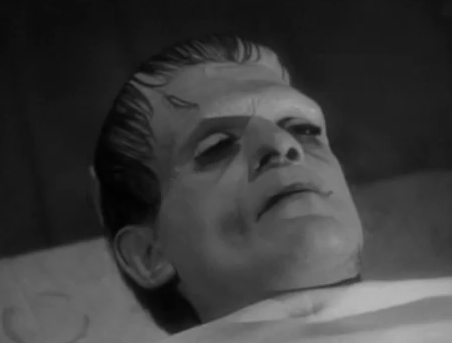
Frankenstein ("Fixing a Hole")


Today's chapter in "32 Days in Movies" - called "A Violent Release" and featuring movies from the half-century mark with violent themes or elements - was posted this morning. But I also want to use today to announce a new series I am launching on Wonders in the Dark. Called "Fixing a Hole" its sole purpose is to review notable films that have not yet been covered on that site (thousands of films have been, but cinematic history is so rich that tens of thousands, including classics, obscurities, and controversial movies among them, have as of yet slipped through the cracks).

Every month will have a theme and this October is designated "Universal Horror Month." I will be writing several of the entries, but I've also invited guest writers to contribute and the inaugural entry is by one such guest writer, the passionate, knowledgeable, and extremely engaging Dennis Polifroni, whose personal pieces for the site I've always admired. I assigned him "Frankenstein" and he's hit the ball out of the park. Here's a sample, and then I encourage you to follow the link and take it all in!

"Karloff so perfectly infuses gentleness into his hand movements when pulling the petals off a daisy stem in his moment with the little girl by the pond that you forget this is just an actor in a costume and some very heavy make-up. In these moments you really believe it’s a being who is trying to recreate, for himself, the same kind of innocent whimsy that attracted him to the smile of this little child. You can see, in the way he crouches next to her and slowly inches his way closer to her, that he sees her as his mentor, someone with answers to his many inner questions, in what is beautiful about a life that has just begun for him."
Update 2018: Unfortunately, this sample is now all that remains of Dennis' essay, as the piece was deleted. 

Search This Blog