Lost in the Movies: filmmaking
Showing posts with label filmmaking. Show all posts

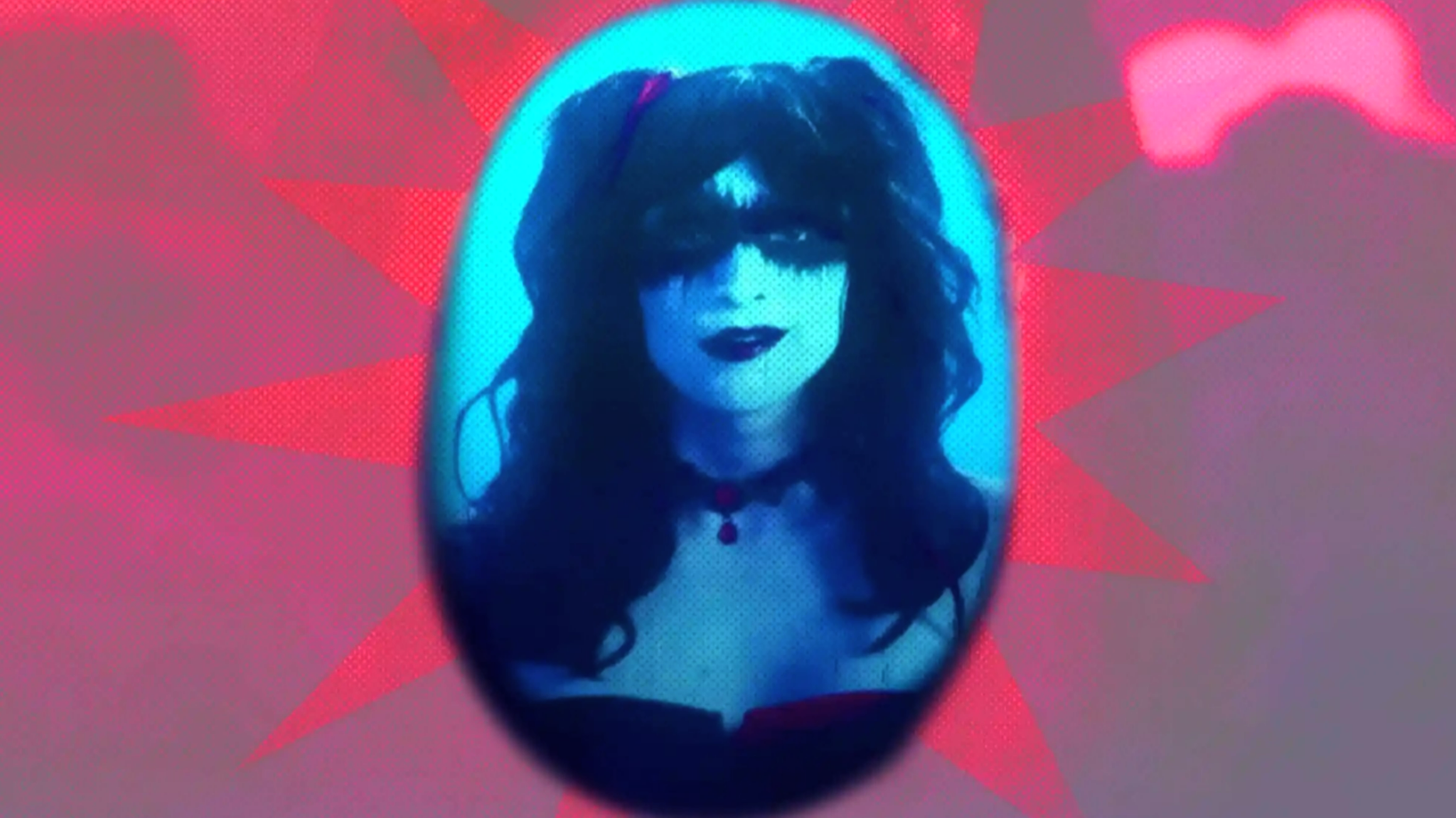
TWIN PEAKS CONVERSATIONS #16 w/ The People's Joker director Vera Drew (YouTube & extended PATREON) premieres on Wednesday


In one of the more unusual Twin Peaks Conversations episodes, my guest is someone whose work does not directly relate to Twin Peaks but who has many Peaks reflections to offer nonetheless. Emmy-nominated editor, comedian, and newly-minted feature director Vera Drew debuted The People's Joker at the Toronto International Film Festival this fall, where it became a cause celebre - a subject of controversy, enthusiasm, and immense curiosity. A surreal, subversive riff on the Batman universe (particularly modeled after Todd Phillips' 2019 Joker, which we also discuss), The People's Joker is part superhero genre parody, part reflection on the 2010s comedy scene, and large part trans coming-out story. It's all surprisingly autobiographical for a film which features battles between Lego comic book characters, satirically dystopian visions of a society in which comedy is banned, and trips through an afterlife/alternate dimension with a magical puppet granting final wishes. In our freewheeling conversation, Vera and I discuss what is and isn't drawn from her own life in the film, the unique production process conducted during the Covid pandemic, and the whirlwind twists of fate that led to a media breakthrough and studio backlash (The People's Joker is currently in distribution limbo as Vera and her representatives push its case as a fair use work). We also dig into what David Lynch and Twin Peaks have contributed to her sensibility and aesthetic over the years, kicking off the podcast with this subject before shifting to her early and recent film/TV/online work. You can bookmark and refresh this page within the next few days (or keep an eye on my YouTube channel) for the upcoming premiere...

PART 1 on YouTube
(premieres at 8 pm Wednesday, December 7)

In the second, longer part of the discussion, exclusive to the $5/month tier, we focus more exclusively on Peaks topics, including Vera's original experience with the series, her fascination with The Return and frustrations with Part 18, and much more. We even take a side trip to the world of another cinematic influence on The People's Joker, Richard Kelly's Southland Tales (which I'll further discuss on another podcast very soon).

Listen to...
(also premieres at 8 pm Wednesday, December 7)


(and follow Vera on her YouTube channel + Twitter, Instagram & Tumblr)

The Hero We Didn't Know We Needed: a conversation with Jared Drake, director of Visioneers & the upcoming Mack Luster


For a brief moment in the dystopian comedy Visioneers (2007), disgruntled office worker George Washington Winsterhammerman (Zach Galifianakis) plunks himself down in front of the television, hoping to smother his ever-growing anxiety with a soothing escape. Instead, he's confronted with the televised antics of a deranged action hero, Mack Luster (Ryan McCann), valiant and violent opponent of "Chayos" (the film's name for the free-floating unease destabilizing this placid world and causing people to literally explode). Assaulting rather than protecting the innocent (the "villains" include a terrified old lady and a little girl with ice cream), Luster provides an amusing subversion of 80s action hero cliches. He's a grinning, muscled-up do-gooder who clearly believes his antisocial actions represent some glorious triumph over evil.

This scene (which you can watch on YouTube) was tangential to the rest of the film, yet Luster's over-the-top antics proved popular with viewers and stuck with the film's director Jared Drake. Drake decided to spin the character off into his own story, Mack Luster, but with a twist. No longer simply the symbol of a world gone crazy, the Mack Luster of this new project will be the only sane person onscreen, a reminder of what was valuable and lovable about 80s action heroes. He's a throwback to an age of older, less self-conscious American icons and his sincerity make him a fish out of water in the present - albeit one we sympathize with. Drake plans to turn the Visioneers version of Luster on its head, preserving the "awesome cheese" quotient while encouraging us to laugh with, rather than at, our hero by the end of the movie.

I was contacted by Jared as he prepared to launch his Kickstarter campaign; while I haven't been doing many interviews lately, this concept - and Drake's intentions behind it - piqued my curiosity (plus Jared grew up in the Twin Peaks hometown, a bit of synchronicity given my slew of upcoming Peaks and Lynch). Via a 90-minute Google chat, we discussed his film Visioneers, his decision to place an 80s icon in the present and the philosophy behind that, and why he's chosen crowdfunding and sees it as the future of filmmaking (this was one of the most fascinating parts of the discussion for me - I believe that when it comes, the next Easy Rider or Star Wars-type game-changer will drop online, not in theaters). If you'd like to support the Mack Luster campaign, or just find out more, it launched today:


Filmmaker documentary marathon, 11/9


On November 9 I held a viewing marathon in which I watched documentaries about filmmakers. Here they are, with a screen-captured image and personal epigram. Visit my #WatchlistScreenCaps archive for more arresting images.

Generations Linked by Video: The iHistory WW2 Project & Interview with Jeffrey Worthington


 The iHistory WW2 Video Competition
"The iHistory WW2 video competition is proud to connect teenagers with WWII veterans, giving students the opportunity to hear first-hand accounts of history. The students will film an interview with a WWII veteran that will be submitted to the Library of Congress. Then the students will use editing resources provided on our website to make a mini-documentary which they will submit to the competition on YouTube." - from "About the iHistory WW2 Contest"

There's a moment near the start of The Century (a documentary miniseries from 1999) that I've always found magical. The program begins unexpectedly in small-town New Jersey around '96 or '97, peeking into the corners of the familiar present to notice unexpected hints of the past. While there are many revealing places (including a car garage that was once a stable, back when "horsepower" meant just that), the most powerful and poignant reminders are the people who inhabit these places. It's their voices that carry us into the past, a miraculous dissolve from a moonlit sky to archival footage of dancing soldiers and parading movie stars and moonwalking astronauts...never has history seemed so alive.

That's the power of human memory, and the power of modern technology to capture and deliver these memories to a new generation. And that is why I was so intrigued to find out about the iHistory World War 2 project, a contest (sponsored by the nonprofit Worthington Foundation) encouraging young students to record interviews with World War 2 veterans; students will then be given the opportunity to craft polished documentary projects. This idea perfectly captures ability modern media's ability to bring history to life. Furthermore the time is now, because the youngest WW2 vets are now in their late eighties, and they aren't getting any younger.

I heard about the contest via email; I receive many such notifications and usually can't follow up even with the interesting ones. Yet I was fascinated by this project - its historical relevance, its cross-generational connections, its ability to open up filmmaking for young people who many never have considered themselves filmmakers before - and so I scheduled an interview with Jeffrey Worthington, founder and CEO of the Worthington Foundation. At the appointed time, Jeffrey was dealing with an unforeseen emergency, but he was kind enough to respond to my questions anyway, and the results are below. For more information, you can visit the iHistory WW2 contest website. The full interview follows the jump.

It Was 20 Years Ago Today: When A Star Moves


Where there's a will there's a way, even if it makes no sense. On July 31, 1993, twenty years ago this day, I began shooting my first movie in the woods behind my aunt's house in New Hampshire. We used my dad's Hi-8 home video camera, several friends, an alien made of tin-foil (I provided the voice live, just off-camera), and several toy dinosaurs filmed in close-up (later to be intercut with the actors in an effort to disguise their true size). It was a surprisingly organized beginning although this orderly kickoff would soon devolve into a mess of delays, personal conflicts, and technical difficulties - all surprisingly ubiquitous even at this early phase. I utilized a formal screenplay, detailed shot list, out-of-sequence shooting (timecode diligently logged on Hi-8 tape), and a shooting schedule soon fragrantly disobeyed. My father was the cinematographer and I shouted orders from behind his knee, a four-and-a-half-foot tyrant in sweatpants two sizes too big.

The Pebble and the String: an allegory for art


excerpted from an interview with writer Javed Akhtar in Mark Cousins' documentary "The Story of Film" (2011)

"You must have seen children playing with a string and a pebble. They're tying a string to a pebble and they start spinning it over their head. And slowly they keep leaving [makes motion of lowering grip] the string, and it makes bigger and bigger circle. Now, this pebble is the revolt from the tradition. It wants to move away. But the string is the tradition, the continuity of the tradition. It is holding it. But if you break the string, the pebble will fall. If you remove the pebble, the string cannot go that far. This tension of tradition and revolt against the tradition are in a way contradictory but as a matter of fact it is a synthesis: you will always find the synthesis of tradition and revolt against the tradition together in any good art."

Press Play features my De Palma video w/ Kevin B. Lee interview


My video essay (the online work I'm proudest of in any form) "directed by De Palma", featuring clips from Hi Mom, Carrie and Scarface, has just been highlighted on the video essay site Press Play. It's accompanied by an interview with me, conducted by the great video essayist Kevin B. Lee (fair warning: the video contains strong violent and sexual imagery from Brian De Palma's work, and is NSFW).

Below I've reproduced both the interview and the video, which can also be found on PressPlay.

2002 in 2012: The Making of My Movie, Class of 2002


The how & why of my adventure in filmmaking, followed by the end result.
Click here to watch the film first.

Commencement: Discovering a Premise

My long journey began in, of all places, Hollywood.

Not behind the closed doors of a cushy studio office, or in a limousine winding between the (literally) star-studded sidewalks, nor even on a sweaty camaraderie-boosting soundstage but at a wings joint on Sunset Boulevard. It had been nearly two months since my quixotic arrival in Los Angeles, but this was the first time I had actually gone out in the city itself, after weeks of scrambling to find a place to live and work. Now, as the clock rolled past midnight, and April gave way to May, I was unwinding with co-workers after a stressful week.

Having finally secured a position at a fundraising organization, I set to work immediately pursuing my real goal, making movies, only to discover, like the characters in Godard's tragicomic La Chinoise, that what I thought had been a great leap was only the beginning of a long march. Additionally, the week had seen my blog disappear into thin air (later resolved, although at the moment my prospects appeared bleak) and offered reminders that, even once hired "permanently" this high-turnover job was hardly a sure thing (indeed, within a few days, I'd be the only one at this table left at the office).

Tonight, the talk quickly shifted from work to movies - street fundraisers, like all impermanent employees in this city, tend to be supplementing work, or dreams of work, in the entertainment industry. I turned to a younger co-worker, who had earlier claimed many story concepts he didn't know what to do with (in other words, the exact opposite of my problem), and asked him if he had any short film ideas he'd be willing to share.

He responded, "Yeah...I haven't written much on it, but I'd love to see a movie about a bunch of characters waiting at a train station for the afterlife. It wouldn't be about where they were going or what happened when the train arrived, but what they were thinking, and who they were."

With that, the wheels began to turn...

The Killer, the Filmmaker, and Their Modus Operandi: A Conversation with Mitch Rouse, director of "M.O."


What does a serial killer do when he's not killing? In M.O., first-time feature director Mitch Rouse hopes to answer that question, taking a neorealist/documentary approach to the daily life of a killer. His influences include the work of the Dardennes, traditional neorealism, and the new crop of young filmmakers shooting in the neorealist tradition. His subject, however, will be quite different from theirs. The following conversation (as you'll see, not all of my questions were short!) focuses on the themes Mitch hopes to explore and the stylistic approaches he plans to employ; it also addresses some of the practical aspects of this venture. M.O. will be financed via a Kickstarter campaign, which is going on right now (Kickstarter is a website set up to promote funding through multiple donors).
_________________
Hi Mitch, hope all is well. I know you were out this afternoon - were you working on anything related to M.O.? How much time does this project take up for you these days?

I was actually working at my full-time job today. I edit for a living, so all of the work I do for M.O. is done in my free time. I usually spend a least two or three hours a night working on the film, whether I'm revising the script, coordinating schedules with actors, or otherwise getting things ready for production. We're scheduled to start principal photography in six weeks, so we're right in the middle of pre-production and we have a lot to do before that can happen.

In a few words, how would you introduce people to this film, your intent behind, and the process for creating it?

It's tough to be concise! But I'll give it a try:

M.O. is a realistic look at the life of a serial killer. The main character in the film is a seemingly average, ordinary guy. He's married, he has a daughter, and he has a job and a house like any middle-class family. But in secret, he's a pathological killer. The intent behind this film is to treat this subject matter without sensation and to leave viewers asking more questions than they came into the film with. On my end, I wanted to make a film that addresses questions I've never seen answered in a film before. Questions such as: What does a serial killer do before and after a murder? How does he plan a murder and then live as if everything is normal, and that he hasn't committed a terrible crime? How does the family of a serial killer not know what he's up to?

The process for creating this film so far has been for me to put myself into this character's shoes. So I've had to imagine what I would do if I had just committed a murder, and then driven home and had dinner with my family as if it were just a regular day. Rather than simply studying the psychology of serial killers, I asked myself what they do when they aren't killing and what their everyday habits are. Do they watch TV like everyone else? Do they spend time with their families? In the main character of M.O.'s case, what is his relationship with his wife like? How does he treat his daughter? So I wanted to know how this character attempts to live like a regular person, and not simply what he does when he's in the process of committing a murder.

Long transcript of interview


This is the complete transcript of my conversation with the director of "M.O." - for the shortened version, see here.

For the Love of Movies interview

When critic/filmmaker Gerald Peary set out to document the history of movie criticism, his subject's story had a beginning. Now it seems that the story may have an ending too, and not a happy one. Or is it merely a rebirth? Nearly a decade after he initiated his project, For the Love of Movies: The Story of Film Criticism is completed and showing around the country (the next screening will be Thursday evening at the Music Hall in Portsmouth, NH). Print criticism is rapidly disappearing (since the release of the film, which already featured dire warnings of a crisis in criticism, the number of fired critics has grown enormously). Meanwhile, the rising presence of the Internet seems to be shifting the definition of criticism - but towards what exactly? Last week, I spoke to Peary about the past and the future of criticism, and also about his own work, both as critic and creator. Most of the discussion is contained here, with some slight edits for clarity and space. My words are in bold, Peary's in regular. Clarifications are offered in italics throughout.

[For background on the film itself, you can read my review of For the Love of Movies, published back in September.]

Search This Blog