Lost in the Movies: twin peaks interview
Showing posts with label twin peaks interview. Show all posts

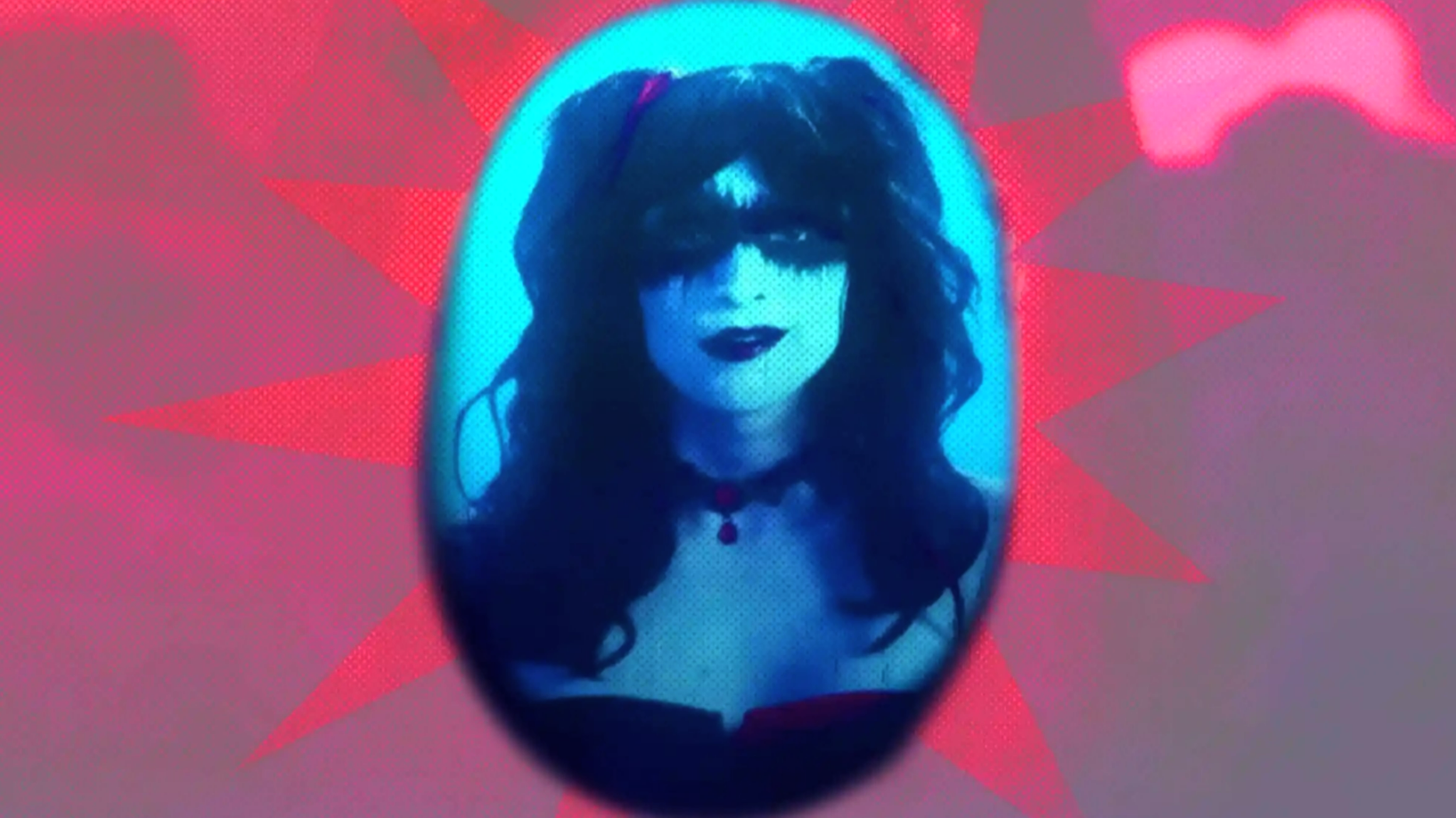
TWIN PEAKS CONVERSATIONS #16 w/ The People's Joker director Vera Drew (YouTube & extended PATREON) premieres on Wednesday


In one of the more unusual Twin Peaks Conversations episodes, my guest is someone whose work does not directly relate to Twin Peaks but who has many Peaks reflections to offer nonetheless. Emmy-nominated editor, comedian, and newly-minted feature director Vera Drew debuted The People's Joker at the Toronto International Film Festival this fall, where it became a cause celebre - a subject of controversy, enthusiasm, and immense curiosity. A surreal, subversive riff on the Batman universe (particularly modeled after Todd Phillips' 2019 Joker, which we also discuss), The People's Joker is part superhero genre parody, part reflection on the 2010s comedy scene, and large part trans coming-out story. It's all surprisingly autobiographical for a film which features battles between Lego comic book characters, satirically dystopian visions of a society in which comedy is banned, and trips through an afterlife/alternate dimension with a magical puppet granting final wishes. In our freewheeling conversation, Vera and I discuss what is and isn't drawn from her own life in the film, the unique production process conducted during the Covid pandemic, and the whirlwind twists of fate that led to a media breakthrough and studio backlash (The People's Joker is currently in distribution limbo as Vera and her representatives push its case as a fair use work). We also dig into what David Lynch and Twin Peaks have contributed to her sensibility and aesthetic over the years, kicking off the podcast with this subject before shifting to her early and recent film/TV/online work. You can bookmark and refresh this page within the next few days (or keep an eye on my YouTube channel) for the upcoming premiere...

PART 1 on YouTube
(premieres at 8 pm Wednesday, December 7)

In the second, longer part of the discussion, exclusive to the $5/month tier, we focus more exclusively on Peaks topics, including Vera's original experience with the series, her fascination with The Return and frustrations with Part 18, and much more. We even take a side trip to the world of another cinematic influence on The People's Joker, Richard Kelly's Southland Tales (which I'll further discuss on another podcast very soon).

Listen to...
(also premieres at 8 pm Wednesday, December 7)


(and follow Vera on her YouTube channel + Twitter, Instagram & Tumblr)

TWIN PEAKS CONVERSATIONS #15 w/ Colin, host of Creamed Corn and the Universe (YouTube & extended PATREON)


It doesn't seem so long ago for those of us who anticipated, watched, and afterwards reflected on 2017's limited series Twin Peaks revival (season three, The Return, call it while you will). And yet it's been five years, long enough for new viewers to stumble across the show, watch it in its entirety as a single piece, and become superfans. Colin, who only began his Creamed Corn and the Universe podcast about six months ago, is one of the most prominent examples of this. He first viewed Twin Peaks in late 2019 (!) and has become so fluent in its world that his weekly podcast can afford to devote in-depth episodes to fleeting figures from the show or even the books (including real historical figures from The Secret History). Colin had me on his show in October to discuss Sarah Palmer, and in this installment of my own podcast I return the favor. We chat not only about his approach to podcasting but also his experience with other David Lynch films (especially Mulholland Drive), the crossover/rivalry between Lynch and Quentin Tarantino, and my fascination with - along with his experience as - this new generation of fans coming to Peaks as a complete work stretching from the pilot to Part 18...

PART 1 on YouTube

Exclusive to the $5/month tier, the back half of the conversation deep dives into many of these topics and even includes an inside on the value of public libraries!

Listen to...


Listen to Colin's podcast Creamed Corn and the Universe


TWIN PEAKS CONVERSATIONS #14 w/ Ominous Whoosh author John Thorne (YouTube & extended PATREON)


With the publication of his new book Ominous Whoosh: A Wandering Mind Returns to Twin Peaks - whose concepts we've been discussing as far back as three and a half years ago (and which the author himself has been cultivating since the third season aired) - John Thorne becomes the first repeat guest on my Twin Peaks Conversations podcast. In the previous episode from Halloween 2021 we dove deeply into questions about Cooper's and Diane's identity and the purpose of Cooper's "mission" in the finale. We continue to trace some of those themes in this installment but also sketch out his approach to this book, in which he interspersed episode-by-episode breakdowns with meaty "interlude" essays exploring discrete topics like the Palmer house, the nature of Judy, and Audrey's unique storyline. I debuted this conversation last week, and there was also - unusually - a lively live chat accompanying the video premiere so check out that chat archive, as well as in-depth comments, on the YouTube page for more discussion (jump to the end of the video to see the full chat). And let me know what you think of these or other Peaks subjects and our interpretations thereof. John's ideas are often as challenging as they are illuminating, and I've long enjoyed grappling with the questions they raise and seeing how my own answers both overlap with and diverge from his own.

We begin by outlining the structure and style of what's on the pages of Ominous Whoosh (which is, of course, a fantastic title taken from the series' evocative closed captioning, alongside other parts of John's text...)

PART 1 on YouTube

Another hour-plus of discussion is exclusive to the $5/month tier on my Patreon, diving deeper into questions about the endings of season three and Fire Walk With Me, and following the curious thread of Sarah/Judy/Experiment (among other topics)...

Listen to...


Prior to our Twin Peaks Conversations episodes, I spoke to John over three print interviews in 2014 (about Wrapped in Plastic, The Missing Pieces, and the announcement of The Return), again when he published his 2016 book, and then over four Patreon podcasts in 2019 (first, second, third, and fourth).

TWIN PEAKS CONVERSATIONS #13 w/ Devil's Advocates - Twin Peaks: Fire Walk With Me author Lindsay Hallam (YouTube & extended PATREON) premieres tonight


This has been a year of Fire Walk With Me commemorations as the film turns thirty. In May, I published my extensive podcast series on the Twin Peaks movie, two weeks' worth of episodes on various aspects timed to coincide with the anniversary of the Cannes premiere. At the same time, I shared a particularly relevant Twin Peaks Cinema episode on The Sweet Hereafter (coincidentally celebrating the twenty-fifth anniversary of its own Cannes debut). And now, today is the anniversary of the U.S. wide release and I've timed the latest conversation for this occasion. I last spoke to Lindsay Hallam, author of the "Devil's Advocate" series book Twin Peaks: Fire Walk With Me, in 2018 when her study was published (in fact this was the last written interview to be published on my site before I switched over entirely to audio conversations). We dig into that project again in this discussion - her book views Fire Walk With Me as a horror film, trauma film, Twin Peaks entry, and David Lynch film - but I also wanted to discuss a broader range of subjects, some of which were not included in her book (or touched upon only briefly). Chief among these was her fascination with both Fire Walk With Me and the Lynch filmography in general as forms of melodrama, linking the surrealist auteur to the great filmmakers of the fifties like Douglas Sirk and Nicholas Ray. Between my "Small Town Blues" series on Twin Peaks Cinema this past winter and my current "Ray's Haunted Fifties" coverage on the same podcast (which will soon make my Patreon episode on Bigger Than Life public), this is obviously a terrain I like to explore so the second part of our talk particularly hones in on it. We also focus on the horror genre, the analysis of "affect" in cinema, and meta-questions about season three and possible future Peaks that my guests and I always seem to circle back to.

The public discussion begins by tracing her journey toward writing the book, and the form it took...

PART 1 on YouTube
(premieres at 8 pm tonight, August 28)

After that half hour, another fifty-plus minutes are exclusive to the $5/month tier on my Patreon, casting the net wider while teasing out those melodrama connections...

Listen to...


Purchase her commentary on Martyrs, video essay on the Gothic Fantastico boxset & essay in the book Women of Lynch


(her connection to Lee Harvey Oswald may have been one degree more removed than I remembered)

(overlapping w/ most of Lindsay's categories of analysis)


TWIN PEAKS CONVERSATIONS #12 w/ Counter Esperanto hosts Jubel Brosseau & Karl Eckler (YouTube & extended PATREON)


Numerous Twin Peaks podcasts have popped up in the past decade, most (including one of my own) following the episode-by-episode format - but few have taken as unique an approach as Counter Esperanto. Jubel Brosseau and Karl Eckler bring to their discussions a deep fascination with and knowledge of both weird fiction and local Pacific Northwest lore. This plus their evocative radio voices, eerie and transporting soundscapes, and penchant for reading haunting short stories by H.P. Lovecraft and other authors makes for one of the most atmospheric podcasts I've listened to, Twin Peaks or otherwise. Though they took several years off of their initial Peaks focus to cover a broader range of subjects, they've recently returned to The Return: hosting guests like John Thorne for retrospectives of different season three sections (although their musings tend to wander across the whole series). With that in mind, this seemed like a perfect time to finally contact them directly - after years of corresponding on Twitter and as guests and feedback-writers to the Sparkwood & 21 podcast in the mid-teens. In both the public and patron-exclusive parts of this conversation, we explore some familiar themes like the passage of time both before and since the new season, where that material fits in with the original series and Fire Walk With Me, and whether or not there will be (or should be) more Peaks. And given their specialty, we also explore topics that have not come up on Twin Peaks Conversations before, including their upbringing on the eastern side of Washington (where the pilot takes place, but not where it was shot) and how the visions of David Lynch - and Mark Frost - both complement and depart from literary concepts of "the Weird."

That question is particularly emphasized in the first half-hour of the podcast, up for free on YouTube...

PART 1 on YouTube

And we continue exploring Peaks and related subjects for another fifty-three minutes, exclusive to the $5/month tier...

Listen to...


The intro/outro music/soundscape comes from their episode


TWIN PEAKS CONVERSATIONS #11 w/ Queen of Hearts director Cameron Cloutier (YouTube & extended PATREON)


June's guest was actually the first person to host me on a podcast, almost exactly eight years ago. In 2014, Cameron Cloutier and I talked Twin Peaks on his YouTube channel Obnoxious & Anonymous pre-Return (even pre-announcement of The Return) and pre-Missing Pieces. Over the coming years I would come back on to discuss the latest Peaks development and when we last published a conversation in 2018, I was interviewing him about his exciting new project: a fan film about Annie Blackburn titled Queen of Hearts. Now, after many twists and turns onscreen and off, the epic creation is complete, uploaded to watch in five separate acts or as a single, four-hour movie. Queen of Hearts picks Annie up where the season two finale left her, incorporating the lore (and some events) of season three, and leaving room for details from Mark Frost's Annie backstory and enigmatic "resolution" in The Final Dossier. Using the Scott Frost novel My Life, My Tapes as a guide, the film also goes even further than just Annie's sprawling journey, telling - in true Lynch fashion - a dual narrative across time and space, presenting Cooper's doomed romance with Caroline Earle and his cat-and-mouse partnership with her evil genius husband Windom in Pittsburgh several years before the series. And did I mention the pop soundtrack?

Cameron and I discuss all that and much more in one of the longer conversations I've hosted on here, running over an hour in its public upload on YouTube plus another two and a half hours exclusive to $5/month patrons. Besides the details of his movie (initially in broad strokes for those who are curious but haven't watched it yet, we eventually get deep into the weeds), we touch on Cameron's personal history with Twin Peaks, his previous forays into filmmaking including deep research into the Golden State Killer case which eventually got his footage featured in an HBO documentary, and of course - as with almost every guest - questions about season three, its finale, and the possibilities for future Peaks.

Here's where it begins...

PART 1 on YouTube

...and here's where it continues:

Listen to...

Watch Queen of Hearts: A Twin Peaks Fan Film in its full four hours:

(or in five acts: 1 / 2 / 3 / 4 / 5)

Cameron's YouTube channel Obnoxious & Anonymous

including horror (features A Nightmare on Elm Street 4 comparison)


Kenneth Welsh performs the original script for


TWIN PEAKS CONVERSATIONS #10 w/ TV Peaks author Andreas Halskov (YouTube & extended PATREON)


(This cross-post accidentally scheduled last week before I noticed and took it down. It's this coming Monday, tomorrow, May 23, that the video will actually be going up. Sorry for the confusion.)

Up to this point, my Twin Peaks Conversations podcast has featured an equal number of episodes with first-time and repeat guests. The Danish scholar, journalist, critic, and author Andreas Halskov is one of the latter, last interviewed by me six and a half years ago upon the release of his book TV Peaks, a rich, in-depth text about the ways that the original series revolutionized television. Since then, of course, a new season aired (or streamed) and Andreas has many thoughts to share about what did and didn't work for him about that new material. We discuss how he first encountered Twin Peaks as a child, the ways that Lynch's vision expresses itself through formal decisions (and how those decisions differed in 1990 and 2017), and the evolution of film/television discourse in an age when the latter has come to be valued more by many observers. Andreas' responses are thoughtful and (as he himself puts it) digressive, teasing out threads in real time and resulting in some real deep dives into various concepts and experiences. One some occasions, the patron "halves" of these conversation are just a few second longer than the public part but in this case that second part runs almost twice as long, re-visiting some of my favorite topics (the new season's relationship to Fire Walk With Me and where new narratives would/could focus) while introducing new ones. To start off with, Andreas will take us into his experience as a nine-year-old in a Scandinavian factory town, breathing in the distinct air of Twin Peaks for the first time...

PART 1 on YouTube
(premieres at 8pm on Monday, May 23)


And then for $5/month patrons, we will kick off the second part by asking why the third season might "feels different" from the first and second seasons, as well as the film. Andreas, who has created many formally-focused video essays (linked below) alongside his written cinematic studies, has a lot to say on that and other subjects.

Listen to...
(link will be active at 8pm on Monday, May 16)


Andreas' publication 16:9
(his particular work, including videos, gathered here)


TWIN PEAKS CONVERSATIONS #9 w/ Twin Peaks Fanatic creator Mya McBriar (YouTube & extended PATREON)


While this is Mya McBriar's debut as guest in the extended Lost in the Movies universe, she and I have crossed paths many times before beginning in the heady days of 2014 - 17 on the dugpa World of Blue forum where we and other fans shared theories and speculation about the upcoming series. She started her blog Twin Peaks Fanatic around that time, soon moving from quick posts on various aspects of the show to longer, more personal essays on the elements of Peaks or David Lynch's work that most moved her, all while plugging away at recaps and reactions to every episode. We appeared, together and apart, on Twin Peaks Unwrapped episodes too - most famously (at least in Unwrapped's own lore) to rank Lynch fims, with some unexpected results. On the anniversary of the Twin Peaks pilot this weekend, we discussed this era of fandom - its new discoveries and layers of nostalgia (and nostalgia-for-nostalgia) - in our first one-on-one interview, along with an eclectic array of topics. These include the highs and lows of season three after all that anticipation: experimentation in Parts 3 and 8; Sarah, Judy, and the frogbug; Dougie's world; Richard Horne's place after abandoning the original Audrey story; and - as always - where the finale leaves us going forward. We also talk about the power of Laura Palmer, Lynch's possible jabs at Quentin Tarantino from the nineties to the teens, Mya's discovery of the original show as a preteen Gen Xer in one of the more remote and offbeat parts of New Jersey ("Shades of Death Road", anyone?), and her own creative writing which combines Lynch analysis with original fictional material. Some of this is featured in the public part of the conversation on YouTube...

PART 1 on YouTube

...while the other half of the discussion, available to $5/month patrons, incorporates the rest of these subjects and casts the net even wider.

Listen to...


Read Mya's other work on 25 Years Later/TV Obsessive as well as in The Blue Rose magazine & the book Women of Lynch (for her piece "Impressions of Lynch: Journaling a Requiem")

Highlights from Twin Peaks Fanatic include Laura Walked With Me amp; Pinky's Dream: The Story of Crazy Clown Time

The Hunter S. Thompson quote was used in 25 Years Later - Happy Anniversary Twin Peaks!


TWIN PEAKS CONVERSATIONS #8 w/ TV Milestones - Twin Peaks authors Julie Grossman & Will Scheibel (YouTube & extended PATREON)


Although the book Twin Peaks was published as part of the "TV Milestones" series in 2020, its authors Julie Grossman and Will Scheibel have a deep background and interest in the study of cinema. Alongside discussions of Peaks' early nineties production history at ABC and the context of soap opera and other television formats, their focus incorporates Fire Walk With Me (of course) - but also the impact of big screen genres like melodrama and particularly noir. In our freewheeling podcast discussion, we dwell on topics like noir motifs, the "white knight" detective, and the concept of the femme fatale, exploring how all of these apply to the work of David Lynch and Mark Frost (up to and including season three, which they were among the first to analyze in book form). How does The Return carve out space for unusual female characters like Diane, Audrey, and Sarah? What were Cooper's mistakes, in both seasons two and three? Is "Judy" the ultimate femme fatale? Like Laura's Ghost and Twin Peaks Unwrapped, this was a book I received way back around the start of the pandemic (and the renewal of Journey Through Twin Peaks), and kept postponing until I knew I could schedule a conversation with its authors. So it was a pleasure to finally dig into the work, both on my own and with them.

PART 1 on YouTube
(premieres at 8pm on Monday, March 28 -
*re-scheduled due to the Oscars)


Some of the above questions were addressed only in the patron exclusive part, an additional fifty minutes after the public half hour; in particular, the noir aspect of our conversation gets to shine in this back-more-than-half....

Listen to...
(link will be active at 8pm on Monday, March 28 -
*re-scheduled due to the Oscars)


Listen to my coverage of Twin Peaks' connections to noir films Laura & Sunset Boulevard

Read Barb Miller's comment on Cooper & Annie in my alt.tv.twin-peaks round-up
(scroll down to 6/14/91)


TWIN PEAKS CONVERSATIONS #7 w/ Laura's Ghost author Courtenay Stallings (YouTube & extended PATREON)


When I first came up with the idea for a regular Twin Peaks Conversations podcast last year, Laura's Ghost: Women Speak about Twin Peaks author Courtenay Stallings was one of the first guests I hoped to invite. Her 2020 book, a collection of interviews, essays, and comments from women in the Twin Peaks community (both fans and collaborators on the series and film), is focused on the experience and legacy of Laura Palmer, which I've always considered to be at the center of the narrative David Lynch and Mark Frost created in 1990. But as I initially frontloaded discussions with authors whose books or podcasts I'd already consumed, after which more immediate releases kept taking precedent, I had to keep postponing this one. In the end, the delay was fortuitous because now I can incorporate Laura's Ghost into a larger month of Fire Walk With Me focus on my Patreon (with Lost in Twin Peaks episodes on the film opening to all patrons while my main podcast offers its final "Twin Peaks Reflections" and "Twin Peaks Cinema" sections, both cued to the movie more than the show). Those podcasts and this one - which premieres tomorrow night at 8pm - are being published during what Fire Walk With Me depicts as the last seven days of Laura Palmer's life (through February 24, when the series begins). The first half of this conversation digs into how Courtenay wrote the book, what it reveals about the character and those who relate to her, and how season three has impacted her perception. The book was four years in the making (its completion now a year and a half in the past), so our discussion spans an era not only divided before and after The Return, but also before, during, and after (?) the pandemic.

PART 1 on YouTube
(premieres at 8pm on Monday, February 21)

The second part runs a bit longer and is, as always, exclusive to $5/month patrons; it shifts from the book's focus on Laura and her trauma to broader but related topics especially regarding Sarah Palmer (Courtenay interviewed Grace Zabriskie for Laura's Ghost and it was a memorable experience). As always, my guest and I wonder what further Peaks would entail and if that's desirable, and we also ask questions like "Is the New Mexico girl really Sarah (and should she be)?" and "What is the connection between Cooper and Sarah?" Courtenay also explores her thesis of season three as a subversive fairy tale in both halves of the conversation.

Listen to...
(link will be active on Monday, February 21 at 8pm)


(10% of proceeds go to RAINN)

Also subscribe to Blue Rose Magazine

Courtenay's interviews w/ former Twin Peaks Conversations guests include:


(w/ other contributors to the book including Sheryl Lee)


TWIN PEAKS CONVERSATIONS #6 w/ Murder at Teal's Pond author Mark Givens (YouTube & extended PATREON)


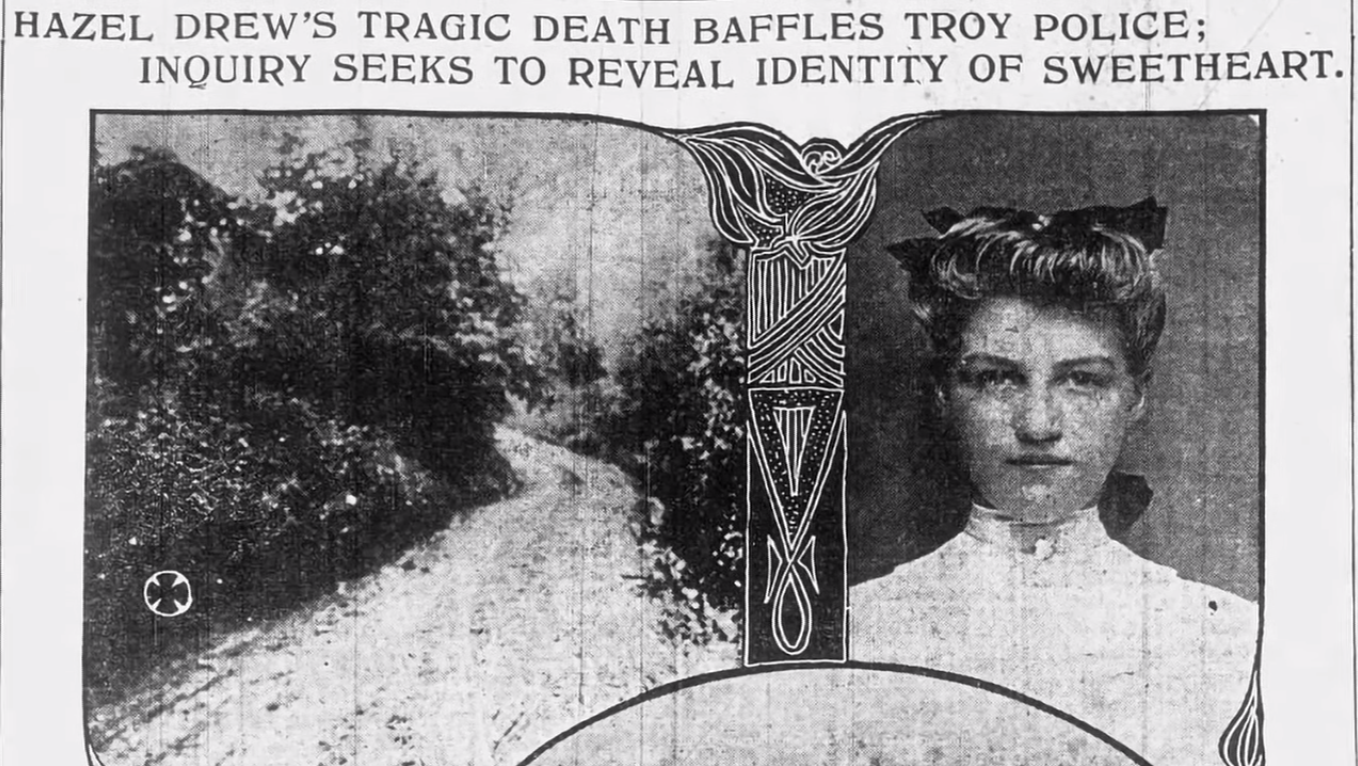
Last September, I spoke to David Bushman, co-author of Murder at Teal's Pond: Hazel Drew and the Mystery That Inspired Twin Peaks. Although our conversation focused more on his earlier book Conversations with Mark Frost, we did discuss his true crime page-turner which at the time had yet to be released. Now that I've read Murder at Teal's Pond and found it riveting, it's time to talk about the book again with its other author, Mark Givens. I've followed Mark's work for years, since he debuted the podcast Deer Meadow Radio in 2016. That's where he first begin to dig into the century-old murder of Hazel Drew, a young woman living in upstate New York whose unsolved mystery inspired Mark Frost to invent Laura Palmer (Frost's grandmother used to tell him ghost stories about the victim, who supposedly haunted passerby near the pond where she was discovered). After years of extensive research, Mark and David (Givens and Bushman, not Frost and Lynch) uncovered a fascinating portrait not just of Hazel but of the very different worlds where she grew up and traveled between in her final days: the bustling, corrupt city of Troy and the remote, rural community around the Taberton woods. They even drew some conclusions about who might have killed her and why some avenues went unexplored back in 1908. Although the simple idea of a dead girl discovered by a body of water was what got Twin Peaks rolling, it turns out there are many other coincidental similarities, which Mark and I discuss.

The public portion of our conversation, running about thirty-five minutes after my usual introduction/update, is entirely focused on the book's rich texture and how it came together (including disagreements and different areas of interest between the two authors, and how those factored into the final text):

PART 1 on YouTube

The second part, longer than the first (as always) at fifty-five minutes and exclusive to $5/month patrons, continues this focus by discussing the detectives who ultimately came up short in their investigations, the politics of Troy, and other aspects of the book, before concluding with questions about season three, possibilities for future Twin Peaks, and even the early nineties Wiseguy tribute to Peaks, which both Mark and I have covered on our own.

Listen to...


Also listen to Deer Meadow Radio: episodes on Hazel Drew (from before the book was written) + Marilyn Monroe & Wiseguy

TWIN PEAKS CONVERSATIONS #5 w/ Fire Walk With Me: Your Laura Disappeared author Scott Ryan (YouTube & extended PATREON)


I'm kicking off a year of Fire Walk With Me by cross-posting my conversation, from a couple weeks ago, with the author of a new book on the subject. Fire Walk With Me: Your Laura Disappeared is written by Scott Ryan, who you're probably familiar with if you've been part of the Twin Peaks fan community over the past decade, and it observes the film from all angles. It's part personal memoir, part deep-dive technical analysis, part interview collection - including brand new discussions with the likes of producer Gregg Feinberg, co-writer Robert Engels, cinematographer Ron Garcia, editor Mary Sweeney (I'm most excited for that one) and Laura Palmer herself, actress Sheryl Lee. Scott's first interview with Lee, published in The Blue Rose magazine several years ago, blew me away with its insights and lively back-and-forth; in it, he laid out some of his difficulties with the new material late in season three, which she engaged in a thoughtful and thought-provoking manner - an issue we also discuss in the latter part of this conversation. According to Scott, this interview is even better than that earlier one so I can't wait to read it (he shared many but not all of the book's chapters with me beforehand, only heightening my anticipation for the rest).

The book is scheduled for when the film celebrates its 30th anniversary in May 2022, but you don't have to wait till then to order it; in fact, Scott is encouraging pre-orders as soon as possible for a limited batch of color editions for the same price as the later black-and-white version - a one-time order he may have to place as soon as the next few days so jump on it now if you haven't already.

The first part of our conversation, made public on YouTube, runs about an hour and focuses on the film and the details of this ambitious book project:

PART 1 on YouTube
(Embedded videos are having difficulty right now - you can jump here for this one.)

The second part, longer than the first, deals with Scott's and my questions and frustrations with season three (as well as what we appreciate about it) and then onto his very Gen X hot takes about the cinema of the nineties versus today (as well as a humorous, related story about his interview with Mary Sweeney for this book).

Listen to...


For more, you can check out my earlier interview with Scott, conducted when he released his documentary film Voyage to Twin Peaks.

Purchase an early order of Fire Walk With Me: Your Laura Disappeared - color edition available at same price for a very limited time


My own related work


Affliction review (talks about the cinematic shift in 1999)


TWIN PEAKS CONVERSATIONS #4 w/ PeaksChatz hosts Allen Ibrahim, Magellan Pfluke & Ryan Persaud (YouTube & extended PATREON)


The podcast PeaksChatz (part of the larger ChatzPod universe) had me on earlier this year to discuss the "killer's reveal" episode; now that they've made it to season three, I've reciprocated the invitation. I included not only Allen and Magellan, the hosts conducting that earlier overview, but Ryan, a frequent guest who has joined them as co-host for The Return episodes (and also co-hosted the podcast Fireside Friends with Allen, where I guested for the twentieth anniversary of Lost Highway). We tread lightly, because Magellan has only made it about halfway through the Showtime material, but I'm definitely fascinated to hear late season responses given what we discuss here - particularly Cooper's complex characterization, a running theme throughout the entire conversation. First up, in Part 1, we delve into their approach to the show and what it's taught them...

PART 1 on YouTube
(Embedded videos are having difficulty right now - you can jump here for this one.)

Then we really dig into questions about Cooper, the place of Fire Walk With Me in the overall narrative and more...

And listen to...

In the next few days (if it hasn't gone up already - I'm preparing this ahead of time), I'll publish my next conversation, with Scott Ryan on his new book on Fire Walk With Me.

Visit the PeaksChatz website & Patreon or download/stream from any podcast platform.

My related work:


TWIN PEAKS CONVERSATIONS #3 w/ John Thorne, creator of Wrapped in Plastic (YouTube & extended PATREON)


My (literally) biggest Twin Peaks Conversations episode so far was actually published over a month ago on Halloween (I've already published another since then, though I'll wait a few more Sundays to officially cross-post it here). Due to my recently-lightened workload, especially the Lost in Twin Peaks public podcast, I'm only now finding the time to anchor it on this site as well.

There are few people I've talked to about Twin Peaks more - and in greater depth - than John Thorne. We first spoke in 2014, where a series of coincidences spun what was supposed to be a single interview into a week-after-week trilogy (one on his years at the center of the small but passionate fandom with the magazine Wrapped in Plastic, one on the then-brand new Missing Pieces release, and one on the sudden announcement that David Lynch and Mark Frost would return to Peaks). Several years later, he published a book collecting former Wrapped essays, interviews, and other material, and we dove into the season two finale, among other topics; finally, after The Return, I scheduled a single Patreon interview which ended up being spun into a a three-parter (here, here, and here) and then a surprise follow-up exploring his "The Return as Cooper's mediated reality" theory. And here we are now, continuing to hone in on the richest yet often most elusive aspects of season three: Diane, Judy, Carrie, and especially two big questions that we struggle to answer (and struggle with one another's attempts to answer as well). Who is Agent Cooper? And how does The Return amplify the pre-existing Twin Peaks? In particular, I engage with a challenging theory about the finale which rests on what we don't see as well as what we do. Much of this is in the second part of the conversation, but the first part - a lengthy full hour - delves into my guest's recent work and expands upon some of the analyses we've discussed before...

PART 1 on YouTube
(Embedded videos are having difficulty right now - you can jump here for this one.)

This time the second "half" isn't a half at all, but another two-thirds, twice as long as the already hefty clip I made public.


Episodes of his podcast on Diane & Kafka

TWIN PEAKS CONVERSATIONS #2 w/ David Bushman, author of Conversations with Mark Frost & Murder at Teal's Pond (YouTube & extended PATREON)


Update for yesterday's Lost in Twin Peaks podcast: the episode went up in the afternoon, but the illustrated companion is not yet finished - it should be complete within a few hours.

In those fateful days just before the pandemic hit, I tore through David Bushman's book Conversations with Mark Frost in anticipation of my upcoming video work on the Peaks co-creator. Later in 2020, I'd begin work on "The Bookhouse Boy" and this book would serve in many ways as a Bible for that project (by far my most time-consuming, and perhaps my most complex, video essay). I'd already spent much of 2019 reading Frost's book, watching his film and TV work, and discovering surprising connections to Twin Peaks. Now here was Frost discussing his own career in his own words, for the first time in such depth, as well as his own fascinating life and philosophy. Bushman provides a brilliant guide through this terrain, asking probing questions and follow-ups (including about the ongoing mysteries of Twin Peaks and particularly The Return) and bringing to bear his own extensive knowledge of television history and Frost's role in it, from his twenty-five years at the Paley Center for Media (as well as, I learned in this conversation, programming the cable network TV Land). Bushman has been immersed in the Peaks world since co-authoring Twin Peaks FAQ with Arthur Smith in 2016, spending the bulk of his time on the upcoming Murder at Teal's Pond - a true crime investigation into the case that inspired Frost to create Peaks in the first place. After introducing Bushman, we spend the first part of our conversation on that topic before moving onto Frost...

PART 1 on YouTube
(Embedded videos are having difficulty right now - you can jump here for this one.)

In the second, longer part of the conversation - over a half-hour of Frost/Peaks/TV-focused content - we hone in on the dynamic and complicated Lynch/Frost relationship and how it plays out in season three. We ponder why the TV era that Frost sharpened his teeth on has largely been forgotten, tease out some lingering Peaks mysteries, and whether a united vision is even possible given the different visions of the co-creators.

And listen to...

This new series kicked off with a bonus episode last week (an interview with the authors/hosts of Twin Peaks Unwrapped) but from now on it will be monthly, so expect the next conversation in October...


TWIN PEAKS CONVERSATIONS #1 w/ Twin Peaks Unwrapped authors Ben Durant & Bryon Koszycka (YouTube & extended PATREON)


My Twin Peaks Conversations series kicks off with the hosts - or rather, now, the authors - of Twin Peaks Unwrapped. Ben and Bryon introduced their podcast in 2015 and kept it going much longer than they expected, finally ending its 250+ episode run this year. In the midst of this process, they wrote a book using their audio discussions as a springboard but ultimately extending far beyond the material they'd already recorded. Building on the oral history tradition established by Brad Dukes (with Reflections: An Oral History of Twin Peaks) and John Thorne (with The Essential Wrapped in Plastic: Pathways to Twin Peaks) - whom I also spoke with in 2014 and 2016 - and formatting their book as an episode guide, Ben and Bryon complemented excerpts from their extensive cast/crew interviews with their own easygoing banter on various subjects, picks for favorite quotes and scenes, and codas from a variety of Peaks fans (including yours truly). In this conversation, we dig into their process behind the book and podcast, discussing their favorite discoveries among other subjects:

PART 1 on YouTube
(Embedded videos are having difficulty right now - you can jump here for this one.)

And that's just the first half hour or so; for $5/month patrons, there's nearly an hour of extended discussion on topics as broad as Lynch's possible Twin Peaks follow-up, The Maxx comic books and series, "sense memory" of podcasts, the nineties television (beyond Peaks) which shaped Ben and Bryon, and even my own origin story as a cinephile.

And listen to...

This will be my approach every month from now on, sharing more than half of these podcasts exclusively with my top tier on Patreon as a successor to the Lost in Twin Peaks podcast. And this conversation is actually a bonus, so expect another before September's up...


Search This Blog