Lost in the Movies

The Sunday Matinee: Before the Revolution


This is an entry in The Sunday Matinee series.

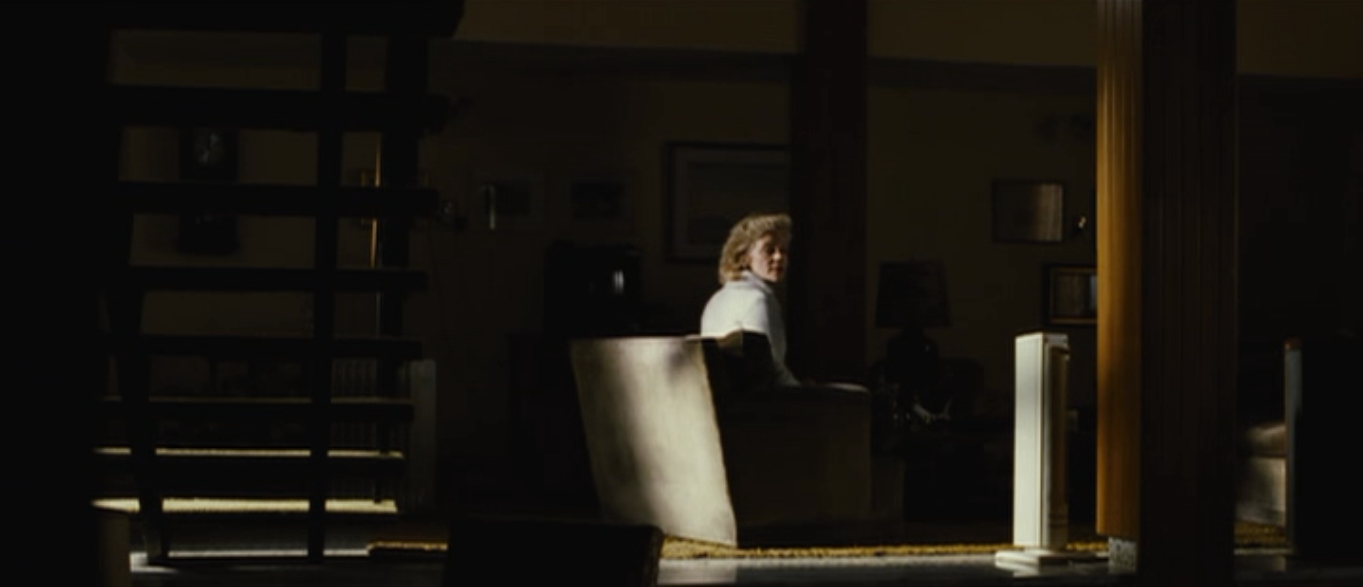
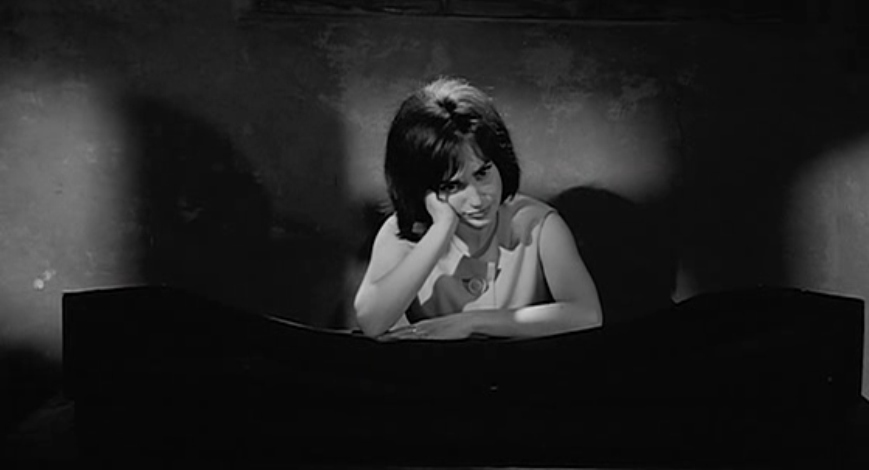
Before the Revolution, Italy, 1964, dir. Bernardo Bertolucci, starring Adriana Asti, Francesco Barilli

Story: In Parma, a young Communist feels torn between his romantic hunger for life, the security of his bourgeois background, and his ideological duty to the cause. Meanwhile, he carries on an affair with his emotionally unstable aunt.

The opening scene of Before the Revolution, or Prima della rivoluzione as it’s more poetically known in Italy, stands among the most elating passages in cinema. You can’t quite pinpoint how this works; trying to relate the alchemy of these moments in typed prose, my fingers tie themselves in knots. Bertolucci, only twenty-two when he shot the movie, would go on to direct more lush, illustrious sequences especially once he began to use color. But somehow here we feel we are getting closest to the pulsating consciousness powering his vision - a sensitivity and sensibility swooning with the pregnant possibilities and numinous actualities of the moment. What exactly do we see? Close-ups of Fabrizio (Frencesco Barilli), our hero, which loom like wall-sized portraits, even on a small screen; soaring overhead shots of Parma as if Bertolucci began to run through his hometown and in his enthusiasm sprouted wings and began to fly. What do we hear? Fabirizo’s neurotic narration, a mixture of lush language and furious, uneasy denunciation, underpinned by Ennio Morricone’s lush, heart-bursting score – fully invested in its sense of operatic intensity, and as unashamed of it as Fabrizio is wary. This film then is a sensuous experience, maybe even first and foremost, but it is also a film of ideas, and a dialectic exists between Fabrizio’s notions and his feelings (as well as amongst the various feelings themselves).


Remembering the Movies, Oct. 29 - Nov. 4

Every Friday, we look back at films released 10-100 years ago this week.

Welcome to Halloween weekend, when masked men, manmade monsters, and ghosts (friendly or very much otherwise) wander those darkened streets - and darkened movie theaters. Most of the films here could be tied at least loosely to the holiday, even though only the silent horror picture is an outright creature feature. Yet we also have a traumatized visionary haunted by supernatural hallucinations, a junk yard filled with the despairing outcasts of civilization, and a memorable thriller villainess who terrorizes the family she works for. With a little stretching, even the Jimmy Stewart comedy could fall into the "trick or treat" category (his winning lottery ticket begins as a treat, and turns into a trick). By the way, if you're thirsty after pigging out on M&Ms and tootsie rolls, why not wash that candy down with an Italian soft drink (and then just try to get that jingle out of your head!). Enter if you dare...

Atanarjuat (Best of the 21st Century?)


#93 in Best of the 21st Century?, a series in which I view, for the first time, some of the most critically acclaimed films of the previous decade.

While he is an infant, Atanarjuat's family goes hungry. The boy's father, an outcast and laughing-stock, can’t hunt to save his life – literally; the other men tease him, asking if his wife will hunt while he stays behind, sewing and cooking. That's humiliation in this community of hardy hunters; still, the hunger must be worse than humiliation. Atanarjuat is too young to comprehend the situation, but his elder brother Amaqjuaq soaks it all in grimly – particularly the mother’s advice: “You must never forget to take care of Atanarjuat.” Somberly, the little boy reaches up to his baby brother, holding out a scrap of walrus heart (which a friend of the family, pitying their destitution, smuggled in to the starving brood). Tellingly, the half-asleep infant does not respond – it’s as if even at this early age he is confident in his own ability to survive, and perhaps complacent in the sense that his family will take care of him.

When we meet Atanarjuat and Amaqjuaq as adults (played by Natar Ungalaaq and Pakak Innuksuk), the big brother is still looking out for the little one. Atanarjuat is a skilled runner and hunter, weak and dreamy in other respects, but holding onto his lifelong faith in survival and confidence in family security. In the course of this striking and stirring epic, that second feeling will diminish drastically, as Atanarjuat is forced to look out for himself. But that first feeling – the confidence in survival – will only grow, and be based on a firmer foundation, because indeed Atanarjuat (the “fast runner” of the English title) will endure what kills other men, and the experience will only make him stronger.

The Wind in the Willows - The Animal Kingdom


Part 7 of a microseries devoted to Kenneth Grahame's The Wind in the Willows and its film and television adaptations.
"'Of course he will,' chuckled the Otter. 'Did I ever tell you that good story about Toad and the lockkeeper? It happened this way. Toad...'

An errant Mayfly swerved unsteadily athwart the current in the intoxicated fashion affected by young bloods of Mayflies seeing life. A swirl of water and a 'cloop!' and the Mayfly was visible no more.

Neither was the Otter. ...

The Rat hummed a tune, and the Mole recollected that animal etiquette forbade any sort of comment on the sudden disappearance of one's friends at any moment, for any reason or no reason whatever."

-from The River Bank

Who exactly are the animals in The Wind in the Willows? Are they animals at all? Even if the creatures of the wood and the river could speak, would they really converse about "Toad and the lockkeeper"? (And anyway how could a toad engage a lockkeeper in the first place, assuming the lockkeeper is decidedly non-amphibian?) Perhaps, then, "Otter" is just a droll Edwardian gentleman, physically no different from you or me. After all, many theatrical and one or two cinematic interpretations of the famous story don't even bother to disguise the actors as animals - a couple whiskers for Rat, a bit of green face-paint for Toad, a tail for Badger if the production is feeling adventurous. At times this seems in keeping with Grahame's strategies. So then, these animals are clearly just people with animal names. Case closed. And yet, in a flash, that complacent conclusion is shattered, when Otter becomes an otter once again, leaping into the river after his insect meal. And what of that Mayfly?! One moment he's a "young blood" following a "fashion" (might as well be a dandy parading down Carnaby Street) and then, unexpectedly, he's Otter's lunch. If these animals are merely people in disguise, then we've just witnessed an act of cannibalism! Perhaps it's best if we follow Mole's lead, ask no questions, and, accepting the strange rules of The Wind in the Willows for what they are, go along for the ride through this topsy-turvy animal kingdom.


Fragments of Cinephilia


Short thoughts on: The River • Stranger Than Paradise • L'Avventura • Henry: Portrait of a Serial Killer • Howard Hawks • AFI lists • Wilford Brimley's physique

These fragments were originally comments on the Internet Movie Database (IMDb) left by yours truly in his pre-blogging days. The jump into blogging was a good move, all things considered, but sometimes I miss the spontaneity and clarity offered by commenting. Since I don't really do capsules or random observations these days, I'd like to revive some of these comments here; they are generally quick and to the point, no padding. These selections (dating from September 2007 to June 2008) are the first 10 I found worth reprinting. Some are general musings, some are focused on a particular film or moment, some are just amusing observations (amusing to me anyway). If you enjoy this sort of thing, let me know and I'll continue from time to time; there's plenty more where these came from. I've already noted that I'd occasionally like to reproduce older writing on this blog - to give myself a break once in a while, if nothing else. Before blogging, IMDb was my movie home, so here's a walk down memory lane. Comments begin after the jump.

The Sunday Matinee: Il Posto


This is an entry in The Sunday Matinee series.

This series is going to continue with European classics from the 60s, with three in turn from a given country - Italy, Britain, Czechoslovakia, perhaps France. After Fists in the Pocket last week, the Italian theme continues with...

Il Posto, Italy, 1961, dir. Ermanno Olmi, starring Sandro Panseri, Loredana Detto

Story: A quietly observant young man gets an office job in the city, where he takes his first tentative steps into the adult world, and falls in love with a pretty co-applicant.

I once read a cartoon featuring an old man lying in bed, covers pulled up to his nostrils. Next to him, an obnoxiously cheerful wife hovered, chirping, “Wake up, honey! Today’s the first day of the rest of your life!” The next panel switched to a courtroom, with the sleeping man standing in the docket and a judge slamming down his gavel. A speech balloon conveyed the verdict - “Justifiable homicide, case dismissed.” A curious anecdote with which to introduce Il Posto, because the cartoon’s arch cynicism could hardly be more out of tune with Ermanno Olmi’s warm, open humanism. Yet it serves to set the film in stark relief, because Il Posto also opens with a character in bed, his eyes wide open, a mother rather than a wife calling out to him. There are times in one’s life where clichés shake off the accoutrements of familiarity and take on a fresh, glowing meaning - “oh, that’s what they meant,” we think to ourselves. If someone told Domenico Cantoni, “Today is the first day of the rest of your life,” he would know exactly what they meant, and it would not be cause for a bitter, murderous outburst but rather excitement, anticipation, worry, and a bit of fear.

Remembering the Movies, Oct. 22 - 28

Every Friday, we look back at films released 10-100 years ago this week.

It's difficult to find one unifying theme this week - rather there are multiple little themes. With Halloween approaching, of course, there are a few gorefests; there are also several films dealing comically with sexuality - one both farcically and poignantly, one about as broadly as barn, and one with satiric surreality. There are two films with "seven" in the title - but there the connections end. So stroll through the years free of the need to furrow your brow and discover the thread. The bulk of these films have little in common but their alignment across time (at least to our decade-obsessed minds). As always, share your thoughts below; this week I'm particularly interested in your thoughts, recommendations or brush-offs as I've only seen two of the titles.

The Headless Woman (Best of the 21st Century?)


#90 in Best of the 21st Century?, a series in which I view, for the first time, some of the most critically acclaimed films of the previous decade.

There are the mysteries that wrap us up in the procedural onscreen, giving us a pleasing diversion and a riddle to solve, and then there are the mysteries which serve as red herrings, MacGuffins for something else. L'Avventura and Blow-Up belong to that latter category, and in The Headless Woman Lucrecia Martel follows suit. But if Michelangelo Antonioni was examining the psychology and spiritual ennui in his 60s classics, Martel's underlying investigation is primarily social. Vero (Maria Oneta) is driving down a dirt road by herself, returning from a get-together with her friends, mostly middle-class, middle-aged women like herself. Her cell phone rings and she leans over to take the call - the car slams into something, shudders and Vero freezes. We don't see what she sees - we're not even sure if she does see anything. She trembles, puts her sunglasses on, takes a few moments and then drives on, massaging her head which she hit in the accident. Looking back out of the car we can see what appears to be a crushed bicycle in the road - but this is not necessarily to say she hit its rider; in the first scene, a few children were chasing one another around and one of them easily could have left his bike in the road. Or so we hope - as does Vero. A torrential downpour has just begun, and as she drives into the rain she does not look back.

The Wind in the Willows - Toad Hall


Part 6 of a microseries devoted to Kenneth Grahame's The Wind in the Willows and its film and television adaptations.
"Arriving within sight of his old home, he rested on his oars and surveyed the land cautiously. All seemed very peaceful and deserted and quiet. He could see the whole front of Toad Hall, glowing in the evening sunshine, the pigeons settling by twos and threes along the straight line of the roof; the garden, a blaze of flowers; the creek that led up to the boathouse, the little wooden bridge that crossed it; all tranquil, uninhabited, apparently waiting for his return. He would try the boathouse first, he thought. Very warily he paddled up to the mouth of the creek, and was just passing under the bridge, when... Crash!"

-from "Like Summer Tempests Came His Tears"
That crash is the sound of "a great stone, dropped from above, smashed through the bottom of the boat." The stone is a physical reminder of the brute reality: Toad Hall no longer belongs to Toad. It is now in the possession of the weasels, ferrets, and stoats, two of whom stand on the bridge over Toad, jeering the vain, bewildered beast below. How did this happen? Well, of course, Toad stole an automobile, and went to prison, leaving his home untended and vulnerable to attack from the nasty animals of the Wild Wood. But why did they seize the opportunity, why were they laying in wait, what motivated them? Sheer deviancy? Jealousy? Or something a bit more substantial? And why did Toad Hall so easily fall into their hands - why was this grand estate vulnerable to attack? Jan Needle, in The Wild Wood (a revisionist retelling of Grahame's tale from the perspective of Baxter Ferret), suggests answers to these questions, but in fact clues can be found within the original story and confirmed by studying British society at the turn-of-the century. There the working class was ascendant, the aristocracy of old was crumbling, and the landed class found themselves - suddenly, unexpectedly, and dramatically - unlanded.


The Director's Chair

My 32 favorite directors (maybe)

My picks are subjective - these are favorites, not best, though I think all of them can stand among the best. They are conditioned by what I've seen, at age 26, and of course by what I haven't...yet. Nonetheless, I think it's an exciting list, and a great guide for anyone looking to expand their experience of auteurs. This post is a response to Films from the Supermassive Black Hole; meanwhile Justine Smith responded to my own tag at The House of Mirth and Movies. (Impressed by her "Unofficial Female Film Canon" I encouraged her to follow suit with a director's list and she did).

For my own picks, I took the visual approach - a title card representing each pick, followed by a lineup of great video clips, perfect if you want to re-live or (better yet) introduce yourself to the fascinating worlds of these filmmakers. Enjoy...

Search This Blog