Lost in the Movies: animation
Showing posts with label animation. Show all posts

belated June 2024 Patreon round-up: EXCLUSIVE - Conversation on The Boy and the Heron & Godzilla Minus One w/ Max Clark + TWIN PEAKS Character Series advance


Two Japanese World War II-era fantasy films from 2023 involving dangerous creatures crown my $5/month tier rewards for June - and they're covered in an unusual way. At this point I'm leaving podcasts for patron's picks every other month and Twin Peaks topics more sporadically than that, so I when I spoke about Hayao Miyazaki's The Boy and the Heron and Takashi Yamazaki's Godzilla Minus One with my friend and previous guest Max Clark (who got me to see both of these films), I decided to edit and present our extensive, two-hour-plus discussion in text form. In addition to exploring how The Boy and the Heron both emerges and differs from previous Miyazaki films (in the past I've covered Spirited Away in prose and podcast), we learn how Studio Ghibli Park in Japan crystallizes the auteur's vision, tease out the film's most-likely-accidental but still intriguing reflections on AI, investigate how the fanciful story reflects the behind-the-scenes Ghibli personalities, and reflect on why the friendship between the characters Mahito and Himi is so affecting. For Godzilla Minus One, which I saw initially in its brief black-and-white cinematic presentation, we dig into the intricacies of the fluid creature design and compare this latest entry - and its monster - to Hideaki Anno's Shin Godzilla (which I've discussed alongside the original and Americanized fifties Gojira/Godzilla in capsule form before; elsewhere I recorded capsules on the 2014 Godzilla and the original King Kong vs. Godzilla). And we get into many other subjects in relation to both films, including Japan's experience in the war and postwar periods. For even more from Max and I, you can check out our podcast episode on Blade Runner 2049 several years ago.

And open to all patrons is an advance entry on another beloved Twin Peaks character, alongside a few quick updates on what else I have been or will be working on this summer...


What are the June rewards?

Melodrama, Crime, Fantasy, and War: 17 Classic Capsules (LOST IN THE MOVIES podcast #45) - brief reflections on Ah, Wilderness!, A Letter to Three Wives, Invitation, Morning Glory, Parnell, Little Caesar, Dick Tracy, Nightmare Alley, Gilda, The Woman in White, It Came From Outer Space, Pinocchio, The Devil and Daniel Webster, The Enchanted Cottage, The White Cliffs of Dover, The Fallen Sparrow & The Angel Wore Red


This podcast season of "Hollywood Classics" reaches a crescendo as I pack over a dozen "capsules" from my Patreon into one episode. Some of these reflections run close to half the length of a normal review while others are just over a minute. As such, they range from tight but comprehensive overviews of a film to very quick riffs on a single element of an otherwise undiscussed movie. Topics include The Angel Wore Red's and The Fallen Sparrow's interpretations of the Spanish Civil War, Little Caesar's spot on the very cusp of the gangster genre, colorful side characters in The Woman in White, the way that everyday forties life is depicted in productions ranging from A Letter to Three Wives to an early version of Dick Tracy, the ability of Hollywood to capture current events alongside more escapist elements in films like The Enchanted Cottage, The White Cliffs of Dover's sympathies with British aristocracy from a down-to-earth American perspective, The Devil and Daniel Webster as a rare cinematic look at New Hampshire, and Pinocchio's proto-Disneyland quality (an idea I've also explored as a visual tribute). Stars like Katharine Hepburn (Morning Glory), Clark Gable (Parnell), and Rita Hayworth (Gilda, of course) appear throughout, and connections casual and arresting alike are made between several of these titles and Twin Peaks itself; for example, It Came From Outer Space anticipates the woodsmen of The Return in a similar location and situation. These topics are organized roughly along a snaking line of occasionally interconnected genres, including poignant melodramas like Invitation (in which a woman realizes her husband may not really love her) to noirish crime pictures like Nightmare Alley (in which a carnival mentalist rises to high society charlatan but risks falling to sideshow geek). Eventually a wide range of fantastical topics - sci-fi, fairy tales, supernatural allegories - bleed into meditations on the legacies of mid-twentieth century wars.

One of the longer discussions, which kicks off the episode, focuses on the many charms of Ah, Wilderness!, a 1935 adaptation of Eugene O'Neil's play set in a 1906 New England town. In addition to leading off from the last couple months of Lost in the Movies subjects - the similarly comic Swing Time and Monkey Business - this bemused but still sincere portrait allows for an obvious comparison to (and contrast with) Thornton Wilder's Our Town. Since I covered that less comedic, more ethereal tribute to small town Americana at the turn of the century in my Twin Peaks Cinema podcast (alongside other underbelly-of-the-pastoral tales Peyton Place and Kings Row), I was eager to tease out those connections as well as exploring how later decades remembered this earlier, ostensibly more innocent zeitgeist.


Subscribe, rate, and review on Apple Podcasts
You can also listen on Pinecast and Spotify
(and most places podcasts are found)


THE LINE-UP
(added in the afternoon)

Belladonna of Sadness as TWIN PEAKS CINEMA #12 (podcast)


An appropriate tie-in to my recent listener feedback episode of the Patreon podcast, which included a passage on the dark fairy tales themes coursing through Twin Peaks (specifically emphasizing Sleeping Beauty and the work of Anne Sexton), the Japanese proto-anime Belladonna of Sadness also kicks off the new three-month season of Twin Peaks Cinema. I'm calling this season's theme "Traumatic Transformations". These films all begin with characters haunted by trauma: loss of loved ones, abuse by powerful men, sometimes both. These traumas become wrapped up in fantasies of various kinds, some casually poetic (a fairy tale read to children when babysitting), some obsessively escapist (a UFO special sparking both avoidance of and a search for the more disturbing truth), and some literally manifesting in supernatural powers (an impoverished peasant evolving into a hypnotic witch whose magic threatens the very lord who raped her). Even the more realistic films suggest, in an offhand way much like Twin Peaks, that the tragedies unfolding across their communities may be connected on some deep, fundamental level with an individual's private crisis. This is certainly true of Belladonna of Sadness, a fascinating project mixing fable with social history, psychology with pornography, and static illustration with pulsating psychedelic montage. Connections to Peaks abound, perhaps most directly to The Secret Diary of Laura Palmer as our heroine Jeanne struggles with a BOB-like demon who is both a manifestation of her own personal defiance and a product of the assault which has become intertwined with her own identity.


Subscribe, rate, and review on Apple Podcasts
You can also listen on Pinecast and Spotify
(and most places podcasts are found)


April 2022 Patreon podcast LOST IN THE MOVIES #90 - Listener Feedback (Twin Peaks subjects include Sleeping Beauty connections, was The Return a passion project?, Fire Walk With Me's subversion of intent, ironic vs. sincere responses, Cooper's identity in flux & more + Snow White & Sleeping Beauty archive reading) + Twin Peaks Conversations podcast


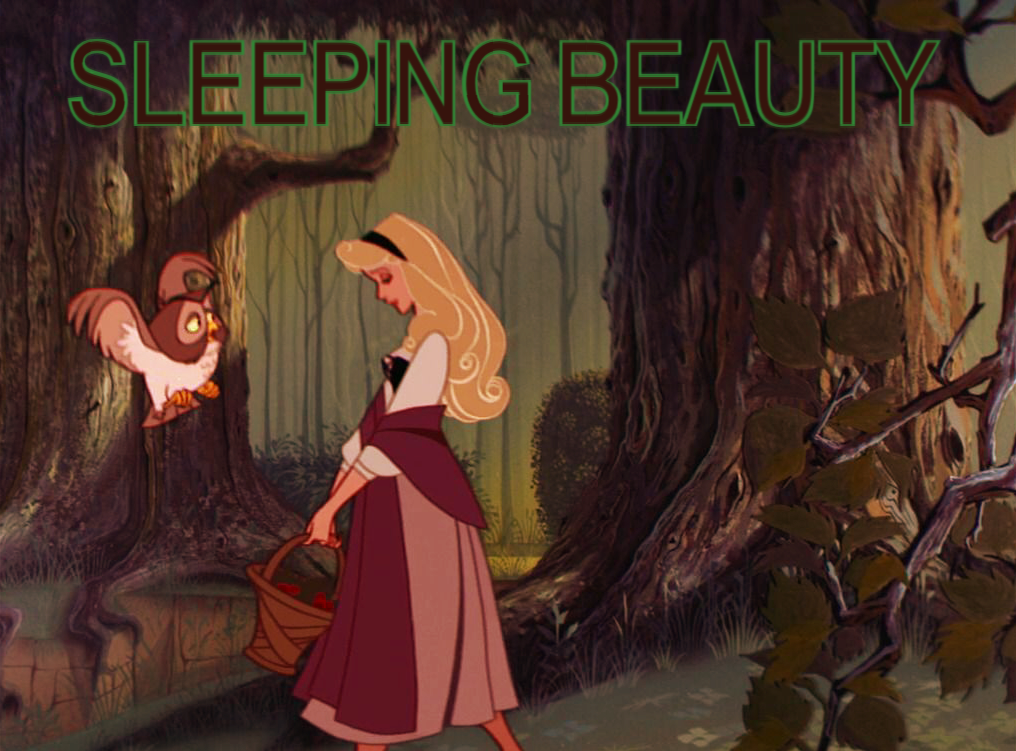
With this podcast - reading and sometimes responding to feedback I've received from my audience on Patreon, YouTube, and this site since last August - I'm finally caught up with the commitments of last summer (aside from the longer-term project of making the Lost in Twin Peaks podcast public). There was a lot to dig into from these responses - topics are listed below - but I especially wanted to highlight my patron Laurence's fascinating connections between Sleeping Beauty and Twin Peaks, which spurred larger digressions into Walt Disney vs. David Lynch, Anne Sexton's Transformations, and the explicit, experimental proto-anime Belladonna of Sadness (which I'll be covering in a public Twin Peaks Cinema podcast in a few days). This feedback also inspired an inordinate amount of time spent crafting a "Twin Peaks" font for the image above - sometimes the most ridiculous effort goes into the littlest things - as well as an archive selection in which I compared Sleeping Beauty to another work (in this case, Disney's own Snow White). Incidentally, "Opening the Archive" will continue month-to-month but aside from that, changes are on the way. I'm not exactly sure what my approach will be to patron podcasts in the coming months; my "Twin Peaks Reflections" approach to characters, locations, and storylines is complete, and my patron-exclusive "Twin Peaks Cinema" entries are done for the time being. Aside from keeping up monthly with brief comments on what I've been watching, reading, or listening to (as well as more consistently fielding feedback), I may offer a longer review in each episode, returning to the "Film in Focus" format. Above all, though, my main priority is to give myself the time for the three big Twin Peaks projects: the aforementioned public Lost in Twin Peaks; the long, long-delayed character series; and finally the last set of Journey Through Twin Peaks video essays.

See you in May...

Spirited Away (LOST IN THE MOVIES podcast #13)


The whimsical, sometimes unnerving but still soothing mood of Spirited Away feels like a good way to kick off 2021 as my podcast returns from its holiday break...plus it was Hayao Miyazaki's eightieth birthday last week. With the Ethan Hawke series over, I will now be discussing random films every couple weeks, with Lost in the Movies continuing to be interspersed with Twin Peaks Cinema and Left of the Movies entries every three months; the details are discussed on this episode. In the fall I will take a new approach, beginning to open up Lost in Twin Peaks on a daily/weekly basis (the long patron episodes will be divided up into more bite-size segments) and spinning Twin Peaks Cinema and Left of the Movies into their own monthly feeds. I also hope to start covering a new release every month, and I already have a theme in mind for the non-new release Lost in the Movies episodes throughout 2022 (think of which film celebrates its forty-fifth anniversary that year for a clue - no, not Eraserhead, although I do plan to release an episode on that '77 classic this year). As for Miyazaki's masterpiece, this is a shorter review than usual - a light meditation on the themes and atmosphere of the movie (another review, based on my first-time viewing, is linked below). I hope this encourages you to send in your own thoughts on Spirited Away, so that I can share them in future episodes.


November 2020 Patreon podcasts: LOST IN TWIN PEAKS #22 - Season 2 Episode 14 and LOST IN THE MOVIES #73 - Twin Peaks Cinema: Belladonna of Sadness (+ Twin Peaks Reflections: Norma, Vivian, Ernie, Red Diamond City Motel, Golf course, MT Wentz/The Final Dossier, The Devil's Bride & more)


In a radical departure from the cheeky, if at times apocalyptic, fun of Back to the Future Part II last month, November's "Twin Peaks Cinema" hones in on the dark psychological and avant-garde experimental aspects of Twin Peaks. When I selected it based purely on the Turner Classic Movies description, I was completely unfamiliar with Belladonna of Sadness, an explicit Japanenese mytho-psychodrama anime from the early seventies. The film tells the tragic story of a young peasant woman in France who survives a traumatic gang rape at the lord's castle, and the subsequent demonic visitations of a phallic creature who may be her own Id or Satan himself, in order to become a witch with healing powers. Full of psychedelic imagery and music evoking both earlier and later productions like Faust, Yellow Submarine, End of Evangelion, and The Witch, the film's biggest tie-in to Twin Peaks turned out to be literary, evoking Laura's struggles with BOB on the pages of Jennifer Lynch's Secret Diary.

Although I use the witch theme to connect to the archive reading of my Devil's Bride review, elsewhere the podcast tackles some relatively lighter fare - Norma Jennings' fraught relationship with her stepfather and (step?)mother, as well as how Mark Frost's later books further complicate this dynamic. In the Twin Peaks Reflections location studies, Twin Peaks' golf course and the Red Diamond City Motel (although I forgot to include that enticing "city" in the recording!) provide dual lens through which to view Leland's troubled consciousness, a theme I explore more deeply in another of this month's podcasts - my episode 15 coverage for Lost in Twin Peaks, opened to all patrons on the thirtieth anniversary of its airing. Meanwhile, the spear's tip of that rewatch (for $5/month patrons) advances to episode 21, which includes reflections not just on the troubled midseason material but also random tangents such as the American public's reaction to the ongoing Gulf War, a German left-wing terrorist group's idiomatic influence, and an abandoned cop show starring Rowdy Roddy Piper and Jesse Ventura. It's always fun to see where a particular episode leads us...


Podcast Line-Ups for...

An American Tail


My interest in An American Tail, the 1986 animated immigrant's tale which I probably hadn't seen since childhood, was reawakened by Molly Haskell's recent biography of Steven Spielberg. She spends several pages analyzing this film and its sequel (obviously objects of deep fascination for her, particularly given this study's place in a series called "Jewish Lives"), whereas some of the director's later movies are lucky to garner a paragraph. This despite the fact that Spielberg didn't even direct An American Tail; the project results at least as much Don Bluth's distinctive vision as anyone's. Still, Spielberg contributed to the writing and was a very active producer; Haskell rightly points out how personal the story is by drawing connections to other Spielberg films. The main character, a curious, guileless little mouse (Phillip Glassner) who wanders the dangerous streets of nineteenth century Manhattan after being separated from his Russian Jewish family during a transatlantic voyage, is even named after Spielberg's grandfather Fievel. When Bluth pushed for a more Americanized name, Spielberg held his ground. Seven years before Schindler's List (and arguably, more explicitly given the Holocaust film's ambiguous point of view) this may be the first time that Spielberg - so eager, by his own admission, to be the all-American filmmaker from the twentieth century suburbs - foregrounded his Jewish identity as an act of storytelling.

The 3 1/2 Minute Review: The Wind in the Willows (+ More thoughts on The Wind in the Willows) (videos)


My 3 1/2 Minute Review series was one of the few YouTube series I introduced in 2015 to make it to four entries before I shut it down in 2016. This, then, is the only entry I'm premiering this spring - the fifth and last to focus on a fantasy/sci-fi topic (previous entries included Neon Genesis Evangelion, The End of Evangelion, Revenge of the Sith, and The Dark Crystal). The Wind in the Willows - both book and adaptations - remains one of my most-covered subjects on this site, perhaps the most covered next to Twin Peaks. In fact, I had so much to say about it that I ended up breaking the "3 1/2 minute" format by creating a bonus video, "More thoughts on The Wind in the Willows." The first video follows the usual format of the series, discussing a single film - in this case the 1987 Rankin-Bass adaptation of the Kenneth Grahame novel; the second video expands to include clips from numerous other adaptations and also addresses the Disney World ride (and its replacement), the VHS tape on which my family recorded an airing of this film in the eighties (including some memorable kids' commercials), my own experimental film incorporating clips from Willows, and glimpses of all the famous voice actors in other roles. This follow-up concludes with an excerpt from my most extensive coverage of Willows, in which I lay out the "psychogeography" of the story, now illustrated by moving images of the various elements (like the River Bank, the Wild Wood, and the Wide World). I had a lot of fun putting this together, and hopefully you have fun watching it.

For more on The Wind in the Willows, check out my Wind in the Willows series exploring different themes of the book, my written review of the Rankin-Bass film, and my aforementioned experimental film What a Long Strange Trip It's Been. To browse these and several other Willows posts, explore my "Wind in the Willows" label.

Watch both Willows video essays combined into a single video on Vimeo:

Inside Out (The Unseen 2015)


"The Unseen" is a series in which I watch popular films for the first time. The list, which moves backwards in time, is based on the highest-ranked film I've never seen each year on Letterboxd (as of April 2018). Inside Out was #3 for 2015.

The Story: Eleven-year-old Riley Andersen's (Kaitlyn Dias') mindspace is as bright and colorful as it is safe and orderly. Her five primary emotions, presented in color-coded, personified form as the red Anger (Lewis Black), blue Sadness (Phyllis Smith), green Disgust (Mindy Kaling), purple Fear (Bill Hader), and effervescent yellow pixie Joy (Amy Poehler), run a well-regulated command center distributing glowing balls of visual memory through giant tubes (shades of Twin Peaks!). The strongest core memories power magical lands that exist across a canyon from these headquarters: Family Island, Goofball Island, Hockey Island, Friendship Island, and Honesty Island. The film delights in imaginative worldbuilding (Pixar-clever at its Pixar-cleverest), but also quickly develops its main plot: Riley's loving family is relocating from Minnesota to San Francisco just as their daughter begins to tiptoe into adolescent confusion. Traumatized by her removal from familiar touchstones, humiliated when she cries in front of her classroom, and eventually driven to run away from home after fighting with her parents (Diane Lane and - speaking of Twin Peaks - Kyle MacLachlan), Riley is no longer sure who she is. This chaos is reflected both in her external life and the now-upside-down interior world that Inside Out has lovingly crafted.

This scenario is meant not only to give the film an emotional grounding, but to test the limits and provide a conduit through all the nooks and crannies of Riley's mental landscape: the literal Train of Thought, the towering stacks and endless aisles of Long-Term Memory, the creampuff pastel aesthetic of Imagination Land, the trippy gauntlet of Abstract Thought (in which the cartoons become Picassolike cubist forms and even two-dimensional dots and lines), the show-biz shenanigans of Dream Studios (where the filmmakers delight in the gap between production process and immersive end result), and dreaded Memory Dump from which there can be no return - or can there? For these scenes, our ensemble becomes a bickering buddy team: Joy and Sadness traverse this landscape in an effort to restore Riley's personality after an emotional shutdown and get themselves back up to the command center after being accidentally ejected. Their companion Bing Bong (Richard Kind), Riley's long-abandoned imaginary pachyderm-ish friend, accompanies them part of the way but mostly the two (and especially the overconfident Joy) need to figure out how to help one another, because Riley can't go through life high on happiness: sometimes you have to sit with your sorrow too.

The Context:

Patreon update #50: Requiem for a Dream (+ The Blue Rose Magazine in 2018, The Green Book, A Charlie Brown Christmas/It's Christmastime Again, Charlie Brown, Sherilyn Fenn in Twin Peaks season 3, who is Red? & more) and preview of Mary Shelley review


Christmastime is (almost) here with the first of two archive pieces paying tribute to the holiday. This one doubles up a couple Charlie Brown Christmas specials, one from the sixties and one from the nineties, to find out what they tell us about changes in both pop culture and Peanuts canon across the years. I also reflect on Requiem for a Dream over the span of nearly two decades to revisit the early millennium's zeitgeist, much as I did with The Social Network last week. To continue this running theme of cinematic historiography, yesterday's biweekly preview explores how a Mary Shelley biopic straddles the eras of Reason and Romance (which bleed together more than we sometimes remember).

For "Twin Peaks Reflections" I survey a great year of issues for The Blue Rose magazine (including an amazing interview with Sheryl Lee), other topics include The Green Book and Richard Ojeda, and as always there's a ton of compelling listener feedback on Twin Peaks (this week perhaps a bit more than usual).

Stay tuned for one more podcast in a couple days, my last of the year before I take a revamped approach in 2019.


Line-up for Episode 49

INTRO

WEEKLY UPDATE/Patreon: 2nd tier biweekly preview - Mary Shelley

TWIN PEAKS REFLECTIONS: The Blue Rose Magazine in 2018

FILM IN FOCUS: Requiem for a Dream

OTHER TOPICS: The Green Book, Conspiracy Theory, Richard Ojeda, podcast recommendation

LISTENER FEEDBACK: The Owl Cave ring and Annie's nurse, Sherilyn Fenn in season 3, did Lynch care about the Audrey/Cooper romance?, who is Red?, is Audrey dead?, "Mike is the man" & Halloween

OPENING THE ARCHIVE: A Charlie Brown Christmas & It's Christmastime Again, Charlie Brown

OUTRO

Patreon update #47: Steamboat Willie's 90th anniversary & 9 other classic Mickey Mouse cartoons (+ Lindsay Hallam's Fire Walk With Me book, the Soviet War and Peace - Andrei & Natalya, Democrats in the midterms, Vic Berger's Walkaway video, Nazis vs. MAGA normies, Armistice Day, Halloween/political podcast recommendations & more)


Mickey Mouse, Laura Palmer, and Leo Tolstoy star in this week's eclectic podcast episode (with guest appearances by Vic Berger, Kurt Vonnegut, and Alexandria Ocasio-Cortez). In some ways, though, the lead subject is Lindsay Hallam, an author whom I interviewed last week about her new book on Fire Walk With Me. "Twin Peaks Reflections," continuing its synchronization with my "5 Weeks of Fire Walk With Me" series, discusses that book and the talk we had about. My film in focus becomes films in focus as I celebrate not just the ninetieth anniversary of Steamboat Willie, the first-distributed and first-sound-designed Mickey Mouse cartoon, on November 18, 2018, but also nine more Mickey shorts from the thirties, ranging from sharp black-and-white to lavish Technicolor. These were a lot of fun to revisit.

The bulk of the episode, however, is consumed by a mammoth "other topics" discussion, my first in about a month. There are a few readings or viewings to touch on but, aside from a lengthy segue on Halloween podcasts, the topics are mostly political. A couple weeks after the fact, I finally offer my response to the "blue wave" (or was it?) midterm elections and some of the spillover into the already-coalescing new Congress. I share a hilarious Vic Berger video about a rally gone wrong (including some audio), muse on the ridiculous but unsettling exchanges between fascists and run-of-the-mill Republicans on Twitter, and reflect on the centenary of Armistice Day. And of course, I offer another big round-up of podcast episodes, all featuring a political context but with subjects ranging from existentialism to the Haitian Revolution.

The podcast closes with part one of my War and Peace review from ten years ago, discussing the Soviet adaptation's structure and the parts focused on the characters of Andrei and Natalya. I'll pick up with the 1812 and Pierre sections next week - see you on the other side of Thanksgiving.

Oh and one more thing - early on the episode, I discuss some potential ideas for my approach to both Patreon and Journey Through Twin Peaks in the new year. Expect more concrete plans for this in the next few weeks including some public Patreon posts.


INTRO

THOUGHTS ON MY APPROACH TO PATREON & TWIN PEAKS VIDEOS IN 2019 (plus a brief update on my Lindsay Hallam interview)

TWIN PEAKS REFLECTIONS: Lindsay Hallam's Fire Walk With Me book & my interview with her

FILM IN FOCUS: Steamboat Willie (+ 9 Mickey Mouse shorts from the 30s)

OTHER TOPICS: The 2018 Midterms & Democrats in the House, Hill Street Blues, Mary Shelley and biopics, Frankenstein LIFE special edition, Halloween podcast recommendations, Vic Berger's Walkaway video, Nazis vs. "normie conservatives", Kurt Vonnegut & a centenarian on Armistice Day, political podcast recommendations

OPENING THE ARCHIVE: War and Peace (Soviet version)

OUTRO

Patreon update #40 (The End of Evangelion, Carrie Page as the dreamer, American Made, The Children Act, Wire's 154 & more) and preview of Zama review


What would you be interested in hearing from "Twin Peaks Reflections" in the future? With the Return rewatch over, I consider some different options and also ask for your input. Additionally, I survey all of the Twin Peaks subjects I've covered so far. Elsewhere on the podcast, I finish reading my 2015 End of Evangelion review, read some follow-up feedback from the listener who discussed Cooper as the dreamer (now she's focusing on Carrie Page as Laura's dream), and run down the films, books, and music I've experienced in the past several months. For the biweekly preview, I share a full review for the first time, of the Argentine film Zama.


Line-up for Episode 39

INTRO

WEEKLY UPDATE/recent posts: updated Twin Peaks directory, from now on focusing on my backlog

WEEKLY UPDATE/Patreon: 2nd tier biweekly preview - Zama, discussing biweekly preview backlog

WEEKLY UPDATE/work in progress: Ethan Hawke films for Patreon, The Unseen: La La Land, Devil's Bride review, Fire Walk With Me early draft, read Lindsay Hallam's Fire Walk With Me book, Mad Men season 2 premiere viewing diary

TWIN PEAKS REFLECTIONS: Where should I go with this section?

LISTENER FEEDBACK: Twin Peaks/Neon Genesis Evangelion, Double R counter patrons - is that shift/cut a continuity error & does it matter, Carrie Page as Laura's dreamer, remembering what Ethan Hawke was in

OTHER TOPICS: American Made, The Children Act, other films I've watched for online work, Dead Poets Society special features, still playing DVDs & CDs, Alan Splet, Roku menu, Spielberg bio, Lynch's Room to Dream bio, Blue Rose Magazine including Women of Lynch episode, Fire Walk With Me book, Classics Illustrated (90s editions), Time Machine books, Common Ground photo book, 154 (Wire album), Live at the Witch Trials (The Fall album), Sister Ray

OPENING THE ARCHIVE: The End of Evangelion (2 of 2)

OUTRO

Star Wars: The Clone Wars - discussion w/ Bob Clark on the feature film (& more)


Welcome to my viewing diary for the animated series Star Wars: The Clone Wars (2008 - 14). In this prelude (the diary will begin in earnest sometime in the future), Bob Clark and I discuss the preliminary material, particularly the film (which I reviewed yesterday). I have never seen this series before so there will be NO spoilers.

The impetus for covering The Clone Wars came largely from Bob Clark (creator of the webcomic Neo Westchester), a passionate fan of both the Star Wars prequels and this series. He joined me for a chat a few years ago, which I'm happy to finally produce now. We go in-depth into various aspects of the film The Clone Wars, branching off at points into discussions of various American animation styles (even allowing for these detours, I had to cut out long segues into auteurism in fan culture and the tone of the Disney renaissance - hopefully I can find a place for them eventually). Whereas I'm coming to the series as a total newbie, Bob is a long-time fan, and whereas I'm not particularly well-versed in animation techniques, Bob has far more grounding in that area. The resultant conversation will probably be of interest to both new viewers of The Clone Wars and those far more immersed in its culture, as well as those simply curious about the topic.

Star Wars: The Clone Wars


This is an entry in the viewing diary for the Star Wars: The Clone Wars animated series (2008-14).

I don't think any other TV series I cover will require quite as much "easing into" as The Clone Wars. We are now four entries into this viewing diary and after two live-action features, a couple dozen cartoon shorts, and an animated feature we still haven't quite hit The Clone Wars proper. Then again, this movie is probably best viewed not as a standalone film but as a pilot for the series. After all, its stakes are hardly as high as any other Star Wars film (well, ok, maybe Phantom Menace) and its purpose is clearly to establish characters and solidify a universe that will pay off. And actually I thought it did a pretty good job at that. In fact, I found The Clone Wars quite enjoyable - a surprise given its abysmal reputation. Although the series itself has been acclaimed, earning several Emmies, establishing a new generation of Star Wars fans, and winning over many viewers who had been dismayed by the prequels, The Clone Wars got off to an ignominious start with this theatrical feature.

Star Wars: The Clone Wars - Genndy Tartakovsky's Clone Wars microseries


This is an entry in the Star Wars: The Clone Wars series, covering both versions of the animated show alongside the prequel films.

As I prepared to do a Clone Wars series, I was confused. I knew there had been a movie, not very well-received (Rotten Tomatoes reveals an 18% - far, far worse than any prequel score). I knew there had been a TV show recently, supposedly much better than the movie, that was cancelled by Disney when they bought Lucasfilm - apparently they preferred to focus on a later period of Star Wars history for a variety of reasons. I knew that a decade ago, there was a Clone Wars show created in traditional 2D animation. So I was surprised when I looked at images from the Clone Wars film that were computer-animated (even though I hazily remembered that detail in retrospect - when the film was released in 2008, I looked askance at it partially because it seemed to be taking the prequels' obsession with CGI even further). Turns out there are two versions of this story. The first, called simply Clone Wars, was created by Genndy Tartakovsky for Cartoon Network in 2003-05, between the release of Attack of the Clones and Revenge of the Sith. Designed in short, stylized bursts of action (following one episode of quick exposition), each chapter of Clone Wars ran but three minutes, until season three, when the runtime was extended to twelve (for five episodes). Taken all together (either on the two-volume DVD set or as stitched into a relatively continuous narrative on YouTube), these twenty-five chapters form a two-hour twelve-minute exploration into untapped corners of the Star Wars universe. I loved it.

Patreon update #13: Spirited Away (+ announcing The Return rewatch series, two perspectives on Twin Peaks' meaning & more)


Nearly a decade since I first (and last) saw and reviewed Spirited Away, I was able to revisit Hayao Miyazaki's masterpiece - or one of them anyway - thanks to a patron's suggestion. The blu-ray was crisp and gorgeous, and I enjoyed digging into some background to the film on the special features as well. This is my Film in Focus this week, but the other big subjects are gathered in the "Twin Peaks Reflections" series where I announce that I'll be revisiting the third season week-to-week on the first anniversary of each episode. I also dive into two different perspectives on The Return, one presented through a Reddit thread reflecting on an LSD-tinged rewatch, the other a popular theory presenting Laura is "bait" to blow up Judy inside a "cage" universe. You can find out which one I really dug and which one I had major objections to.

I also re-visit my video clips series from 2011 (highlighting a "60 Years of Cinema in 40 Seconds" montage I made at the time) and continue to discuss some tweets and threads from earlier in the winter, including film critic Matt Zoller Seitz's "death of cinema" reflections and the decade-recap aesthetics of a car commercial. Plus find out which Twin Peaks veterans made People Magazine's "50 Most Beautiful People" list over the past twenty-eight years! Only the most important topics are covered on this podcast...


Line-up for Episode 13

INTRO

WEEKLY UPDATE/recent posts: Mad Men viewing diary

WEEKLY UPDATE/Patreon: changing "Film in Focus" reward

WEEKLY UPDATE/works in progress: Clone Wars & Star Trek viewing diaries, character series - which Twin Peaks veterans were on the "50 Most Beautiful People" list?, Matthew Arnold, history of Fire Walk With Me (screenplay w/ Laura & Cooper hooking up), 4 Ways of Watching of Fire Walk With Me

FILM IN FOCUS: Spirited Away

TWIN PEAKS REFLECTIONS: Announcement - upcoming rewatch segment, two perspectives: Rewatch-on-acid Reddit thread & "Judy cage bomb" theory

OTHER TOPICS: decade aesthetics - what does the 00s look like?, Matt Zoller Seitz on death of cinema, "lost generation" of filmmakers, Rashomon & Anatomy of a Murder - treatment of rape, Ben Dixon on Bernie Sanders in 2020, Scott Ryan & Twin Peaks Unwrapped on "keep the mystery alive", Mark Frost's "accidental" mistakes in the books & Twin Peaks music (teaser for my Reflections next week)

LISTENER FEEDBACK: Inland Empire

OPENING THE ARCHIVE: "Video Dreams" (September - November 2011), this week's highlight (32 Days of Movies Day 19 - "To Become Immortal, and Then, to Die.")

The Favorites - Stille Nacht I-IV (#6)


The Favorites is a series briefly exploring films I love, to find out what makes them - and me - tick. Stille Nacht I-IV (UK/dir. Stephen & Timothy Quay): Stille Nacht I - Dramolet (1988), Stille Nacht II - Are We Still Married? (1991), Stille Nacht III - Tales From the Vienna Woods (1992), Stille Nacht IV - Can't Go Wrong Without You (1993) appeared at #6 on my original list.

What it is • Each film is black-and-white. Each is rendered with exquisite stop-motion animation. Each is only a few minutes in length (the first, shorn of credits, barely clocks in at seventy seconds); together they add up to only fourteen minutes. Stille Nacht I: Dramolet was commissioned for MTV back when they used to do that sort of thing, presumably aired as a little bumper between programming. It stars a doll with a cracked head and its top lopped off, clothed in a sack and staring poignantly at a bowl on a wooden table. The bowl, naturally, is filled with iron shavings dancing about as if hypnotized by a hidden magnet. This eerie yet oddly sympathetic doll could be a refugee from the Quay's landmark animation from the previous year, Streets of Crocodiles (think the doll creature in Toy Story, which is almost certainly a tribute). The next Stille Nacht is a music video for the avant-garde nineties band His Name is Alive. If the first film was striking but fleeting, Stille Nacht II: Are We Still Married? evokes a more lingering effect. Featuring a female doll whose legs pump up and down and a white rabbit who twitches and flutters against a door, the short obviously calls back to Alice in Wonderland. Yet Carroll's work, weird as it is, features a common-sense little girl as its protagonist, grounding us in a world of wackiness. If we're with anyone in Stille Nacht II, we're with that rabbit and hence we aren't just interacting with a skewed universe, we are enmeshed in it. Stille Nacht III: Tales From a Vienna Wood is closer in form to the first, though it's longer (the longest of the four), a visual experiment with a collage-like soundtrack, perhaps more an object of contemplation than immersion. The camera rotates around a six-legged table with an extended spoon beneath it (the warped, exaggerated, shifting perspective derives from the Quay brothers' enduring fascination with the distorting process of anamorphosis, explored at length in their animated documentary Anamorphosis, or, De Artificiali Perspectiva). A bullet fires from a gun and shimmers through the dark undergrowth of, I suppose, the titular forest - though it's hard to say exactly what we're seeing. Then we are on to the final Stille Nacht, which returns to the Alice imagery and HNIA score of II, while raising the uncanniness another notch. This time we are both inside the room with the woman and the rabbit, and outside of it with a deathlike figure who shimmers hungrily in his desire to get inside. The rabbit devotes great attention to an egg that appears beneath the bleeding doll (this short is heavily invested in menstrual imagery), placing it inside a cage while his ears feverishly wiggle back and forth. There is a precision and intensity to all of the action in these films, as nonsensical as it seems, a conviction that impresses us with the notion that everything we see is incredibly important, even if we can't quite determine why. It's an odd comparison - and maybe the little bunny brings it to mind - but the works of the Quays function almost like nature films, but nature films shorn of a narrator to helpfully explain the habits and instincts of the world onscreen. It's left to us to explain the purpose of the frenzied activity or, better yet, give up and just go for the ride. Dreams, like nature, operate with an overpowering logic we may not be able to fully comprehend even as we sense its meaning intuitively.

Why I like it •

The Favorites - Red Hot Riding Hood (#30)


The Favorites is a series briefly exploring films I love, to find out what makes them - and me - tick. Red Hot Riding Hood (1943/USA/dir. Tex Avery) appeared at #30 on my original list.

What it is • We all know the story: a little girl goes romping through the woods to visit her grandma, while a sinister wolf lurks behind the trees ready to lead her astray. As Red Hot Riding Hood opens, a goofy narrator dutifully recites these familiar details, until the irritated wolf whirls around and stares straight out at the audience, lambasting the hidden storyteller. The credits roll again, in flashing neon, baring a subtitle "Something new has been added." That "something new" may be modernity - the new tale unfolds not in a rustic forest but amidst the urban jungle of Los Angeles with spotlights shooting from the skyscraper windows and a Hollywood and Vine street sign wrapped around the wolf's head after he takes a tumble. Or the "something new" might be sex, what was implicit in the original story now brought to the forefront - you'll lose count of the phallic symbols within about ten seconds of this new beginning. Little Red is now involved in a nightclub striptease and the wolf is her biggest fan, flipping between sleazy pickup artist, put-on Euro-sophisticate, and gawky goofball, depending on what he thinks will work. None of it does and as in the fairy tale, he races to Grandma's (some have read her as a bordello madam, awaiting the return of one of her employees) to intercept her and try again. Instead, the old woman who greets him is even hornier than he is, and has a stamina that ultimately defeats the exhausted canine, chasing him through rooms, knocking him out windows, reappearing in doorways when he thinks he's gotten rid of her. None of these descriptions convey the lightning energy of the short itself - it must be watched to be digested. Perhaps the "something new" that's been added is cinema: this is a fairly tale completely reconfigured for a new mass medium, a folk legend given new life by celluloid and the animator's brush.

Why I like it •

The Favorites - Snow White (#37)


The Favorites is a series briefly exploring films I love, to find out what makes them - and me - tick. Snow White (1933/USA/ani. Roland Crandall) appeared at #37 on my original list.

What it is • Not the Snow White you were expecting to see here? True, Betty Boop's version of the Grimm tale isn't exactly identical to the Disney feature, but there really are quite a lot of similarities! Both display the Evil Queen's jealousy when she discovers that Betty, er, Snow White is the "fairest in the land" by honing in on her face, with its wide eyes and bulbous nose, as it morphs into a frying pan with two sizzling eggs. The two Snow Whites also depict our heroine's escape from execution in similar fashion: the queen's knights destroy their weapons before brawling with the tree stump on which they were going to chop off her head, punching and kicking the scowling block of wood as it wraps its roots around them like tentacles. Most memorable of all is the music these films share - hallmarks of Sing-A-Long Song videotapes cherished by millennial children, in which the bouncing ball struggles to keep up with Cab Calloway in clown/ghost drag, lamenting his dead lover while his head detaches and becomes a giant bottle of "boooooze."

On second thought, maybe these two films are pretty different. Packing one hell of a punch at seven minutes and seven seconds (one for each dwarf), the 1933 Snow White beat its more famous companion by four years. Produced by the Fleischer brothers, it was largely the work of animator Roland Crandall who, according to Wikipedia, was given free reign to create this stream-of-consciousness cartoon by his own hand (which took half a year). The result is remarkable, every frame stuffed with hilariously random invention.

Why I like it •

Search This Blog