Lost in the Movies

The Vanishing as Twin Peaks Cinema #19 - Disordered Stories (podcast)


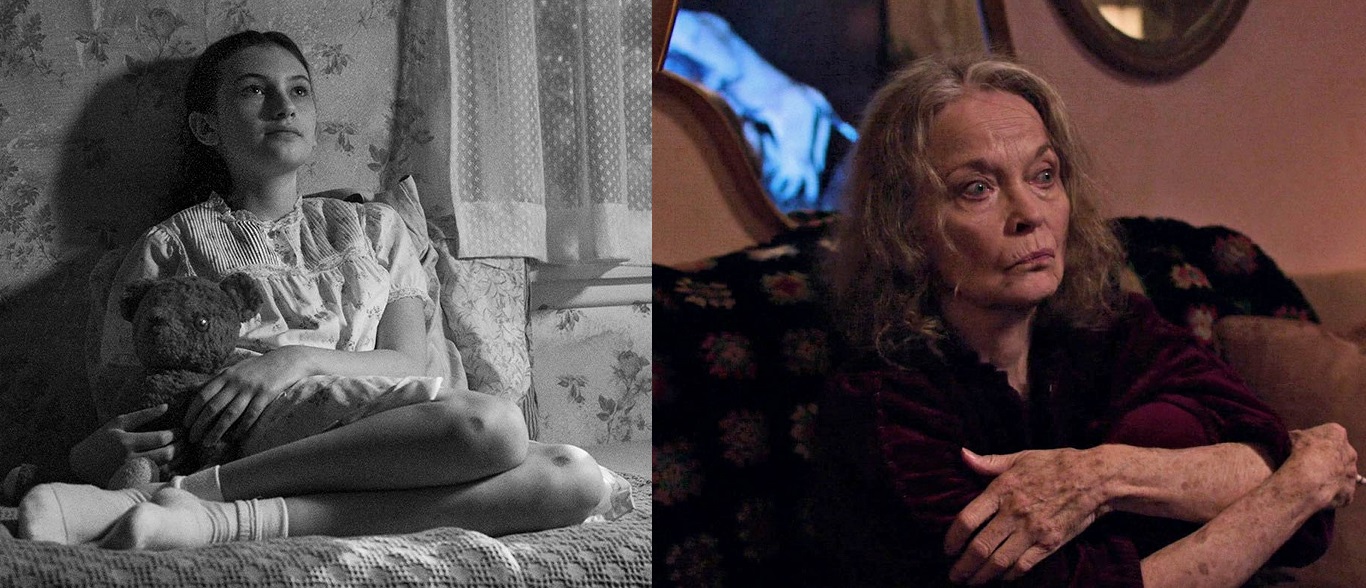
To my surprise, this is one of the longest episodes of Twin Peaks Cinema: a study of the chilling, riveting Dutch thriller The Vanishing from the late eighties (right around the time Twin Peaks itself was first conceived and produced). Like the other three subjects of fifty-plus-minute episodes - Vertigo, The Sweet Hereafter, and Mysterious Skin - this is one of the darkest Peaks-connected films, with a rich sense of character psychology. Unlike them, and unlike Fire Walk With Me, The Vanishing does not really explore the victim's side of the coin to the same extent as the detective's. The perspectives it offers are more akin to Cooper's and Leland's (and maybe even Windom Earle's!) than Laura's. That is not to say the story doesn't have a Laura Palmer-like character of course; Saskia is played by Johanna ter Steege, a luminous presence and lively performer whose curious mind and warm charisma anchor the opening passage of the movie before her disappearance haunts the rest. Once she casually enters a gas station and is never seen again, her brooding lover Rex (Gene Bervoets) spends years obsessed with her image on TV screens and missing posters, tracing and re-tracing their steps together and giving interviews which disturb the kidnapper Raymond (Bernard Pierre Donnadieu). That's not a spoiler, by the way, since he's introduced even before the kidnapping itself! This early reveal is embedded in a narrative jumbled with flashbacks and re-tellings (hence its inclusion as part of the "disordered stories" season alongside last month's timey-wimey Back to the Future Part II and next month's classically fractured Rashomon). Not identity, but motivation and outcome are the mysteries here along with the question of whether Rex will - or could - ever get satisfaction in his quest. In a way, Fire Walk With Me - or rather the process that led to Fire Walk With Me - is present in The Vanishing, because Rex's determined pursuit of Saskia, consequences be damned, resembles David Lynch behind the camera as much as anyone onscreen. Unable to give up on someone who appears to just be gone, he forces his way back into the past at great personal cost.


Subscribe, rate, and review on Apple Podcasts
You can also listen on Pinecast and Spotify
(and most places podcasts are found)


LINKS FOR EPISODE 19

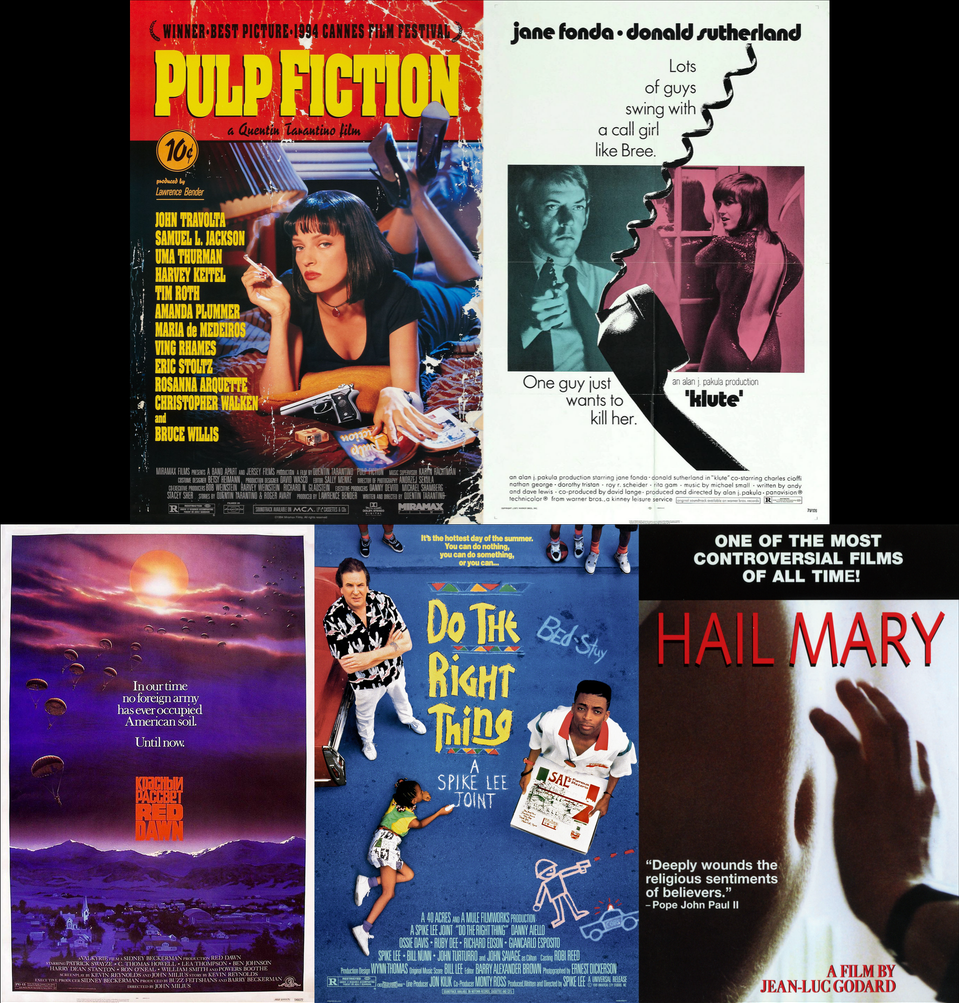
belated September 2022 Patreon round-up • LOST IN THE MOVIES patron podcast #95: The 90s in September (& beyond) + 70s bonus & Concluding the 80s ... Pulp Fiction, Klute, Red Dawn, Do the Right Thing & Hail Mary (capsules on Stranger Things, Top Gun: Maverick, The Goonies, Gremlins, Midnight Run, Scarface, Thelma & Louise, Scream, Gremlins II, Romeo + Juliet, Set It Off, The Firm, Exotica, Network, Superman, Magnolia, Saturday Night Fever, Thelma & Louise, Reality Bites, Boogie Nights, Nashville, The Pelican Brief, The Client, The Ice Storm, Dangerous Minds, archive readings of The Conversation & Enemy of the State + feedback/media/work updates including Encanto & more) + 3 TWIN PEAKS Character Series advances & Twin Peaks Conversations podcast


The Patreon episode intended for a couple months ago was released in two parts:


To represent the postmodern Gen X nineties, I easily chose Pulp Fiction - a film I'd surprisingly never really discussed on this site. Klute, on the other hand, was more a case of happenstance; I'd received the Criterion blu-ray as a gift a while ago but hadn't watched the film in a decade or more and remembered little about it. The film provides a fascinating snapshot of New York City right as the sixties/post-sixties cultural changes were taking hold alongside a phenomenal performance by Jane Fonda as a troubled, fairly independent, and deeply introspective call girl stalked by a mysterious figure. The other films I covered for the September podcast ended up being surprises - for me. I initially watched Red Dawn as something I'd mention briefly in capsule form but I ended up discussing it for much longer than that because there was so much to dig into with this Cold War relic (pairing its absurd premise with a tight, even thoughtful approach to the war film genre). Do the Right Thing and Hail Mary I did initially intend to be films in focus; after watching, I wondered if I'd have enough to say to justify that treatment but ended up elevating them from capsule status while pursuing various threads. My coverage of Hail Mary also serves as a tribute to the recently deceased Jean-Luc Godard - as will another film in focus in the November podcast.

In August, I began an approach that will take me through the end of the year: focusing on a different decade beginning with the eighties and moving in different directions. Each subsequent episode, including this one, would pair at least one full review and a bunch of capsules on films from a post-eighties decade with a review and handful of capsules on films from a pre-eighties decade (plus some more reviews/capsules finishing off the previous episode's decade). So for one of my more sprawling Patreon podcasts, I'm offering capsules on a couple dozen films from the seventies, eighties, nineties - plus the most films in focus I've ever provided in one episode. This one episode, however, is a two-parter separated by several weeks in which I waited to access some of the titles I wanted to discuss. As a result, this patron reward (intended for September) did not conclude until very late in October and I didn't get to sharing it on this site until now. (I was able to immediately catch up with a Halloween special podcast - you can listen to that one on Patreon; it will be cross-posted here soon.)


My advance character studies went up on time in September (I've already released October's round-up, which will be more officially cross-posted alongside the other reward intended for that month). For September, the trio of characters - ranked as always by screentime - included two familiar faces with new material in The Return and one entirely new entry on someone introduced in 2017. Patrons can now unlock each of these pieces...

(become a patron to discover their identities)


Finally, though I already cross-posted this conversation on its own, September saw John Thorne return to the Twin Peaks Conversations podcast; the longer part of our discussion - on his new book Ominous Whoosh and his further thoughts about Twin Peaks and especially the third season - is reserved for the $5/month tier.


Podcast Line-Ups for...

The Many Faces of Sarah Palmer • discussion w/ the Creamed Corn and the Universe podcast (+ status update: Lost in Twin Peaks returns)


Visit/download the episode on Apple Podcasts

Perhaps no Twin Peaks character presents more paradoxes and possibilities than Sarah Palmer. When Colin, the host of Creamed Corn and the Universe, asked me to choose a subject for this episode, Sarah was an easy pick. Colin's format focuses on (for the most part) a different character each week, tracing their journey chronologically within the text(s). Her breadth has few rivals. Sarah appears across a half-dozen pieces of Peaks media - the two original seasons and the belated third, the film and deleted seasons, Jennifer Lynch's novel The Secret Diary of Laura Palmer and Mark Frost's novel The Final Dossier. She even shows up in Between Two Worlds, Lynch's interview with the Palmer actors - in character - which was released on The Entire Mystery blu-ray set before The Return was announced. If you accept that she is indeed the "New Mexico Girl" of Part 8 (as Frost unambiguously asserts) then we may see more of her lifespan than any other character - not just in Frost's written backstory but illustrated in the aforementioned variety of media. And when Sarah calls to her daughter in the pilot, she becomes the first person to introduce us to Laura as a person (not just an icon, as she is initially presented); much later, Sarah's offscreen voice will speak the last words we hear in all of Twin Peaks - the very same ones (indeed, the exact same clip) that accompanied her first appearance in 1990.

Despite all of that, and despite her presence at crucial junctures throughout - shouting at Leland at the funeral, lying on the floor as Maddy is murdered, delivering a message to Major Briggs when Cooper is in the Lodge, and smashing Laura's portrait when Cooper tries to take her "home" - Sarah's presence in Twin Peaks is surprisingly fleeting and sporadic. Her memorable guest spots are sprinkled sparingly throughout the TV show and while The Return hints at a more central role in its mythos she remains on the margins. So who is Sarah Palmer? An evil demon? An innocent victim? Something more complicated? Colin and I had a great, expansive discussion on the topic, resulting in one of his longest episodes (after which I invited him as a guest on my own Twin Peaks Conversations, an episode released around the same time). I hope you find this as illuminating as I did in the process of recording, realizing or crystallizing concepts for the first time myself as we went back and forth.

•

Meanwhile, this week I accidentally published an advance episode of Lost in Twin Peaks, digging into the characters and event order of The Return's Part 11. This was quickly deleted and re-scheduled, but I thought I should offer a clarification so I uploaded the following announcement; my daily/weekly episode-by-episode podcast will be back tomorrow, running exactly through the end of the year by concluding on New Year's Eve (the plan for season two to go public, however, is deeply in doubt). Listen to the details here:


While I haven't yet properly cross-posted many of my other recent podcasts with introductions and illustrations (I'm saving those for successive Sundays from now on), they have been going up on Patreon and I might as well mention them here - a belated and much-belated two-part "September" episode on seventies, eighties, and nineties films; three more advance character studies; a Halloween special focused on a Coppola classic; and the second part of the aforementioned follow-up conversation with Colin. I also finally updated all of my directories to reflect the busy past couple weeks.

The Vulnerable Throne: capsule on The Bitter Tea of General Yen + brief reflections on Knights of the Round Table, Land of the Pharaohs & Rasputin and the Empress (LOST IN THE MOVIES podcast #47)


For the second time in this "Hollywood Classic"-themed season, I'm rounding up several films in a single podcast (in the first of those episodes I covered seventeen rather than just four). In this case, the coverage is lopsided; though not a full review, The Bitter Tea of General Yen is the focus for about seven minutes whereas the other three receive brief reflections lasting about a minute or two - touching on aspects of Knights of the Round Table, Land of the Pharaohs, and Rasputin and the Empress that I found noteworthy or compelling. I wanted to gather all four films in one public episode (they were initially watched and capsuled on my Patreon podcasts at different times) because they are so obviously linked in their stories. All four films depict the downfall of a ruler, usually due to romantic or sexual intrigue. General Yen slips from power by listening to a beautiful Christian missionary, King Arthur loses his wife to his best friend, Pharaoh Khufu is bewitched by a foreign princess determined to avenge her people's oppression, and the Tsarina Alexandria allows the diabolical Rasputin into her inner circle to soothe her son's illness. As has been the case all season, this podcast serves as a bridge on both sides; the previous month's episode on The Shanghai Gesture dealt, like Bitter Tea, with pre-World War II China while next month's episode on Marie Antoinette will conclude the series by focusing, like Rasputin, on a female monarch who falls to popular revolution.


Subscribe, rate, and review on Apple Podcasts
You can also listen on Pinecast and Spotify
(and most places podcasts are found)


THE LINE-UP

Back to the Future Part II as Twin Peaks Cinema #18 - Disordered Stories (podcast) + Back to the Future capsule


Tomorrow is the sixth anniversary of the future - the day that Marty McFly stepped into the 2015 version of Hill Valley as envisioned by the creators of Back to the Future Part II in 1989. The same year that Lynch/Frost Productions descended upon the Seattle area to establish Twin Peaks, Robert Zemeckis released the ambitious sequel to his 1985 hit Back to the Future. After spending all of his time travel in 1955 for the original film, Marty zips back and forth across the space/time continuum in this follow-up. He rescues his own son from catastrophe, returns to an alternate version of '85 run by a distinctly Trumpian Biff Tanner and finally winds up returning to the site of the first movie: spying on past events while trying to retrieve an item from the future which could threaten his own present. Got that? If Peaks can be perplexing and maddening due to its ambiguity and surrealism, Part II poses the opposite challenge. Its intricate interplay of meta-narratives and sci-fi concepts may make you either giddy or dizzy depending on your mood. While Marty initially travels to the year that David Lynch would film The Return, and his return to the Potterville-like alt-'85 resonates with Cooper's and Carrie's nocturnal sojourn in the season three finale, it's the third part of Back to the Future Part II that connects with Twin Peaks most strongly: a hero attempts to both alter and maintain the past and a filmmaker returns to his own earlier work, incorporating new and old footage into a new context, presenting the familiar from a skewed perspective.

After exploring the film in its own right as well as its Peaks connections, this podcast also incorporates some bonus material from my Patreon archives: a two-minute quickie capsule review of the original Back to the Future, a clip from my video essay comparing different eras in the town, an early tease for this eventual recording, and some memorable listener feedback which, unusually, scorns rather than praises the subject matter. This episode kicks off a new themed mini-season: "Disordered Stories", in which chronologically skewed films echo, amplify, and contrast with Twin Peaks' own narrative games.


Subscribe, rate, and review on Apple Podcasts
You can also listen on Pinecast and Spotify
(and most places podcasts are found)


LINKS FOR EPISODE 18

The Shanghai Gesture (LOST IN THE MOVIES podcast #46)


In an interlude between two omnibus film capsule episodes, I'm focusing on a single film for my October podcast: Josef von Sternberg's The Shanghai Gesture. Recommended by a patron back in 2018, in part for its Twin Peaks connections (which I touch on briefly), the film is an odd, fascinating fusion of Sternberg's precise, even ponderous direction and an eclectic, bustling scenario similar to Casablanca. Based on a scandalous play and set in a brothel barely disguised as a casino and featuring a tangled web of interracial romances, the film presented a challenge for the censors - contributing to the film's messy feel. Starring Gene Tierney, Victor Mature, Walter Huston, and Ona Munson, with scene-stealing supporting work by Phyllis Brooks and Maria Ouspenskaya, the ensemble offers so much to discuss that I didn't even find time to mention Eric Blore, one of my favorites from the Astaire/Rogers stable. This review forms a bridge between the prior and upcoming podcasts, as has been a consistent pattern all season. September's anthology ended with a discussion of The Angel Wore Red, about a prostitute in a tumultuous early twentieth century society, and November's round-up will begin by covering The Bitter Tea of General Yen (sampled at the end of this episode) which sets a disoriented Westerner against a Chinese culture she's both at home and at odds in, just as in The Shanghai Gesture.


Subscribe, rate, and review on Apple Podcasts
You can also listen on Pinecast and Spotify
(and most places podcasts are found)


LINKS

The Shanghai Gesture (1941) by Sheila O'Malley (Film Noir of the Month)

TWIN PEAKS CONVERSATIONS #14 w/ Ominous Whoosh author John Thorne (YouTube & extended PATREON)


With the publication of his new book Ominous Whoosh: A Wandering Mind Returns to Twin Peaks - whose concepts we've been discussing as far back as three and a half years ago (and which the author himself has been cultivating since the third season aired) - John Thorne becomes the first repeat guest on my Twin Peaks Conversations podcast. In the previous episode from Halloween 2021 we dove deeply into questions about Cooper's and Diane's identity and the purpose of Cooper's "mission" in the finale. We continue to trace some of those themes in this installment but also sketch out his approach to this book, in which he interspersed episode-by-episode breakdowns with meaty "interlude" essays exploring discrete topics like the Palmer house, the nature of Judy, and Audrey's unique storyline. I debuted this conversation last week, and there was also - unusually - a lively live chat accompanying the video premiere so check out that chat archive, as well as in-depth comments, on the YouTube page for more discussion (jump to the end of the video to see the full chat). And let me know what you think of these or other Peaks subjects and our interpretations thereof. John's ideas are often as challenging as they are illuminating, and I've long enjoyed grappling with the questions they raise and seeing how my own answers both overlap with and diverge from his own.

We begin by outlining the structure and style of what's on the pages of Ominous Whoosh (which is, of course, a fantastic title taken from the series' evocative closed captioning, alongside other parts of John's text...)

PART 1 on YouTube

Another hour-plus of discussion is exclusive to the $5/month tier on my Patreon, diving deeper into questions about the endings of season three and Fire Walk With Me, and following the curious thread of Sarah/Judy/Experiment (among other topics)...

Listen to...


Prior to our Twin Peaks Conversations episodes, I spoke to John over three print interviews in 2014 (about Wrapped in Plastic, The Missing Pieces, and the announcement of The Return), again when he published his 2016 book, and then over four Patreon podcasts in 2019 (first, second, third, and fourth).

Bigger Than Life as Twin Peaks Cinema #17 - Ray's Haunted Fifties (podcast)


The conclusion to my three-month "Ray's Haunted Fifties" season, Bigger Than Life may have encouraged more Twin Peaks comparisons than any other Nicholas Ray film (except perhaps last month's entry, Rebel Without a Cause - whose direct influences are more on the surfaces and whose indirect connections are more subtle). Like the title that kicked off this season, On Dangerous Ground, Bigger Than Life centers an angry, violent father, but in this case the father's wrath is directed at his family rather than on its behalf; or rather, he convinces himself that his patriarchal rage is meant for the benefit of his wife and son...even it costs them their lives. As a mild-mannered schoolteacher turned by addiction to Cortisone into a psychopathic abuser, James Mason's Ed Avery runs a similar gamut to Leland Palmer in Fire Walk With Me (or, for that matter, to Walter White in Breaking Bad, which also comes up in this discussion). Tackling one of the most common fifties motifs, familial domesticity in suburbia, Bigger Than Life offers an early subversion of its tropes in ways both obvious - Avery's controlling mania undercutting the idea that "father knows best" - and more subtle (there's even a cameo from the star of Leave It to Beaver himself in a bit of black comedy). The film's portrayal of the family's financial precarity and spiritual ennui, even before Avery goes mad, evokes a broader societal malaise behind his own personal drama.


Subscribe, rate, and review on Apple Podcasts
You can also listen on Pinecast and Spotify
(and most places podcasts are found)


LINKS FOR EPISODE 17

Melodrama, Crime, Fantasy, and War: 17 Classic Capsules (LOST IN THE MOVIES podcast #45) - brief reflections on Ah, Wilderness!, A Letter to Three Wives, Invitation, Morning Glory, Parnell, Little Caesar, Dick Tracy, Nightmare Alley, Gilda, The Woman in White, It Came From Outer Space, Pinocchio, The Devil and Daniel Webster, The Enchanted Cottage, The White Cliffs of Dover, The Fallen Sparrow & The Angel Wore Red


This podcast season of "Hollywood Classics" reaches a crescendo as I pack over a dozen "capsules" from my Patreon into one episode. Some of these reflections run close to half the length of a normal review while others are just over a minute. As such, they range from tight but comprehensive overviews of a film to very quick riffs on a single element of an otherwise undiscussed movie. Topics include The Angel Wore Red's and The Fallen Sparrow's interpretations of the Spanish Civil War, Little Caesar's spot on the very cusp of the gangster genre, colorful side characters in The Woman in White, the way that everyday forties life is depicted in productions ranging from A Letter to Three Wives to an early version of Dick Tracy, the ability of Hollywood to capture current events alongside more escapist elements in films like The Enchanted Cottage, The White Cliffs of Dover's sympathies with British aristocracy from a down-to-earth American perspective, The Devil and Daniel Webster as a rare cinematic look at New Hampshire, and Pinocchio's proto-Disneyland quality (an idea I've also explored as a visual tribute). Stars like Katharine Hepburn (Morning Glory), Clark Gable (Parnell), and Rita Hayworth (Gilda, of course) appear throughout, and connections casual and arresting alike are made between several of these titles and Twin Peaks itself; for example, It Came From Outer Space anticipates the woodsmen of The Return in a similar location and situation. These topics are organized roughly along a snaking line of occasionally interconnected genres, including poignant melodramas like Invitation (in which a woman realizes her husband may not really love her) to noirish crime pictures like Nightmare Alley (in which a carnival mentalist rises to high society charlatan but risks falling to sideshow geek). Eventually a wide range of fantastical topics - sci-fi, fairy tales, supernatural allegories - bleed into meditations on the legacies of mid-twentieth century wars.

One of the longer discussions, which kicks off the episode, focuses on the many charms of Ah, Wilderness!, a 1935 adaptation of Eugene O'Neil's play set in a 1906 New England town. In addition to leading off from the last couple months of Lost in the Movies subjects - the similarly comic Swing Time and Monkey Business - this bemused but still sincere portrait allows for an obvious comparison to (and contrast with) Thornton Wilder's Our Town. Since I covered that less comedic, more ethereal tribute to small town Americana at the turn of the century in my Twin Peaks Cinema podcast (alongside other underbelly-of-the-pastoral tales Peyton Place and Kings Row), I was eager to tease out those connections as well as exploring how later decades remembered this earlier, ostensibly more innocent zeitgeist.


Subscribe, rate, and review on Apple Podcasts
You can also listen on Pinecast and Spotify
(and most places podcasts are found)


THE LINE-UP
(added in the afternoon)

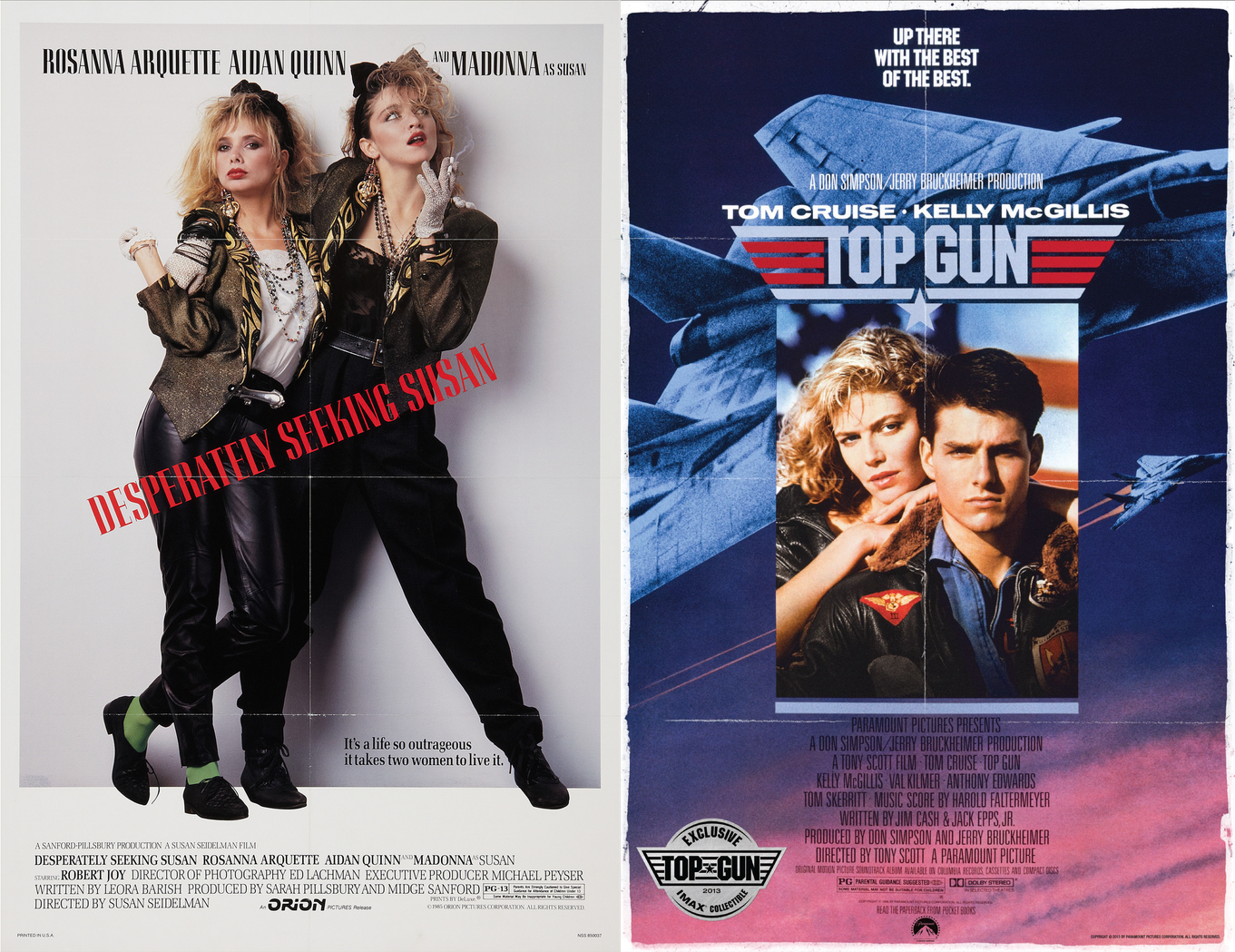
August 2022 Patreon round-up • LOST IN THE MOVIES patron podcast #94: The 80s in August... Desperately Seeking Susan & Top Gun (capsules on Stranger Things, Poltergeist, Beverly Hills Cop, Witness, The Breakfast Club, Wall Street, Twins, The Hunger, archive readings on Fast Times at Ridgemont High, E.T., Muppet Babies, An American Tail, Brave Little Toaster, The Secret of NIMH, The Last Unicorn + feedback/media/work updates including Captain America: Civil War & more) + 3 TWIN PEAKS Character Series advances & Twin Peaks Conversations podcast


I stumbled across a theme for this podcast, and by extension the next several months, only when I watched Top Gun about halfway through August. Then the idea kept getting reinforced by the outside world: what was playing in theaters, showing on TV, trending on social media, and even being given as gifts at a cousin's birthday party (a vinyl record player accompanied by an LP of the Top Gun soundtrack provided the score for that evening). Having bought a Top Gun blu-ray on a whim this past spring, I only found time to watch it after catching up with various other projects and was inspired to keep exploring eighties films as the month went along. I pulled some DVDs from my own collection and ordered others from Netflix; Top Gun itself was initially only meant to be a brief capsule discussion, so for my longer film in focus section I found (free on YouTube), watched, researched, and reviewed the wry, whimsical Desperately Seeking Susan. That choice may have been inspired by the Madonna-scored montage from the third season of Stranger Things which I also talk about on this podcast, finally catching up years after I watched the first episode. And as it turned out, there was so much to dig into with not just Top Gun but its production and tangential themes (the USSR as an implicit enemy, the totalizing eighties aesthetic) that the Tom Cruise action flick became my second film in focus for the month, the first time I've doubled up in years.

I didn't make it to 2022's Top Gun sequel on the big screen, as initially planned, nor was I able to finish watching the newer fourth season of Stranger Things by month's end - those capsules will have to wait till September. However, I did get to reflect - often for longer-than-usual capsules - on a couple first-time viewings (The Hunger and Witness) and return to some classics I'd already seen (Wall Street, Poltergeist, The Breakfast Club, Beverly Hills Cop, and Twins). Twins, I'm pretty sure, was the first live-action film I ever saw in a theater, as a five-year-old in 1988. It's kind of amazing to consider that my college rewatch in 2005 (when the seventeen-year-old movie and my childhood viewing of it seemed like ancient history) is in fact exactly halfway between the present and '88, a generation's length in either direction.

Speaking of generations, that favorite subject comes up not only in some of these capsules (particularly The Breakfast Club) but also the archive reading of my 2012 Fast Times at Ridgemont High review, and the 2022 reflection which follows now that another ten years has passed since I wrote that retrospective. (There were so many potential Opening the Archive picks this month that, in addition to an excerpt on the '84 Olympics in my main episode, I also published an entire bonus episode of readings: reviews of E.T., Brave Little Toaster, An American Tail, The Last Unicorn, and The Secrets of NIMH, plus an essay on meta cultural references in Muppet Babies and other cartoons.) The topic of generations appears first in my behind-the-scenes work update in the non-eighties part of the podcast, which also includes another Marvel capsule for Civil War.

Next month there will probably be more non-decade-themed capsules but also probably even more hailing from that particular decade. But which decade will that be? Should I move backward to the seventies, or forward to the nineties (and onto the zeroes and teens, catching up with many recent acclaimed and popular movies I missed in my lost decade of cinephilia)? I'm leaning toward the latter, but perhaps I'll make some room for at least a sample of the former as well.

As for other Patreon rewards, after falling behind in the mid-summer I was able to publish all three character advances for August well before the end of the month. These entries provided a particular challenge since a couple of them actually covered more than one character, entailing research into multiple actors...

(become a patron to discover their identities)


I already cross-posted the full conversation a week ago, but specifically on Patreon I published almost an hour of extra discussion with author Lindsay Hallam for the $5/month tier. The occasion that night was the thirtieth anniversary of Fire Walk With Me...


Podcast Line-Ups for...

Search This Blog