Lost in the Movies: sports
Showing posts with label sports. Show all posts

belated October 2021 Patreon podcasts: LOST IN THE MOVIES #84 - Twin Peaks Cinema: Field of Dreams (+ Twin Peaks Reflections: Rusty, Annie, Library, Easter Park, Lodge Mythology/Season 3 Part 14 & more) plus Twin Peaks Conversations, Lost in Twin Peaks & other announcements


My October patron podcasts took almost as long to complete as my February ones did (longer, in the case of the main episode). In some of the announcements linked below, I explain why - if you haven't already read/heard me talking about it - but by the eve of Thanksgiving* I got there, publishing the first new "Twin Peaks Cinema" discussion since early September. A listener suggested Field of Dreams when re-watching her childhood favorite and I was intrigued by similarities both circumstantial and fundamental. Both capture something about the late eighties/early nineties zeitgeist, its quasi-spiritual yearning for both the comfort of the past and the excitement of a just-on-the-cusp future. And once again Part 18's existential road trip offers a new point of comparison between Twin Peaks and another work, although in this case reclusive writer Terrence Mann and boomer dreamer Ray Kinsella bond more readily than Cooper and Carrie Page. Elsewhere in this episode, I read from one of my favorite essays - an extensively-researched 2010 meditation on Field of Dreams' relationship to the sixties (as well as the later zeitgeist looking back on it nostalgically) - and I use a late season two episode of Twin Peaks as a springboard for several subjects including the show's sprawling mythology. Here's the round-up...

(*November's official podcasts were completed after these, during the last days of the month, and will be cross-posted separately in a couple weeks.)

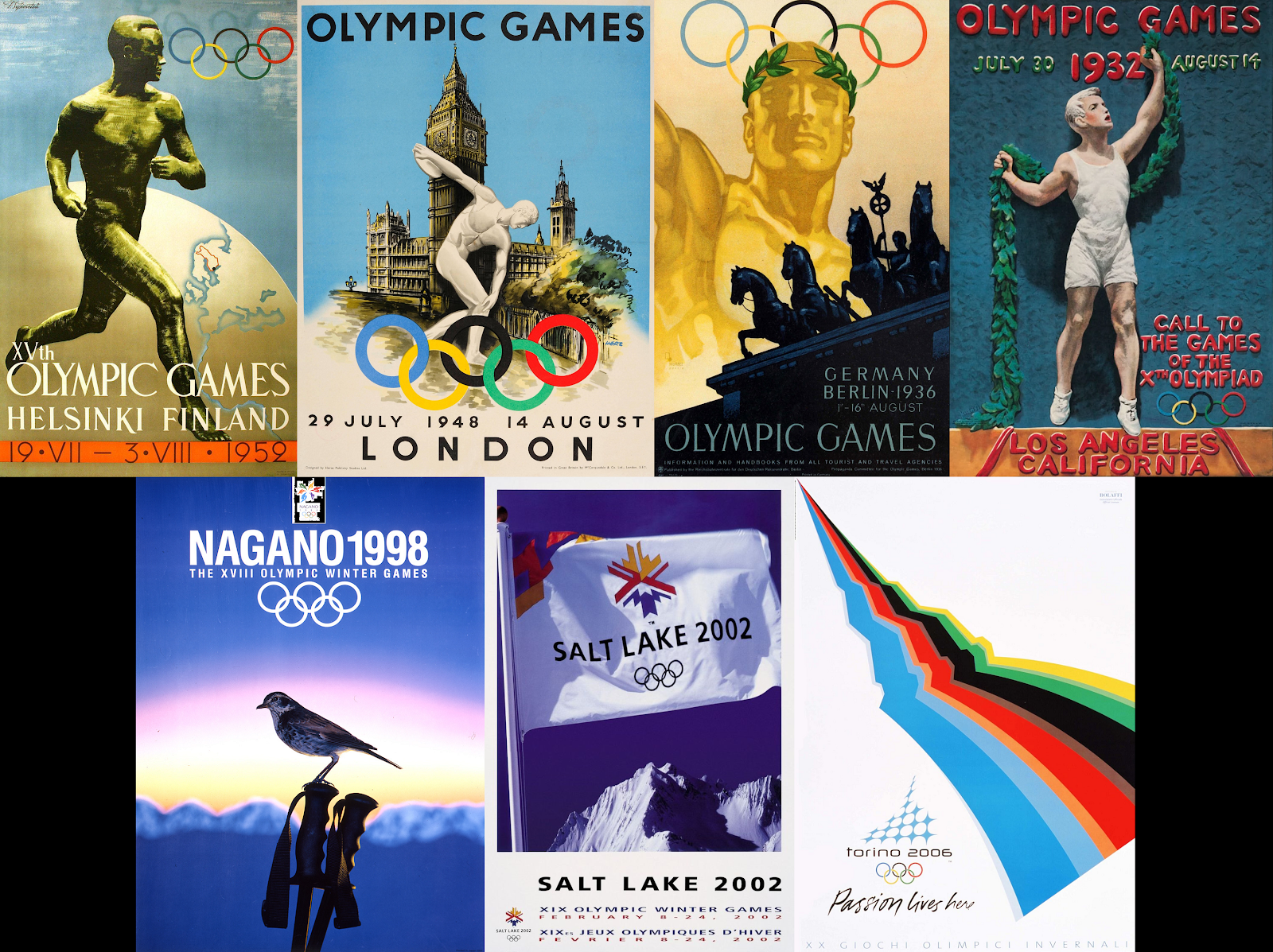
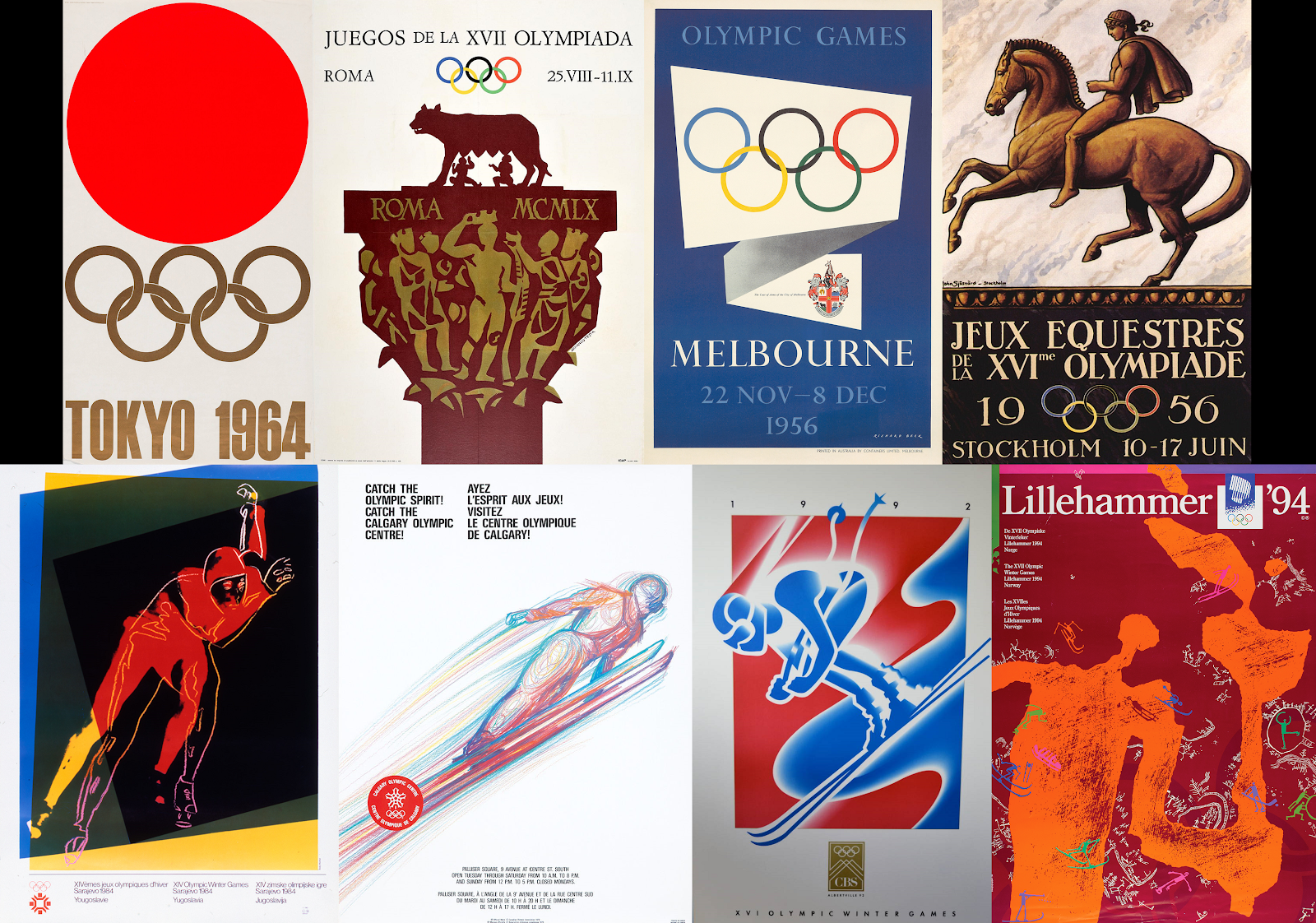
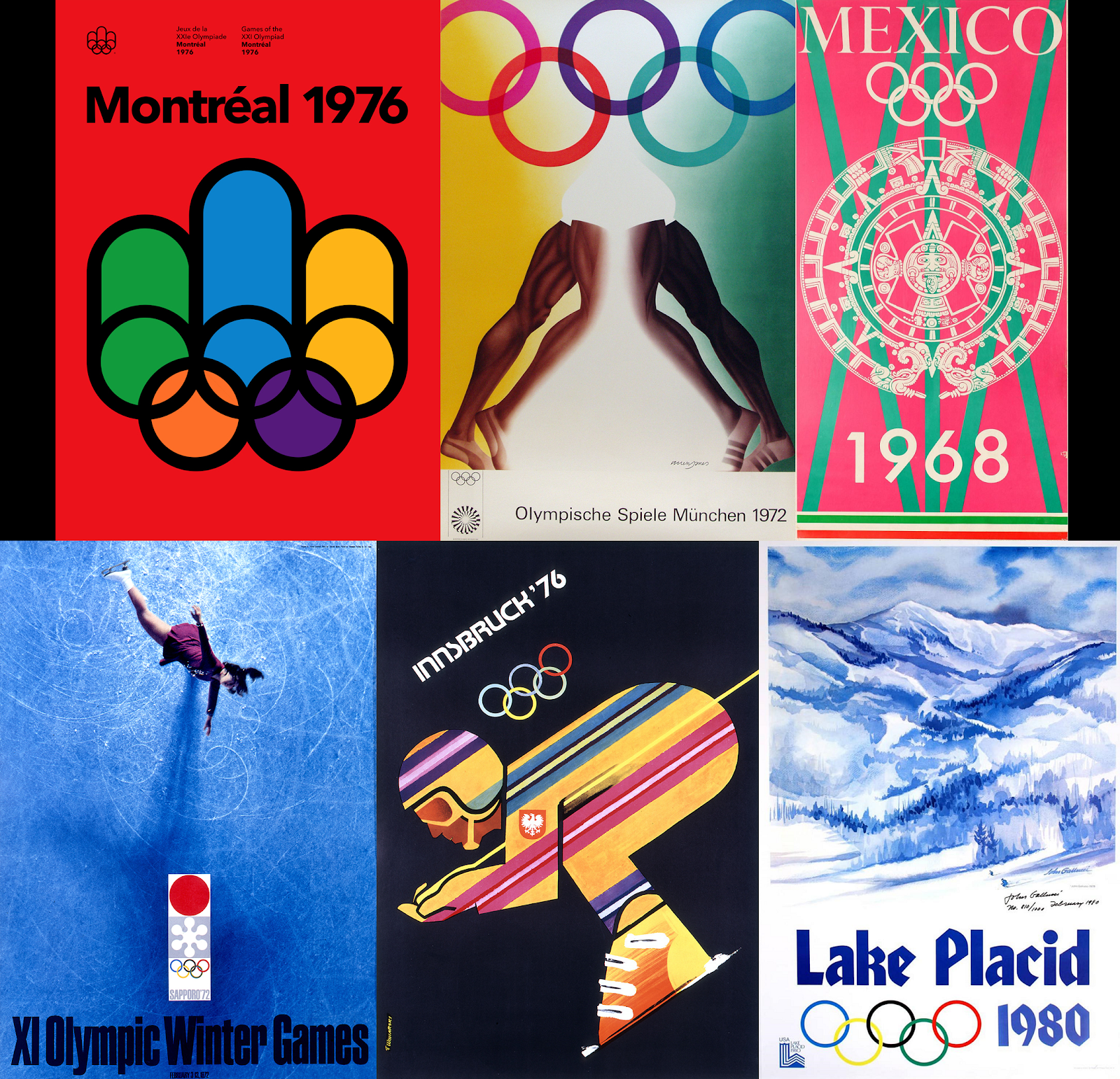
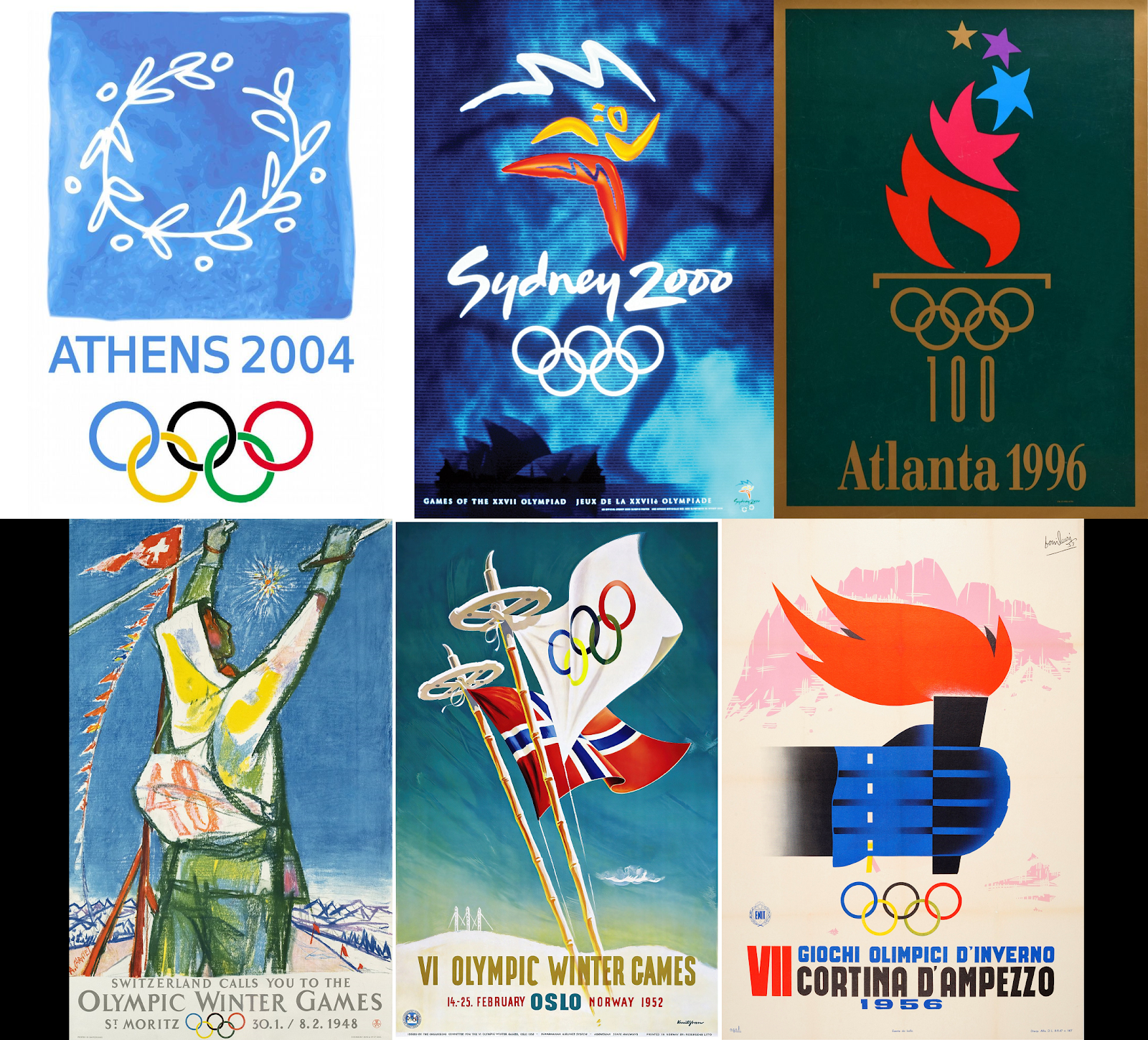
The Olympic Series: full directory


Introduction

With the long delay of the 2020 Olympic games, we now face the shortest gap between summer and winter events since the International Olympic Committee switched to an alternating schedule nearly thirty years ago (from 1924 to 1992, both seasonal games were held in the same year). To bridge that gap from August 2021 to February 2022 (Tokyo to Beijing), each month* I will be reviewing between six and seven Olympic documentaries in a single round-up, with capsules focusing as much on the historical context, geographical/cultural flavor, and cinematic style of the films as the notable athletic achievements or personalities. Few sporting events end up capturing their zeitgeists - and all the consequent political implications - as thoroughly as these international games, for all their attempts to eschew the tensions of their times. Think Tommie Smith and John Carlos infamously raising their fists in the air in Mexico 1968, or the Black September hostage-taking in Munich 1972 which led to the deaths of the Israeli team, or the reconciliation between North and South Korea which reached its peak in PyeongChang 2018 - or, of course, Adolf Hitler and Leni Riefenstahl collaborating to glorify the Nazi regime in Berlin 1936.

Although I will be watching many of these movies through the Criterion Collection boxset which spans 1912 to 2012, I'll also be checking out some newsreels on YouTube as a bonus (for the early years that either didn't have official films or lost those films), and watching the more recent post-Criterion documentaries, on 2014, 2016, and 2018, which are available on the IOC's website. My approach will balance recent and distant past, as well as winter and summer, by moving backwards through the summer games and forward through the winter ones. I will be bookending the series with comments on the broadcasts (since the films aren't ready yet) of the just-finished Tokyo summer games and, once these too have concluded, the Beijing winter games. This will be a fun, zigzag rhythm to establish in my journey through time.

Here is the schedule, which will be updated with images and links as the pieces become available. They will appear once a month on Wednesdays, encompassing multiple films at the same time. (*2022 update: After the first entry, the series was delayed and re-scheduled as weekly, so it will now be published every Wednesday from January 19 to February 23.)

NOT JUST O.J.: 7 Subjects in O.J.: Made in America (video essay)


My first video essay of 2017 is finally available and it took a while to put together. As part of "Oscars on Fandor Month" it celebrates Ezra Edelman's 8-hour documentary O.J.: Made in America, which is nominated for Best Documentary in tonight's ceremony.


In order to analyze this film, I "cheated" and took two different approaches. The two-and-half minute introduction compares Made in America to its coincidental 2016 companion, the dramatized miniseries The People v. O.J. Simpson. Then, I move on to the primary approach: delineating seven subjects the film deals with besides O.J. Simpson, although they all involve him of course.

Here is my introduction to the video:


Raging Bull, the Last of the Consensus Classics


This is an entry in "The Big Ones," a series covering 32 classic films for the first time on The Dancing Image. There are spoilers.

There is some irony in Raging Bull being called “the best American film of the 1980s.” Its placement in that decade is a mere accident of chronology – and critics calling it the best of those years are essentially saying what (little) they think of them. Peter Biskind, by naming his book on 70s American cinema Easy Riders, Raging Bulls, acknowledged an important fact: when Raging Bull came out in 1980, it was closing out, rather than ushering in, an era. To this day, it remains a kind of fault line in cinema history – before it come the acknowledged classics, after it a number of films up for grabs, many possible masterpieces or potential classics, with their adherents and detractors, but few with the kind of immediately obvious weight Raging Bull carries. It is the last of the "consensus classics," a generalization (even Citizen Kane has its critics) but a helpful one in determining the shape of critical and popular opinion, and thus a kind of cinematic historiography.

Among popular Hollywood touchstones there’s E.T., maybe Raiders of the Lost Ark. Lynch’s unique voice has been recognized in the cautious canonization of Blue Velvet and (to a lesser extent) Mulholland Drive - though the "Lynchian" seems to transcend a single film. Do the Right Thing has its advocates, while Goodfellas and (more controversially) Pulp Fiction were huge gamechangers as far as style goes, informing everything that came afterward. Schindler’s List is probably the only post-Raging Bull film to seem just as “unavoidable,” as unquestionably important to the conversation – although it has many major detractors in a way Raging Bull does not. In recent years, only the one-two punch of 2007 (No Country for Old Men and There Will Be Blood) seem to contend that same throne.

What happened? It would require many more posts to explain in detail why consensus becomes less clear after Raging Bull. But the phenomenon is real, not imagined, and it is not a matter of time passing before the dust settles on reputations – consider that from 1962 to 1982, recent films did not have trouble making the international Sight & Sound lists: indeed, Raging Bull cracked the top three “all-time greats” within a dozen years of its release (back in 1962, L'Avventura made an even quicker jump, #2 after two years). I think there have been plenty of great films since then, but my list differs substantially from everyone else’s, as do everyone else's from one another. A certain common ground has been lost (the advent of DVD and the internet will either reverse or hasten this stasis in canonization, perhaps both; the 2012 Sight & Sound list should be interesting). What interests me here is why Raging Bull does make the cut, and what that means.

The Sunday Matinee: This Sporting Life and Billy Liar


This is an entry in The Sunday Matinee series.

The Sunday Matinee is a series exploring various national cinemas of the 60s – Italian, British, Czech, and French. Usually, the approach is film by film but this week is an exception. This admittedly rather long essay takes a wide view, not just of the two films in question, but of the British New Wave as a whole, and how these particular movies relate to it. Both reviews contain spoilers.

This Sporting Life, UK, 1963, dir. Lindsay Anderson, starring Richard Harris, Rachel Roberts

Story: Frank Machin, a working-class bloke made local hero in a rugby league, tries to establish a relationship with his widowed landlady, but neither of them can escape their past – she because of her suicidal first husband, he because the patriarchs owning his team never let him forget to whom he owes his success.
• • •
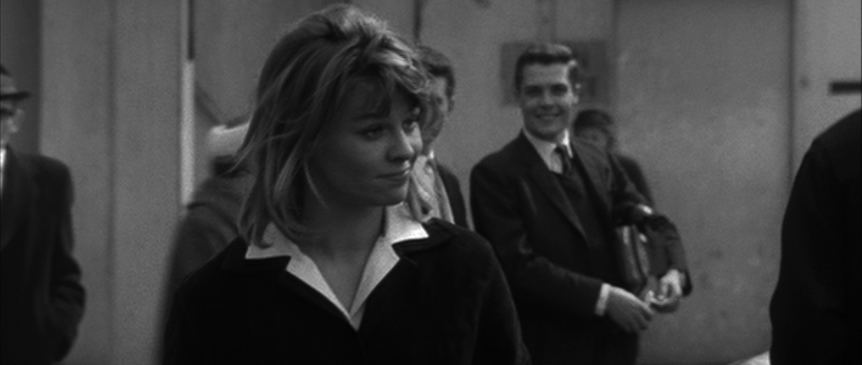
Billy Liar, UK, 1963, dir. John Schlesinger, starring Tom Courtenay, Julie Christie

Story: Billy Fisher uses imagination to get him through a life filled with boring dead-end jobs, multiple fiancées, and crushed hopes, but his active fantasy life is challenged by Liz, a free spirit who pushes him to live out his dreams in the real world, rather than in his mind.

The Sunday Matinee: The Loneliness of the Long Distance Runner


This is an entry in The Sunday Matinee series.

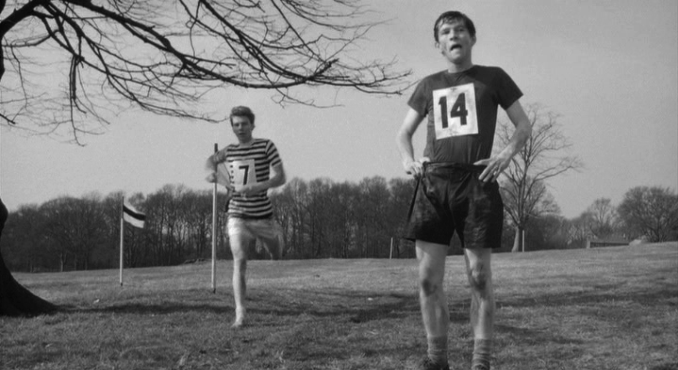
The Loneliness of the Long Distance Runner, UK, 1962, dir. Tony Richardson, starring Tom Courtenay, Michael Redgrave

Story: Colin has been sent up for robbing a bakery, but to his surprise he finds himself being handed advantages and privileges at the reform school. As it turns out, he’s a talented runner and the school director hopes he will help defeat a prestigious public school in an upcoming race.

First things first, the timing of this entry is no accident. This morning the New York Marathon kicks off – so good luck to all the runners, particularly my friends Patrick and Morgan. Secondly, tributes aside, it should be noted that this is in many respects an anti-sports film, both in the sense that it thumbs its nose at “sports film” conventions, and because it views competitive athleticism itself with severe antipathy. But more on that by the by. When we are introduced to Colin, he’s pulling double duty, running and narrating just like Fabrizio at the start of last week’s entry, Before the Revolution. There the similarities more or less end. Whereas Fabrizio was politicized in theory but distanced from any sense of class struggle, Colin – without necessarily articulating it in explicitly political terms (save for a few somewhat clumsy “consciousness-raising” lines of dialogue) – views his entire life as one long struggle against authorities and class constrictions. “Running’s always been a big thing in our family,” he tells us in the opening narration (during which, unlike Fabrizio, he runs away from the camera rather than towards it). “Especially running away from the police. It’s hard to understand. All I know is that you’ve got to run. Run without knowing why, through fields and woods, and the winning post’s no end even though barmy crowds might be cheering themselves daft. That’s what the loneliness of the long distance runner feels like.”

My Winnipeg (Best of the 21st Century?)


#88 in Best of the 21st Century?, a series in which I view, for the first time, some of the most critically acclaimed films of the previous decade.

My Winnipeg filters municipal history through personal experience (or perhaps vice-versa) so forgive me if I do something similar for a moment. Besides, my initial draft of this review was swept away - demolished like the old ice rink shown above - and in starting afresh, I feel compelled to make a meta-blogging and perhaps self-promotional detour. Lately I've been blogging rather furiously, trying to meet the demands of a new schedule I forced upon myself; as a result I am often composing my posts at the last minute (as opposed to this past summer where a leisurely pace allowed ample time to develop entries at my own tempo). Due to the way I've scheduled things, I end up writing a post in my Wind in the Willows series and the latest entry in "Best of the 21st Century?" every Monday night, and this week I noticed some similarities. To wit: in "Wayfarers, All," a late and seemingly digressive chapter in Kenneth Grahame's classic book, the Water Rat meets a Sea Rat who regales him with tales of the Mediterranean; transfixed, the hypnotized creature - who's never left the riverside before - prepares to follow his newfound friend on a grand adventure. He is stopped, at the last minute, by his faithful but perhaps somewhat oppressive pal, Mole, who physically restrains him and then talks him down from the dizzying height of his wanderlust. Thus "cured" of his restlessness, a depressed Rat sits at his desk and scribbles out some poetry about willow wrens.

Boomer Baseball: Field of Dreams & the American 60s


“Ray Kinsella, child of the sixties, builds baseball field and at end of movie meets his dead father.”
-Japanese tagline for Field of Dreams, paraphrased by writer/director Phil Alden Robinson

Beloved for its family drama, revered for its sporty caché (at least among those who can forgive a rightie Shoeless Joe), Field of Dreams is generally less recognized for its cultural-historical importance. It was one of the crucial films signifying a late 80s trend: the ascension of the baby boom generation to Hollywood's height of power, accompanied by a burst of 60s nostalgia which helped (re-)define the era for a generation. Preceded by "thirtysomething" and "The Wonder Years" on TV, big hits like The Big Chill and smaller films like Running on Empty (among others) in the cinema, as well as cultural events like the 20th anniversary of Woodstock and the release of the Beatles catalog on CD, Field of Dreams arrived at a crucial crossroads. In 1989, the Berlin Wall was crashing down and a new world was being born - for many in the West, the first time such a sensation had arisen in two decades. Meanwhile, the baby boomers were all hitting or approaching 40, many heading nuclear families and holding professional jobs they never would have foreseen, or so we were told.

The Reagan era, encapsulating a strong reaction to the 60s counterculture and New Left, was coming to an end, with President Bush half-heartedly promising "a kinder, gentler America." As the Wall crashed, and conservatism tentatively relaxed its hold on the American consciousness, pop culture experienced a renewed burst of creativity. New filmmakers like Spike Lee and Oliver Stone emerged to point a light at the country's darker aspects; TV suddenly grew adventurous and subversive with "Twin Peaks" and "The Simpsons"; postmodernism exploded from an academic subculture into the dominant media approach; meanwhile, a reversion to authenticity in mainstream rock was just around the corner. At the center of all these phenomena (except for the last) were baby boomers, who after plugging away and working their way up had finally emerged as mainstream trendsetters. Not only did they point the way forward; they also looked back at their own history, which was ripe for mythologization and nostalgia after a decade in the "dated" bin. Field of Dreams, with its attempt to synchronize America's National Pastime and the Age of Aquarius, its yearning to fuse youthful dreams, old traditions, and adult responsibilities, may be the quintessential film of this moment.

New on DVD: The Blind Side


[Although The Blind Side does not appear on disc until next week, I'm reviewing it now, in the absence of new releases I wanted to write about. Next week  I will review one or two other films released on March 23.]

"The Charge of the White Brigade"

In a clip that received continuous play on Oscar night - featured on both the Barbara Walters special and as a favorite of the Awards broadcast when highlighting the nominated Blind Side - Leigh Anne Tuohy (Sandra Bullock), a blonde, beautiful, sassy Southern housewife with wealth and attitude to spare, confronts several young black men sitting on a stoop in the projects. Leaning forward after one of them calls her "bitch," she stares him down and fires back with everything in her arsenal. She lets him know that if he comes to her side of town, he's in for a world of hell, that she lunches with the D.A. on a regular basis, and that she's a full-fledged member of the NRA who's always packing. Earlier we've seen the sinister youth threaten gentle giant Michael Oher (Quinton Aaron), Leigh Anne's adopted son, with his own gun, all while boasting about his criminal operations and salivating over Leigh Anne and her teenage daughter. Yet now, confronted with a woman in heels, surrounded in his own territory, he cowers. Whatever his own prowess and presence in the ghetto, he can't touch the threat of a pistol-packin' mama with an open line to the enforcers of political authority. And how are we supposed to feel about this? After all, as the young man is written, he deserves to be threatened and "put in his place." Yet the racial elements are impossible to ignore - as is the reflection that the film must know this, but proceeds anyway, without acknowledging the diatribe's deeper implications.

Invictus


Invictus, Clint Eastwood's tale of post-apartheid South Africa's momentary unity with the success of the national rugby team, could be described many ways: slight, obvious, familiar, underwhelming. Despite running well over two hours, it's not very weighty and even as characters give too much time for exposition the movie can be difficult to follow (and not just for those unfamiliar with rugby or the Afrikaaner accent). It's another entry into that disreputable genre, the feel-good true-life sports film, yet lacking in many of the tropes of that genre - we don't really get to know the team members, the games themselves (except for the last one) fly by in a few quick montages, and the main character is not even an athlete himself. Invictus sometimes gives the impression of a just-add-water "Instant Genre Film" mix in which someone forgot to add the water.

Did I mention that I liked it?

The Lost Son of Havana


Thirty years after the chants of "Lou-eee, Lou-eee!" have faded from Fenway, six miles from the spot of a very important and long-awaited 1975 reunion, the National Amusements Showcase Cinemas in Revere screened The Lost Son of Havana in Theater 1 at 7:35 pm; one of four daily screenings for at least the remainder of the week (if it is not held over any longer). The name of the movie was left out of the "Now Playing" flyers adorning the lobby, and there weren't any placards emblazoned with large quotes from Entertainment Weekly or video installments running trailers in loops. When asked for a ticket to the film, one of the theater's employees warned, "You do know it's a documentary, right?" Apparently, this disclaimer was necessary: some customers have been complaining. No one complained on this particular night, though - the four other people in the near-empty theater seemed perfectly content with their choice of entertainment.

Hoop Dreams

The other night, in composing my Shoulda Won the Oscar list, I selected Hoop Dreams as a kind of compromise for 1994, while my head suggested Pulp Fiction and my heart Forrest Gump. Actually, Hoop Dreams probably is the best picture of the year, appealing to both head and heart, and gut too (feel free to throw the liver in for good measure). Hoop Dreams' great gift is specificity which, when done correctly, opens out to infinite possibilities. Through the narrow focus on two kids trying to use basketball as their ticket out of Chicago's inner city, we come to a greater understanding of African-American communities, sports as business, family life, the American economic structure and the way it affects individual lives, the power of the media, and all the intersections thereof. And none of this is conveyed with voice-of-God narration (a neutral voiceover pops up once in a while to give us crucial information before going into hiding again), an overabundance of talking-head interviews, or stylized, finger-pointing editing.

Search This Blog